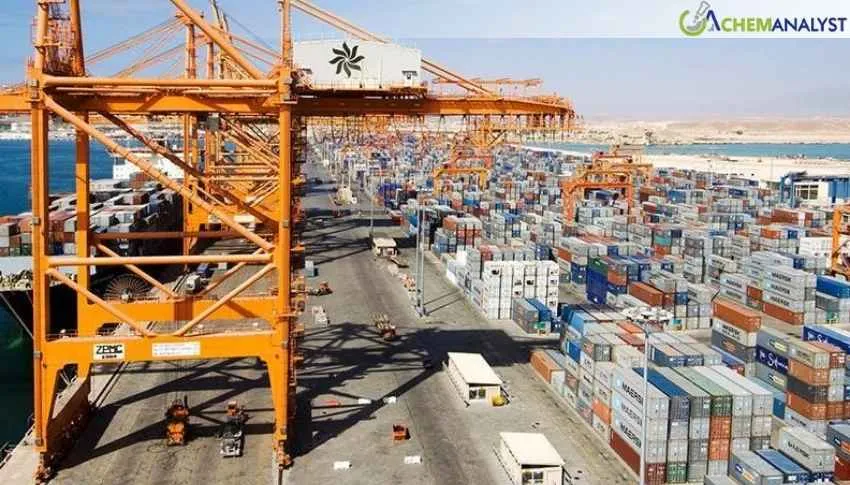
The temporary closure of the Port of Salalah in Oman has significantly disrupted ammonia exports from the Middle East, a region that accounts for a major share of global ammonia supply. According to an official customer advisory issued by the port authority on March 11, all terminal operations at the port have been suspended until further notice. The announcement indicates that the suspension affects all cargo-handling activities, effectively halting the export of ammonia shipments from the region’s last viable export gateway.
The shutdown follows a drone strike targeting fuel storage tanks at the port on March 11, as reported by Omani state media. While the full extent of the damage has not been publicly detailed, the incident prompted authorities to suspend operations as a precautionary measure. The disruption comes at a particularly sensitive time for global ammonia trade, as ongoing geopolitical tensions in the Middle East have already restricted shipping routes and export logistics for chemical cargoes.
The Port of Salalah has played a critical role in sustaining ammonia exports from the region since the escalation of conflict in the Middle East. Many of the region’s major export terminals are located inside the Strait of Hormuz, a strategic waterway that has become increasingly risky for commercial shipping during the ongoing conflict. As a result, Salalah, located on the Arabian Sea outside the strait, has effectively served as the last accessible export point for ammonia shipments.
One of the companies relying on the port is OQ Trading, which exports ammonia produced by the Salalah Methanol Company. The company has previously used the facility to supply customers in regional markets, including Jordan.
However, market sources suggest that the vessel’s planned ammonia loading has likely been canceled due to the suspension of operations at the port. A source familiar with the market told Platts on March 12 that the ship may only take on bunker fuel when it reaches the port, rather than loading ammonia as originally scheduled. This development highlights the immediate logistical impact of the port closure on chemical trade flows.
Participants in the ammonia market have noted that Salalah had become the only realistic loading port for ammonia exports from the Middle East after the outbreak of the regional conflict. Other major production hubs in countries such as Saudi Arabia and Qatar are located behind the Strait of Hormuz, making them difficult to access due to heightened security risks and shipping concerns.
Requests for comment sent to the Port of Salalah and OQ Trading regarding the operational suspension and its implications for ammonia exports have not received responses so far. Even if the port resumes ammonia loading activities in the near future, shipping companies may remain cautious. The surrounding waters are currently classified as a high-risk maritime area, meaning vessels entering the region face significantly higher insurance costs.
Insurance premiums for ships operating in conflict-affected waters have surged, making ammonia shipments even more complicated. In addition, ammonia itself is a hazardous cargo. As a highly toxic and pressurized gas, it requires specialized carriers and strict safety measures, which further discourages shipowners from taking risks in volatile areas.
The broader regional shipping situation also reflects the impact of the conflict. At present, three ammonia carriers remain stranded within the Strait of Hormuz after loading cargoes in Saudi Arabia and Qatar before the outbreak of hostilities. Two of those vessels are fully loaded and unable to safely exit the area.
In another case, a fourth ammonia carrier returning from a routine delivery to Asia has reportedly chosen to remain outside the high-risk zone rather than proceed to Saudi Arabia for another cargo. According to a shipping market participant speaking to Platts on March 11, the vessel will wait outside the danger area until the security situation improves.
Together, these developments highlight the significant disruption facing ammonia exports from the Middle East and underscore how geopolitical instability can rapidly affect global chemical supply chains.






Leave a Comment
Comments (0)