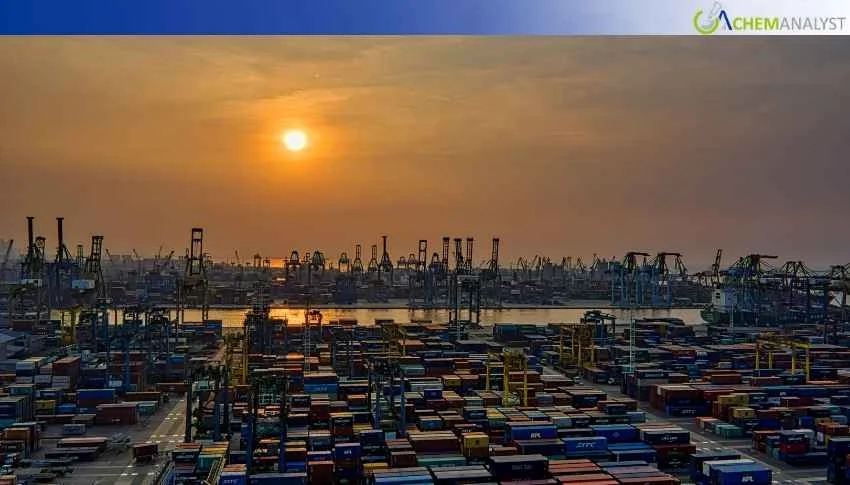
Weekly Ocean Freight Summary- Week of February 20, 2026
The global container shipping market witnessed a week of underlying change and seasonal adjustment. A major consolidation reshaped the carrier landscape, U.S policymakers introduced a controversial maritime funding proposal, and freight rates continued their post- Lunar New Year decline. In the meantime, global terminal operators improved their position in the Middle East.
Hapag-Lloyd's $4.2 Billion Mega-Merger with ZIM
The container shipping landscape experienced a seismic shift this week as German ocean carrier Hapag-Lloyd announced a definitive agreement to acquire Israeli shipping line ZIM Integrated Shipping Services in an all-cash transaction valued at $4.2 billion. The deal represents a massive 58% premium over ZIM's recent closing price. To satisfy national security and regulatory requirements, the Israeli private equity firm FIMI Opportunity Funds will carve out a new, independent container line dubbed "New ZIM." Operating 16 vessels, this new entity will ensure secure maritime access to the Mediterranean, U.S., and Europe for Israel, while Hapag-Lloyd integrates the bulk of ZIM's global fleet into its network.
U.S. Proposes Maritime Fee on Foreign-Built ships-
Trade policy developments added fresh ambiguity this week. The U.S. administration introduced a proposed “Maritime Action Plan” that would impose a weight-based fee on imported cargo transported aboard foreign- built vessels.
The stated objective is to generate funding for domestic shipbuilding initiatives. Though, international shipping associations and global trade groups have critiqued the proposal, warning it could raise landed import costs and disrupt already weak supply chains.
If applied, the policy would likely impact a large portion of containerized imports, given the limited number of US- built commercial container vessel in operation.
Terminal Tie-Ups: APM Terminals and DP World
In port operations, there are signs of an increase in strategic alliances. APM Terminals (a subsidiary of Maersk) has purchased a 37.5% minority stake in the South Container Terminal at Jeddah Islamic Port. DP World, the Dubai terminal operator, will retain a 62.5% majority stake and continue to manage the terminal. Meanwhile, changes in global trade patterns are evident in recent figures from the Port of Hamburg, which saw a near 50% increase in container shipments from India and an 84% increase from Malaysia, a far cry from the 25.6% drop in U.S. traffic due to tariff related slowdown. These figures underscore the ongoing shift of global trade flows.
Freight Rate Update
The post-Lunar New Year slump has taken hold. With Asian factories winding down, spot rates continue to slide as carriers aggressively blank sailings to align with reduced demand.
Asia to U.S. West Coast: Rates have softened further, hovering around $1,900 to $2,200 per FEU.
Asia to U.S. East Coast: Prices continue to ease, resting near $2,750 per FEU for discounted "bullet rates."
Asia to North Europe: Rates are sliding, currently averaging $2,100 per FEU, as the market absorbs the seasonal lull.
Transatlantic (Europe to U.S.): Rates remain depressed by overcapacity, sitting near $1,600 per FEU.
Short-Term Future Outlook
The ocean freight market is poised to enter a delicate transition phase. During the latter part of February and the early part of March, shippers will be presented with a constrained network and unpredictable schedules as carriers implement blanket schedules to offset the decline in holiday volumes. Although this will help stabilize spot market rates, shippers need to focus on flexible routing options and developments in the U.S. maritime fee proposal.







 About ChemAnalyst
Leave a Comment
Comments (0)