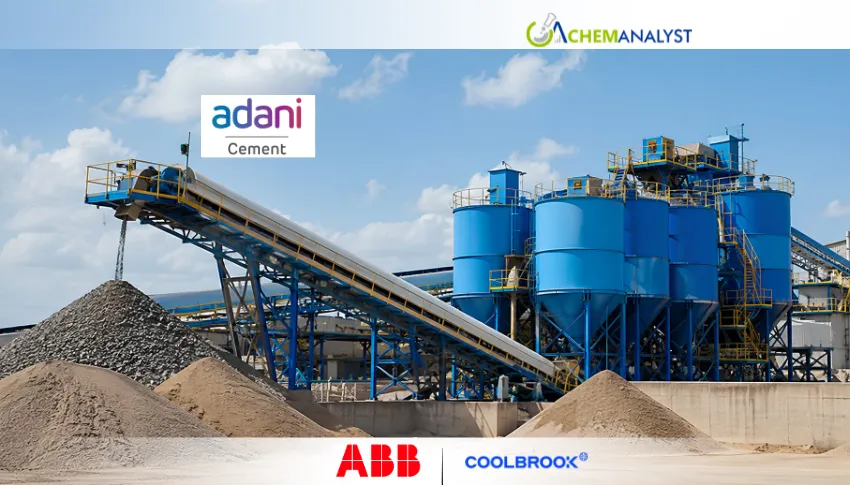
Coolbrook and ABB have entered the industrial execution phase of their strategic collaboration by launching the world’s first industrial-scale deployment of Coolbrook’s RotoDynamic Heater™ (RDH™) technology at Adani Cement’s Boyareddypalli Integrated Cement Plant in Andhra Pradesh, India. The milestone represents a significant advancement in the electrification of high-temperature industrial processes, particularly within the cement sector, which remains one of the largest contributors to industrial carbon emissions.
Following several years of joint research, technology validation, and pilot testing, Coolbrook has officially awarded ABB the responsibility for supplying the electrical systems required for the RDH project. ABB’s scope includes advanced drives, motors, an electrical house (e-house), and other critical electrical infrastructure. These components will be integrated with the ABB Ability™ System 800xA® distributed control system (DCS) to ensure efficient, reliable, and safe operation of the electrified heating solution.
The deployment comes at a time when industrial manufacturers worldwide are accelerating efforts to replace fossil fuel-based heating with electrified alternatives. Growing renewable electricity generation, combined with increasingly stringent climate regulations, is encouraging heavy industries to adopt cleaner technologies capable of delivering high-temperature process heat without compromising productivity. The partnership between Coolbrook and ABB reflects this transition by combining innovative heating technology with ABB’s established expertise in industrial electrification and automation.
Within cement manufacturing, the calcination process is particularly energy-intensive and traditionally depends on fossil fuels. Coolbrook’s RDH technology provides clean, high-temperature heat that can be used to dry alternative fuels and improve their calorific value. This enables cement producers to increase the use of sustainable or waste-derived fuels while reducing dependence on conventional fossil fuels. The installation at Adani Cement is expected to cut approximately 60,000 metric tons of carbon dioxide emissions annually, with additional emission reduction potential as the technology is further optimized.
Coolbrook CEO Joonas Rauramo stated that the cement industry has reached an important stage in its transition toward electrification. After years of technology development and industrial validation, the focus has shifted toward commercial-scale deployment. He emphasized that reliable and scalable electrification solutions will play a central role in helping manufacturers achieve long-term decarbonization goals while maintaining operational performance. He also highlighted ABB’s extensive experience in industrial electrification as a key factor in ensuring successful project execution.
Joachim Braun, President of ABB’s Process Industries division, noted that decarbonizing energy-intensive industries requires close collaboration, technological innovation, and scalable solutions. He described the Adani Cement project as a landmark achievement that demonstrates how advanced electrification technologies can reduce industrial emissions while maintaining productivity and operational efficiency, paving the way for broader adoption across global cement manufacturing.
Impact on Products and Chemical Commodity Prices
The deployment of Coolbrook's RDH technology is expected to increase demand for electricity, industrial motors, automation systems, and waste-derived alternative fuels while gradually reducing fossil fuel consumption in cement manufacturing. Over the long term, higher adoption of electrified heating could support demand for specialty electrical materials and industrial equipment rather than conventional coal or petcoke. For chemical commodities tracked by ChemAnalyst, the immediate price impact is expected to remain neutral. However, sustained electrification may slightly soften demand for petroleum coke and coal-based inputs while encouraging stable demand for industrial lubricants, specialty coatings, electrical insulation materials, and engineering polymers used in advanced electrification systems.








 About ChemAnalyst
Leave a Comment
Comments (0)