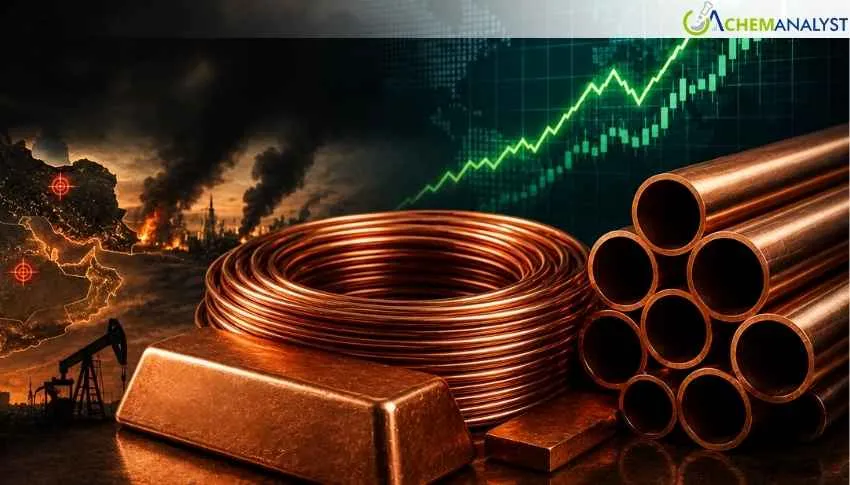
Despite significant geopolitical uncertainties stemming from the Middle East, copper prices are demonstrating remarkable resilience, shrugging off concerns to aim for new record highs. This upward trajectory is primarily driven by a fundamental imbalance where demand is consistently outstripping supply, leading to tight market conditions and declining inventories, particularly in China.
A confluence of factors contributes to the constrained supply. Major operational setbacks and incidents at key copper mines across Chile, Africa, and Indonesia in 2025 have severely throttled global production, putting the world on course for its first annual contraction in copper output since the pandemic. Adding to these challenges is a growing concern over a looming shortage of sulphuric acid, a vital component in copper extraction. China's cessation of sulphuric acid exports to Chile and an impending ban on exports from May signal further supply disruptions for the red metal. It is also suggest that the consensus view overstates anticipated copper supply growth for 2026-27, with prices needing to remain above US$10,000 per metric tonne to incentivize sustainable production.
Economically, this scenario is leading to heightened volatility across metals markets. The broader rally in risk assets, alongside copper's ascent, indicates that investors are currently prioritizing strong demand fundamentals over geopolitical risks.
Geopolitically, while copper has largely overlooked the immediate impact, the ongoing US-Iran conflict has significantly impacted crude oil prices due to concerns over tight global energy supplies and the closure of the Strait of Hormuz. This conflict had previously caused copper prices to slump in March 2026, highlighting the underlying sensitivity to escalating tensions. In a related development, the US is actively pursuing "Project Vault," a $12 billion initiative aimed at building strategic mineral reserves to reduce reliance on countries like China for critical minerals, including copper. A US congressional report, "China's Minerals Mafia," further underscores China's increasing dominance in the critical minerals sector, partly attributed to its willingness to operate under conditions that Western firms often avoid.
Industry-specific impacts include miners struggling to meet demand, although higher copper prices are making existing operations more economically viable. The momentum in copper is also influencing other commodities, with gold seeing renewed safe-haven demand and lithium and uranium gaining traction due to high oil prices and energy security concerns.







Leave a Comment
Comments (0)