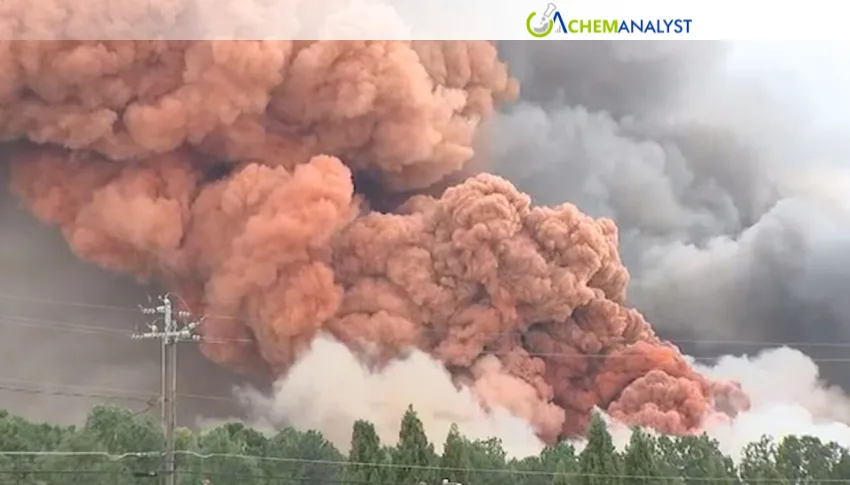
The U.S. Chemical Safety and Hazard Investigation Board (CSB) has released its final report on the catastrophic chemical fire and toxic gas release that occurred on September 29, 2024, at KIK Consumer Products’ Bio-Lab Plant 12 warehouse in Conyers, Georgia. The investigation concluded that a corroded sprinkler component leaked water onto highly reactive pool-treatment chemicals, triggering a decomposition reaction that generated intense heat, fires, and toxic emissions. The resulting smoke plume contained chlorine, hydrogen chloride, bromine, and other hazardous substances, prompting the evacuation of approximately 17,000 residents and shelter-in-place advisories for nearly 90,000 people across the Atlanta metropolitan area.
According to the CSB, the warehouse stored nearly 14 million pounds of chlorinated isocyanurates and other reactive chemicals—more than double the inventory originally disclosed to local authorities before the facility opened in 2019. These chemicals were packaged in around 5,000 large polypropylene "super sacks," each weighing over one ton. However, the sacks were not waterproof, leaving the materials vulnerable to moisture. The warehouse also lacked adequate air conditioning and humidity control, creating conditions that increased the likelihood of chemical degradation and hazardous reactions.
The investigation revealed that chlorine fumes released naturally from the stored chemicals combined with humidity inside the warehouse to form hydrochloric acid on metal surfaces. Over time, this accelerated corrosion of sprinkler components. During a routine inspection in December 2023, more than 1,100 sprinkler heads were already identified as corroded. On the day of the incident, one of these compromised components failed, allowing water to reach the chemicals and initiate a chain of reactions involving chlorinated isocyanurates, cyanuric acid, aluminum sulfate, and sodium bromide. The heat generated activated additional sprinklers, further escalating the event.
The fire destroyed the warehouse and led to prolonged emergency measures, including nightly shelter-in-place warnings within a two-mile radius for 17 days and school closures lasting nearly two weeks. KIK Consumer Products permanently ceased operations at the Conyers facility in May 2025.
The CSB identified five major safety failures contributing to the disaster: operating equipment until failure, inadequate recognition of storage hazards, weak risk management and oversight, insufficient industry guidance for pool-treatment chemicals, and regulatory gaps covering reactive chemical hazards. Investigators noted that chlorinated isocyanurates are not regulated under OSHA's Process Safety Management standard or the EPA's Risk Management Plan rule despite their potential to release toxic gases under certain conditions.
The Board renewed long-standing recommendations urging OSHA and the EPA to broaden regulatory oversight of reactive chemicals. It also issued additional safety recommendations to KIK Consumer Products and the National Fire Protection Association (NFPA), emphasizing that stronger regulations and improved storage practices are essential to prevent similar incidents and better protect workers, emergency responders, and surrounding communities.
Impact of the News
The CSB's findings are expected to tighten safety requirements for the storage and handling of chlorinated isocyanurates and other reactive pool-treatment chemicals, prompting manufacturers to invest in improved warehouse infrastructure, corrosion-resistant equipment, and stricter inventory controls. These compliance measures could temporarily constrain production and distribution, particularly if facilities undergo inspections or operational upgrades. For chemical commodities tracked by ChemAnalyst, prices of chlorinated isocyanurates and related pool chemicals may remain firm to moderately higher due to increased compliance costs and potential supply disruptions. However, the impact on broader chlorine derivatives and industrial chemicals is expected to be limited unless additional regulatory actions significantly reduce production capacity.








 About ChemAnalyst
Leave a Comment
Comments (0)