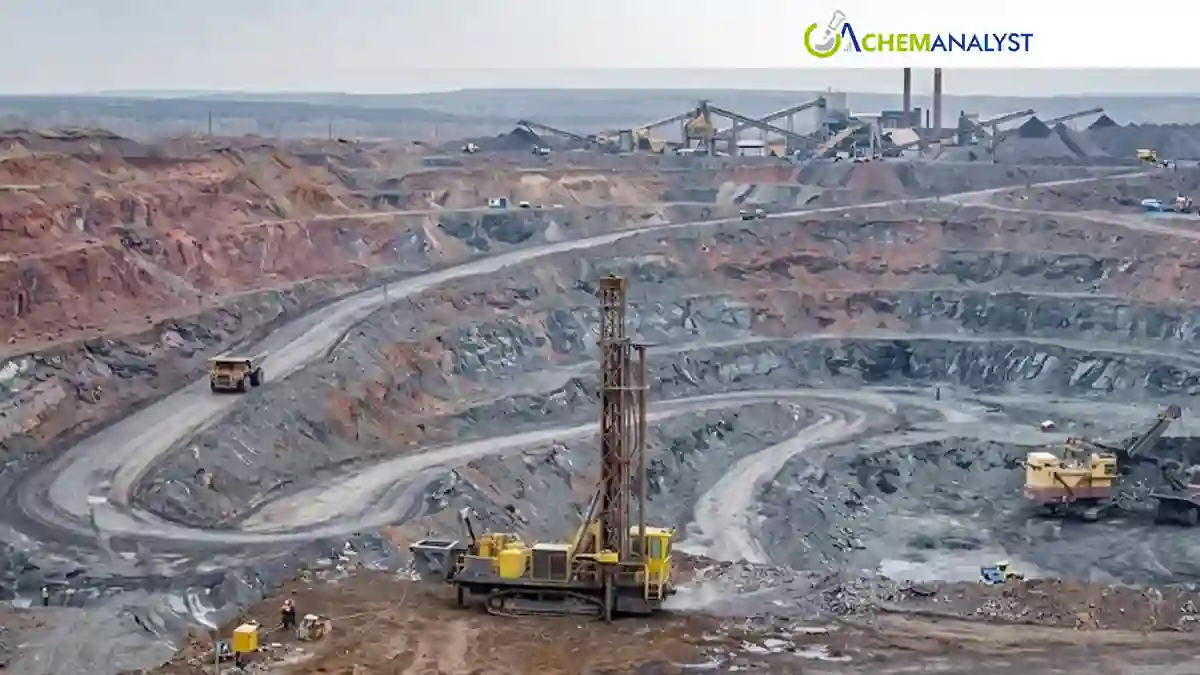
District Metals Corp. (District) has started an airborne Mobile MagnetoTellurics System (MobileMT) survey at its Alum Shale Properties in north-central Sweden. This initiative aims to identify drill targets for critical metals, including uranium, vanadium, nickel, molybdenum, zinc, and rare earth elements (REEs). The survey represents a significant step in the company's exploration strategy within a region newly supportive of critical mineral extraction.
Expert Geophysics Surveys Inc. is conducting the helicopter-borne MobileMT survey. This advanced geophysical technology offers deep penetration and high-resolution mapping capabilities. The system effectively detects highly conductive Alum Shale, which is rich in graphite and sulphides, making it an ideal tool for identifying mineralized zones. The current survey covers approximately 2,253 line kilometers over additional mineral licenses within District's extensive 151,329-hectare Alum Shale properties. Previous MobileMT surveys in summer 2025 successfully mapped mineralized Alum Shale at the Viken Energy Metals Deposit, validating the technology for broader use across the company's properties.
The commencement of this survey aligns with a significant shift in Sweden's mining policy. The Swedish Parliament overturned a 2018 ban on uranium mining in November 2025, with the repeal becoming effective on January 1, 2026. Further legislative changes, approved on June 15, 2026, and taking effect on July 15, 2026, remove the municipal veto over uranium extraction and processing. These reforms streamline the permitting process, treating uranium mining similarly to other mineral extraction activities. This policy reversal reflects Sweden's strategic goal to enhance energy security and increase domestic supply of critical minerals.
Sweden possesses an estimated 80 percent of Europe's known uranium deposits, making the policy shift geopolitically significant. The exploration and potential extraction of these critical metals can bolster Sweden's role as a key supplier for the European Union, reducing reliance on external sources. Economically, increased exploration and future mining activities could attract substantial investment, create jobs, and contribute to the national economy. These minerals are vital for the global green energy transition, underscoring their strategic importance.
District's strategy involves acquiring properties with historical data and applying modern exploration techniques to unlock their full potential. While past environmental concerns led to the initial uranium mining ban, the new regulatory framework aims for a predictable and uniform permitting process. District is also actively engaged in research, collaborating with Xoma AB on water treatment solutions to purify water impacted by metal leaching from mineralized Alum Shale. This demonstrates a commitment to addressing environmental aspects alongside resource development.
Impact on Prices of Chemical Commodities Tracked by ChemAnalyst
District Metals' exploration campaign is unlikely to have an immediate impact on global chemical commodity prices, as the project remains in the exploration phase without commercial production. However, the announcement carries a bearish long-term outlook for several metal-based chemical feedstocks. If economically viable deposits are confirmed and developed under Sweden's newly favorable mining regulations, future supplies of vanadium, nickel, molybdenum, zinc, uranium, and rare earth elements could increase across Europe. Improved regional availability may gradually ease supply constraints and reduce import dependence, particularly for battery materials, specialty alloys, catalysts, pigments, and high-performance chemicals tracked by ChemAnalyst. In the short term, prices are expected to remain largely stable because exploration, permitting, mine development, and commercial production typically require several years. Nevertheless, the policy reforms and expanding exploration activity are likely to improve long-term market confidence, encouraging investment and potentially moderating price volatility for these strategic mineral-based chemical commodities over the coming years.







 About ChemAnalyst
Leave a Comment
Comments (0)