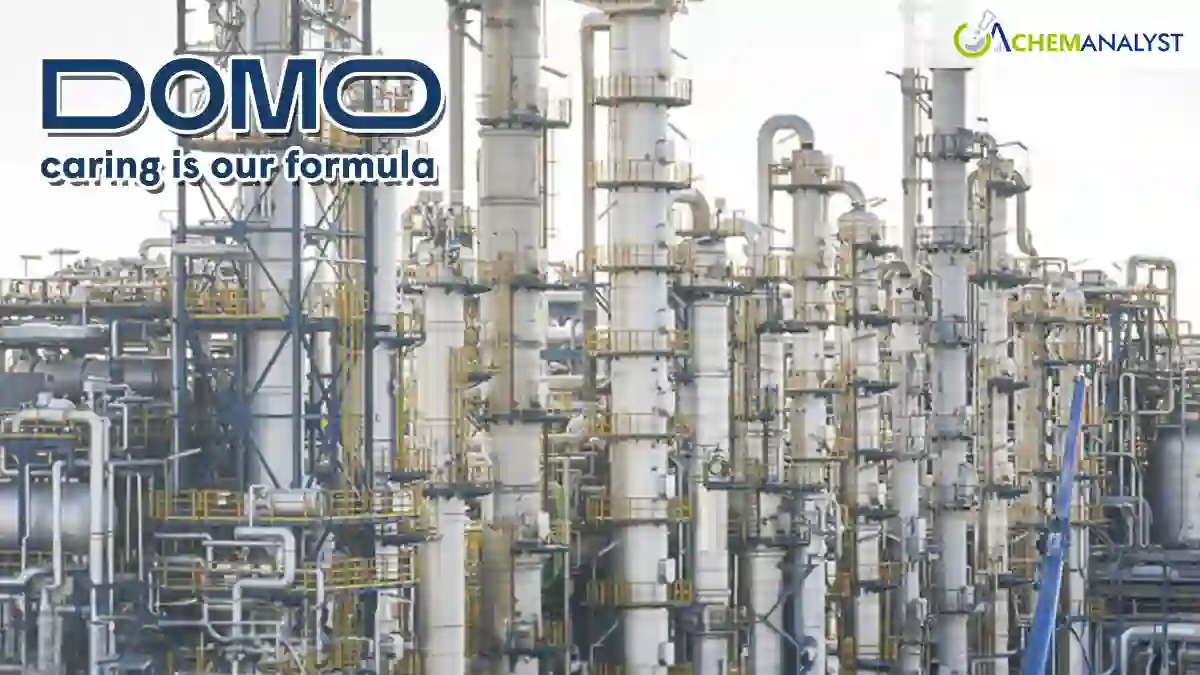
German authorities have ordered the continued, limited operation of DOMO Chemicals’ production facilities in Germany, citing urgent public safety and environmental considerations. The decision applies primarily to the Leuna sites operated by DOMO Chemicals and was issued by the state government of Saxony-Anhalt. Under this order, the facilities will remain active at a reduced level for the time being, effectively ruling out an immediate shutdown.
The rationale behind the state’s intervention is rooted in operational safety. According to authorities, the current weather conditions make a controlled and safe shutdown of the Leuna production units technically unfeasible. An abrupt cessation of operations could pose serious risks to human health and the environment, particularly given the chemical processes involved. To avoid such hazards, the installations must continue running, albeit at minimal capacity. At present, only the existing operators have the technical knowledge and on-site capability to manage these risks responsibly.
As a result, the state has implemented a legal mechanism known as “substitute performance” (Ersatzvornahme). This measure allows public authorities to step in to ensure safety when an operator is unable to fulfil critical obligations. Importantly, this intervention does not relieve DOMO Caproleuna GmbH—the entity responsible for the Leuna facilities—of its legal and financial responsibilities. Rather, it is a temporary safeguard designed to prevent uncontrolled outcomes during a period of financial instability.
The move has been cautiously welcomed by insolvency administrators. Prof. Dr. Lucas F. Flöther of the law firm Flöther & Wissing, who serves as the court-appointed preliminary insolvency administrator, described the decision as a positive development under difficult circumstances. He noted that maintaining reduced production provides valuable time to assess whether the business can be stabilised over the longer term. Among the possible scenarios being examined is a takeover by a third-party investor, which could eventually allow the state to withdraw from its substitute role and restore a more sustainable operational footing.
The current crisis follows the insolvency filings made on 25 December by three German subsidiaries of the DOMO Chemicals Group. In recent weeks, the operational situation deteriorated further as the companies struggled to secure essential supplies. Continuous production requires uninterrupted access to energy, specific industrial gases, and cooling agents such as liquid nitrogen. Due to a lack of liquidity, the companies were at risk of being cut off by suppliers, which would have jeopardised safe operations.
Efforts to secure emergency bridge financing reached an impasse last Thursday when negotiations between creditors and the shareholder failed. In response, Saxony-Anhalt’s Minister of Economic Affairs convened a high-level meeting in Leuna, bringing together management, the works council, representatives of the trade union IGBCE, and infrastructure operator Infraleuna. When no timely compromise emerged, the state proceeded with substitute performance to avert immediate risks.
On the workforce front, there has been some reassurance. The Federal Employment Agency has approved advance financing of insolvency benefits, ensuring that wages and salaries for around 585 employees will continue to be paid punctually. These arrangements are secured for the duration of the preliminary insolvency proceedings, expected to last until the end of March. The support applies to all affected entities, and production at the Premnitz site will also continue.
Overall, while the future of DOMO Chemicals’ German operations remains uncertain, the authorities’ intervention has stabilised the immediate situation, buying time for stakeholders to explore viable long-term solutions.







Leave a Comment
Comments (0)