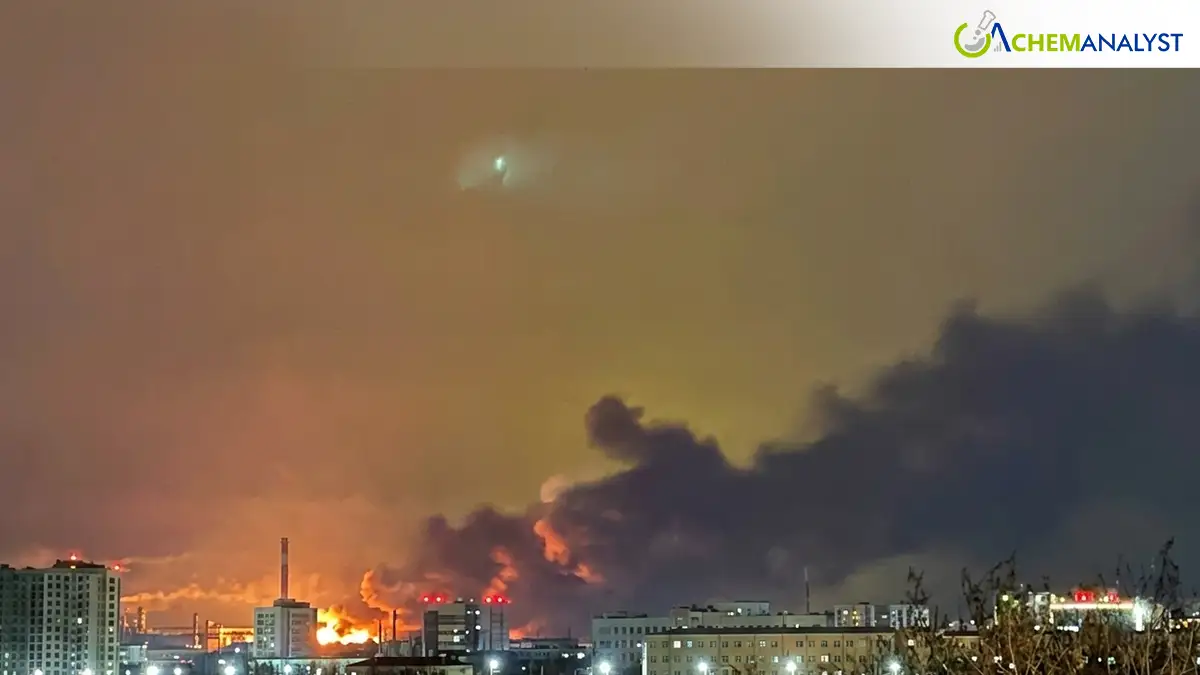
Ukraine intensified its long-range aerial campaign over the weekend by launching drone strikes on major Russian industrial facilities, targeting both energy and chemical infrastructure critical to Moscow’s wartime economy. During the night between Saturday and Sunday, Ukrainian drones struck one of Russia’s largest oil refineries in Yaroslavl and a significant chemical complex in the Volgograd region, underlining Kyiv’s strategy of disrupting the industrial systems that help finance Russia’s military operations.
In Yaroslavl, situated in Russia’s Central Federal District, drones targeted the Slavneft-YANOS refinery, one of the country’s most important oil processing facilities. The strike caused a fire at the refinery, raising concerns about operational disruptions and fuel supply impacts across Russia’s central regions. Slavneft-YANOS is jointly controlled by Russian energy giants Rosneft and Gazprom and ranks among the top five refineries in Russia by processing capacity. Its role in supplying fuel to central Russian markets makes it a strategically significant target for Ukraine’s military planners.
Andriy Kovalenko, who leads the Center for Countering Disinformation under Ukraine’s National Security and Defense Council, confirmed the attack and shared footage showing the impact of the strike. The incident reflects Kyiv’s continued emphasis on hitting deep targets inside Russian territory, especially those connected to oil production, refining, and export infrastructure. Such strikes are designed not only to create immediate operational setbacks but also to weaken Russia’s broader economic capacity to sustain prolonged military engagement.
At the same time, another drone attack was reported in the Volgograd region, where the Apatit nitrogen complex was hit. The strike damaged a high-pressure sulfuric acid pipeline within the facility, highlighting a shift in Ukrainian strategy toward chemical infrastructure in addition to oil assets. Although the attack did not result in a fire, it led to serious workplace injuries. According to local officials, five employees suffered chemical burns and were taken to hospitals for treatment.
Volgograd Governor Georgiy Filimonov stated that emergency services responded quickly and managed to contain the situation before a larger industrial accident could occur. The Apatit complex is a key industrial site involved in nitrogen and chemical production, and any disruption to such operations could have wider implications for domestic industrial output and supply chains.
Drone-related incidents were also reported in the Tambov region, particularly near the city of Michurinsk, where explosions were heard. While detailed information about the extent of damage there remains limited, the repeated incidents across multiple regions indicate the growing reach of Ukraine’s long-range drone operations.
These latest strikes follow a particularly active week in Ukraine’s campaign against Russian industrial assets. On April 22, repeated drone attacks forced the temporary shutdown of the Tuapse and Novokuibyshevsk oil refineries, both operated by Rosneft. The Tuapse refinery, which has an annual processing capacity of around 12 million metric tons, suffered significant fire damage along with destruction to parts of its port infrastructure. Local observers described the aftermath as resembling a “man-made disaster,” with oil products leaking into nearby areas and creating environmental concerns.
Kyrylo Budanov, head of Ukraine’s Presidential Office, has stated that targeting Russian export routes and industrial hubs is a crucial part of strengthening Ukraine’s leverage in ongoing negotiations. While some international partners have reportedly expressed concerns over the potential impact on global energy prices, Kyiv remains focused on reducing the industrial revenue streams that support Moscow’s war effort.
By expanding attacks from oil terminals and refineries to chemical plants and industrial pipelines deep inside Russian territory, Ukraine is demonstrating both the increased precision and strategic depth of its drone fleet. These operations signal a continued effort to weaken Russia’s economic resilience while reinforcing Ukraine’s broader military and diplomatic position.








 About ChemAnalyst
Leave a Comment
Comments (0)