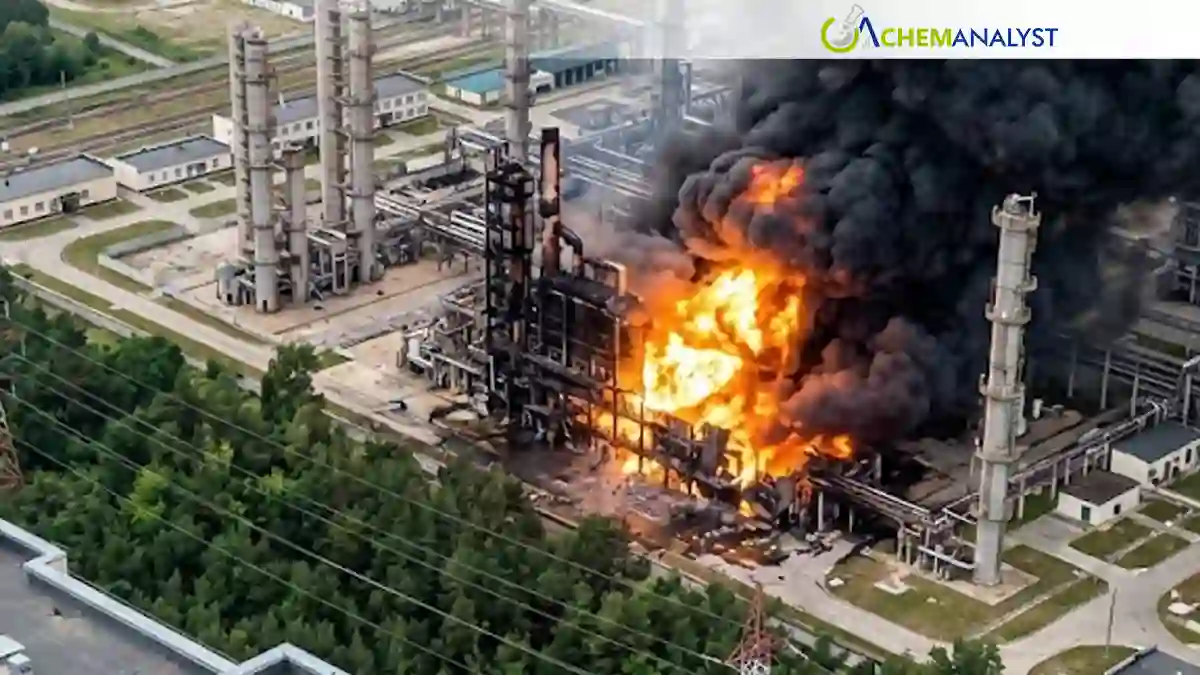
Russia’s Sibur has indefinitely halted operations at its Zapsibneftekhim petrochemical complex in Tobolsk, western Siberia, following a drone attack that damaged the facility. The incident has created uncertainty around LPG availability in the domestic market and could affect feedstock supplies for downstream petrochemical production.
The attack occurred Monday in the Tyumen region, where regional Governor Alexander Moor confirmed that a fire broke out at an industrial facility following a drone strike. However, he did not identify the affected site. Several media reports subsequently linked the incident to Sibur’s Zapsibneftekhim complex.
Sibur said the facility would remain shut while the company assesses the extent of the damage and evaluates the resulting consequences. The complex is strategically important to Russia’s petrochemical industry and is considered the country’s largest liquefied petroleum gas processing facility.
The disruption was reflected in the domestic LPG market on Tuesday, when no LPG volumes for delivery from the Tobolsk loading point were offered on the St. Petersburg International Mercantile Exchange (SPIMEX). Before the incident, the Tobolsk loading point regularly supplied around 4,000 metric tons per day of technical propane-butane mix (PBT) to the market.
According to media reports, Zapsibneftekhim produces approximately 6 million metric tons of LPG annually, representing about 40% of Russia’s total LPG output. The facility therefore plays a critical role in maintaining domestic LPG availability and supporting Russia’s petrochemical value chain.
The impact could extend beyond the LPG market because a significant portion of the facility’s output is used internally. Market participants estimate that roughly half of the LPG produced at Tobolsk serves as feedstock for petrochemical manufacturing at Sibur’s integrated complex.
The shutdown could therefore reduce both marketable LPG supplies and feedstock availability for downstream operations. The duration of the outage will be a key factor in determining the overall market impact. A prolonged shutdown could tighten regional LPG balances, while a quick restoration would likely limit the disruption.
For international markets, the incident could increase attention on Russian LPG exports and domestic supply resilience. Market participants are expected to closely monitor repair progress, production levels, exchange availability and alternative supply sources in the coming days.
Product and Chemical Commodity Price Impact
The shutdown is likely to have a bullish near-term impact on LPG and propane-butane prices, particularly in Russia and nearby markets, because Tobolsk accounts for a substantial share of domestic LPG production. Reduced availability could lift spot prices and premiums, while tighter propane and butane supplies may increase feedstock costs for petrochemical producers. Propylene and polypropylene prices could also face upward pressure if LPG feedstock shortages reduce production or increase operating costs. However, the overall impact will depend heavily on the outage duration and the availability of alternative supplies. A short disruption may cause only temporary price volatility, while an extended shutdown could produce a more sustained price increase.







Leave a Comment
Comments (0)