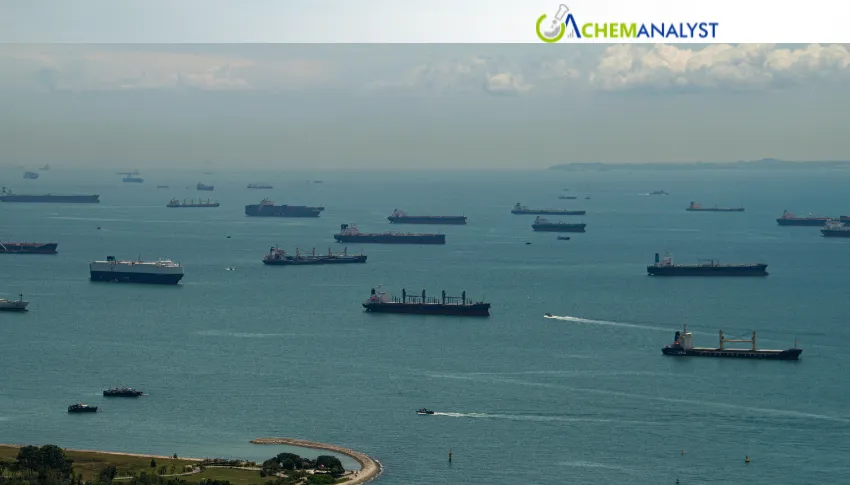
The international maritime cargo shipping business is under more pressure than ever before due to the Middle East situation coupled with the closure of the Strait of Hormuz. With the crisis affecting not only the Persian Gulf but also the Mediterranean Sea, shippers are struggling against a premature peak season with high rates and surcharges.
Frontloading Triggers Early Peak Season
As the Red Sea and Strait of Hormuz become inaccessible, large quantities of ships’ capacities have been consumed by prolonged voyages through the Cape of Good Hope route. In anticipation of possible disturbances, the imposition of tariffs in July by the United States, and the upcoming FIFA World Cup of 2026, there is an urgent rush to place orders in time. Such demand has caused unprecedented congestion and officially marked the start of the usual peak season prematurely.
Carriers Manage Capacity with Surcharges
In order to control the market and balance out the huge expenses related to bunker fuel due to the continued unrest and the exhausted resources in the region, carriers are engaging in capacity manipulation using blank sailings and fee implementations. Companies such as Hapag-Lloyd and Maersk have introduced PSS on the Asia-Europe corridor from June 8 and June 10, respectively, amounting to $1,000 per 40 feet TEU.
Resilient Volumes Despite Disruption
Surprisingly, despite the tough operational challenges faced, the world’s container traffic has not been destroyed. According to the latest figures from the industry, world container volumes have been unexpectedly robust, at around 16.2 million TEUs recently. Although it is natural that the volume of goods moving to the Indian Subcontinent and the Middle East will have decreased because of the effects of the war, world trade has continued to flow like water, finding new routes to bypass the bottlenecks.
Spot Rates Surge as Importers Scramble
The combination of geopolitical anxiety and robust cargo volumes has sent spot rates surging to levels unseen since the pandemic:
• Asia to U.S. West Coast: Rates from Shanghai to Los Angeles have jumped by over 30% to $4,565 per FEU.
• Asia to U.S. East Coast: Rates from Shanghai to New York have surged past $5,505 per FEU.
• Asia to North Europe: Spot rates are climbing rapidly, with Shanghai to Rotterdam reaching $3,579 per FEU, heavily driven by early peak demand ahead of upcoming bunker fuel adjustments.
Short-Term Outlook
The month of June is highly volatile for logistics personnel. High prices of marine bunker oil and low levels of emergency stocks around the world will ensure that baseline costs remain high. Due to the limited space created by carriers and importers trying to secure allocations, shipping lines should be prepared for rising rates, cargo rolls, and the need to pay premium surcharges to secure space.








 About ChemAnalyst
Leave a Comment
Comments (0)