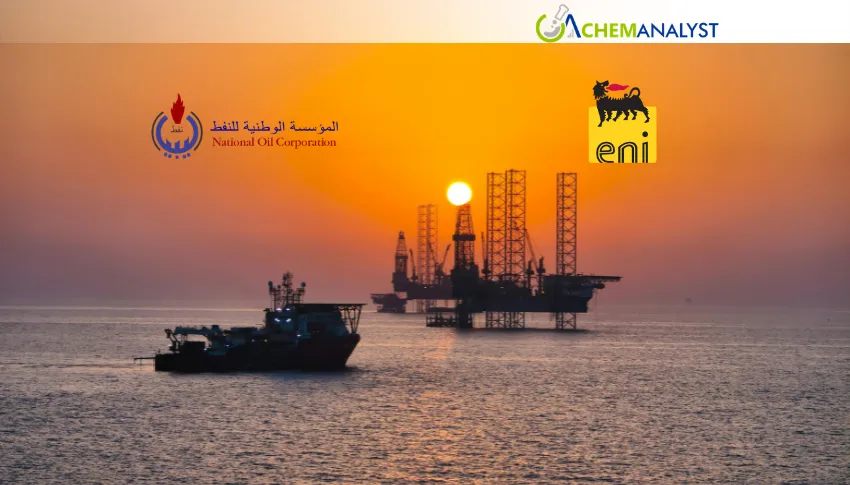
Eni, in collaboration with Libya’s National Oil Corporation (NOC) through their joint venture Mellitah Oil & Gas, has successfully commenced hydrocarbon production under the Sabratha Compression Project. The offshore initiative marks a significant milestone in Libya’s energy sector by enhancing gas production from the Bahr Essalam gas field, situated around 100 kilometers off the Libyan coast. The project has been developed to counter the natural decline in reservoir pressure while ensuring long-term production sustainability and improved gas recovery.
A key component of the Sabratha Compression Project is the installation of a newly designed 1,600-ton offshore compression module on the existing Sabratha platform. The module is equipped with advanced compression trains capable of delivering an overall compression capacity of approximately 440 million standard cubic feet of gas per day (MMscfd). This state-of-the-art infrastructure enables gas extraction even under low-pressure reservoir conditions, thereby extending the productive life of the Bahr Essalam field.
The enhanced compression capability is expected to increase annual gas production by nearly 800 million cubic meters, along with additional condensate output. This production increase is strategically important for Libya as it will help maintain a stable supply of natural gas for domestic electricity generation, addressing the country's growing energy requirements. Furthermore, the additional gas volumes will support exports to Italy through the Greenstream pipeline, reinforcing Libya’s position as a reliable regional gas supplier while strengthening energy cooperation between the two nations.
The successful commissioning of the Sabratha Compression Project highlights the technical expertise and operational capabilities of Eni and NOC in executing complex offshore developments within challenging operating environments. Despite logistical and technical complexities, the project was completed efficiently, reflecting the partners’ commitment to strengthening Libya’s energy infrastructure and improving the resilience of its natural gas production network. The development also contributes to the long-term stability and growth of Libya’s hydrocarbon sector, which remains a vital pillar of the national economy.
Beyond the Sabratha project, Eni and NOC continue to advance additional strategic developments aimed at expanding Libya’s offshore gas production capacity. The Bouri Gas Utilization Project has entered the tie-in and commissioning phase following the successful installation of the Bouri Gas Recovery Module. Simultaneously, work is progressing on the Structures A&E project, which focuses on developing two additional offshore gas fields to further enhance the country’s production capabilities.
Eni has maintained a strong presence in Libya since 1959 and continues to be the country’s leading international energy operator. In 2025, the company’s equity production in Libya stands at approximately 162,000 barrels of oil equivalent per day. With three major development projects currently underway and planned investments totaling nearly USD 10 billion, Eni remains committed to supporting Libya’s energy sector through technological innovation, infrastructure expansion, and sustainable production growth.
Impact on Products and Chemical Commodity Prices
The commissioning of the Sabratha Compression Project is expected to strengthen Libya's natural gas and condensate supply by offsetting production decline at the Bahr Essalam field. Increased gas availability will ensure a more stable feedstock supply for gas-based industries, including ammonia, methanol, hydrogen, and petrochemical manufacturing, while also supporting uninterrupted power generation. Higher condensate output will provide additional refinery feedstock, benefiting downstream fuel and chemical production. The expanded gas supply to both domestic markets and exports through the Greenstream pipeline is likely to improve regional supply security and reduce the risk of supply disruptions.
From a ChemAnalyst pricing perspective, the project is expected to exert mild bearish to stable pressure on natural gas prices in the Mediterranean region over the medium term by increasing available volumes. Consequently, feedstock-dependent chemicals such as Ammonia, Methanol, Urea, Hydrogen, and selected Olefins could witness improved production economics, helping stabilize or slightly soften prices if demand remains unchanged. However, the overall market impact will depend on broader European gas demand, seasonal consumption, and geopolitical developments.







 About ChemAnalyst
Leave a Comment
Comments (0)