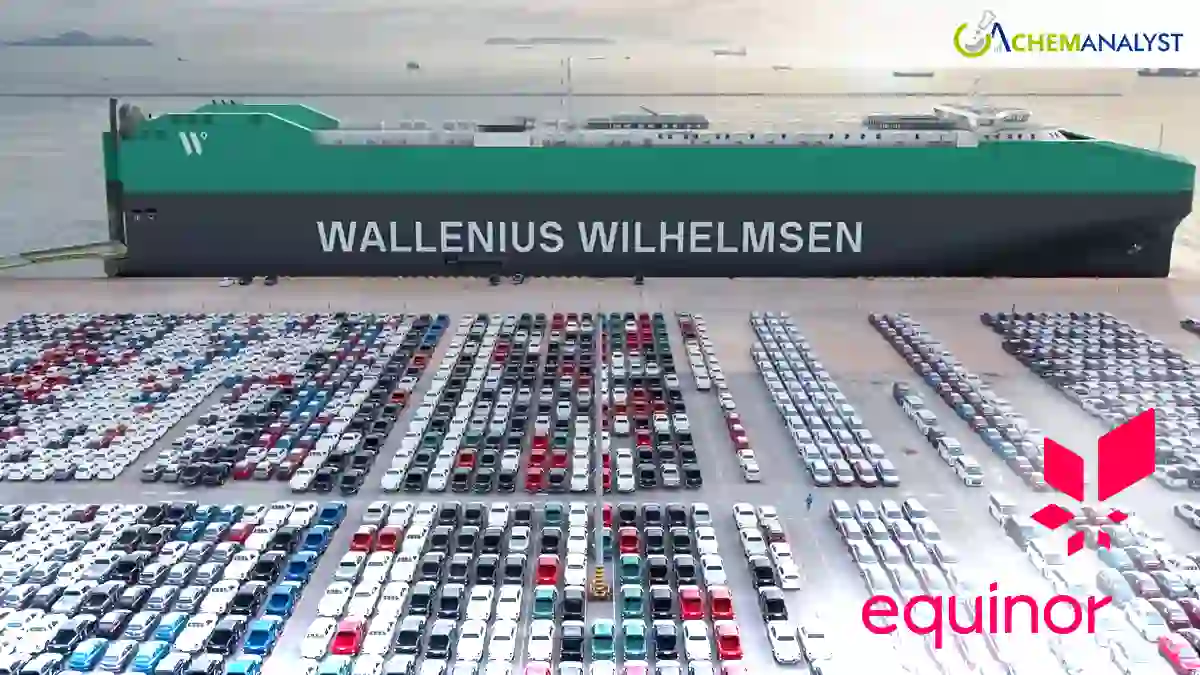
Equinor has signed a two-year agreement to supply bio-methanol to Wallenius Wilhelmsen, marking another step toward expanding the use of low-carbon fuels in the maritime sector. The partnership reflects the growing interest among shipping companies in adopting cleaner fuel alternatives as the industry works toward reducing greenhouse gas emissions and meeting global climate targets.
Under the agreement, bio-methanol produced and supplied by Equinor will be used to power vessels operated by Wallenius Wilhelmsen. These vessels are responsible for transporting automobiles, heavy machinery, and other cargo from manufacturing locations to markets around the world. Wallenius Wilhelmsen is widely recognized as a leader in roll-on/roll-off (RoRo) shipping and vehicle logistics, and the company plans to use the fuel in its next generation of dual-fuel ships capable of running on both conventional marine fuels and methanol.
As part of the arrangement, Wallenius Wilhelmsen will receive bio-methanol bunkering supplies at two major European maritime hubs: Port of Zeebrugge and Port of Antwerp. Deliveries are expected to begin in late 2026. These ports play a critical role in European shipping networks, making them strategic locations for scaling the adoption of alternative marine fuels.
According to Alex Grant, Senior Vice President of Crude, Products and Liquids at Equinor, demand for bio-methanol in shipping continues to grow as companies seek practical and scalable solutions to decarbonize their fleets. He noted that the agreement with Wallenius Wilhelmsen represents another meaningful step in expanding the availability of bio-based methanol for marine applications. Equinor has already established similar supply arrangements with major shipping companies such as Maersk and Norwegian Cruise Line, and the company is currently pursuing additional agreements covering both bio-methanol and conventional methanol supply.
For Wallenius Wilhelmsen, the use of bio-methanol is expected to significantly reduce greenhouse gas emissions from its shipping operations. This supports the company’s broader objective of delivering net-zero logistics solutions for its customers, particularly those in the automotive and industrial sectors who are increasingly seeking low-emission transportation options.
Xavier Leroi, Chief Operating Officer for Shipping Services at Wallenius Wilhelmsen, described the agreement as an important milestone in the company’s sustainability journey. He emphasized that securing a reliable supply of low-carbon bio-methanol strengthens the company’s ability to decarbonize ocean transport while offering customers lower-emission end-to-end logistics services. Leroi also highlighted the importance of industry partnerships in scaling alternative fuels and turning sustainability commitments into real operational changes.
Equinor’s bio-methanol supply will combine methanol produced at the company’s facility in Tjeldbergodden with certified biogas credits derived from captured biogas generated from manure and other biomass sources. This system aligns with the sustainability requirements of the EU Renewable Energy Directive.
Production is based on a mass-balance approach, meaning biomethane injected into the gas grid is used to account for the renewable component of the methanol production process. This method allows existing infrastructure and plants to produce bio-methanol without requiring entirely new facilities. In addition to enabling faster scaling of production, the approach reduces pressure on land and natural resources while helping capture methane emissions that would otherwise be released from untreated manure and organic waste.
Through initiatives like this partnership, the maritime industry continues to explore practical pathways for lowering emissions while maintaining global trade and logistics efficiency.








 About ChemAnalyst
Leave a Comment
Comments (0)