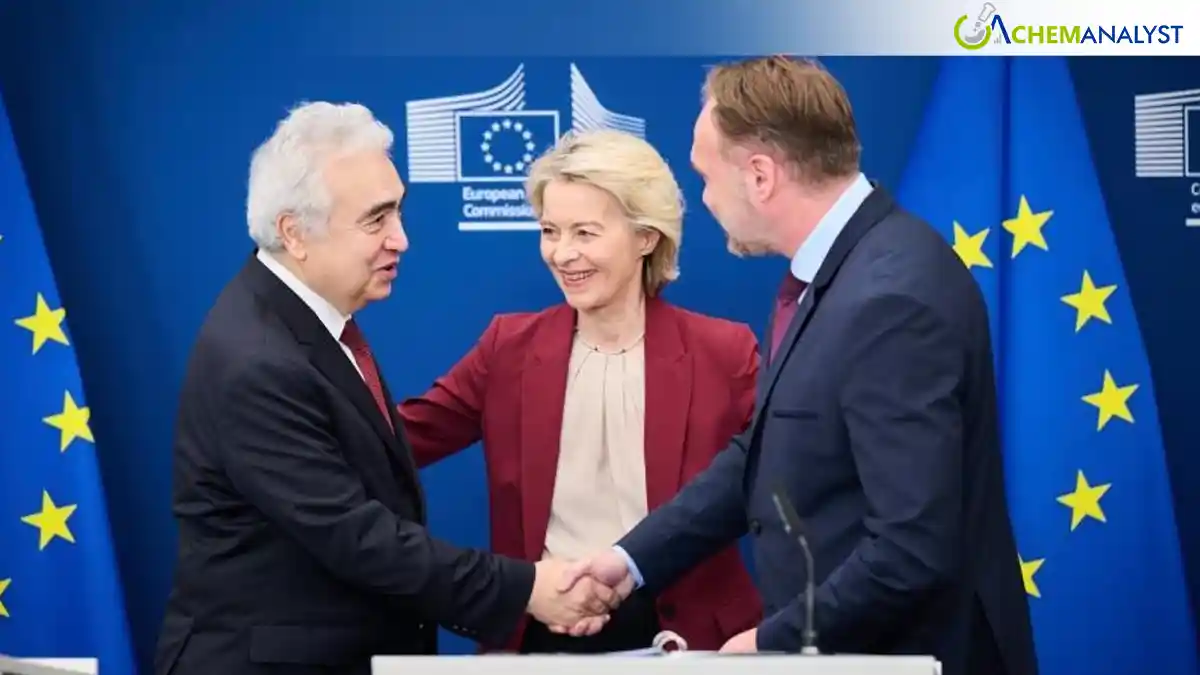
The European Union has reached a landmark provisional political agreement that will permanently halt the import of Russian natural gas and initiate a complete phaseout of Russian oil supplies. This joint decision by the European Parliament and the Council marks a transformative shift in Europe’s energy strategy, aiming to eliminate the EU’s long-standing dependence on a supplier that has repeatedly disrupted energy stability, used energy as a tool of pressure, and undermined the region’s economic security. In alignment with the REPowerEU roadmap, removing Russian fossil fuels from the EU’s energy mix is seen as a critical milestone toward strengthening Europe’s autonomy, competitiveness, and resilience while ensuring greater stability in energy markets.
European Commission President Ursula von der Leyen emphasized the historic nature of the agreement, stating that Europe is now decisively stepping into a future free from Russian energy control. She highlighted that the REPowerEU plan not only protected the bloc during the most severe energy crisis in recent decades but also enabled an exceptionally rapid transition away from Russian fossil fuels. By permanently stopping Russian energy imports, she noted, the EU is reducing the financial resources available to Russia’s war efforts, supporting Ukraine, and opening doors to new energy partnerships and technological possibilities.
Permanent Ban on Russian Gas Imports
Under the new framework, Russian gas imports will be gradually but irreversibly discontinued. Liquefied natural gas (LNG) imports will end by December 31, 2026, while pipeline gas imports must cease by September 30, 2027. For countries facing difficulty in reaching required gas storage levels, a limited extension until October 31, 2027 is possible.
Specific timelines have also been established for different categories of contracts:
• Short-term supply contracts signed before June 17, 2025 will face a ban beginning April 25, 2026 for LNG and June 17, 2026 for pipeline gas.
• Long-term LNG contracts concluded before June 17, 2025 will be prohibited starting January 1, 2027, aligning with sanctions under the EU’s 19th package.
• Long-term pipeline gas contracts may continue only until September 30, 2027, unless a Member State requires extended time to meet storage obligations, in which case the ban would apply from November 1, 2027.
Any amendments to existing contracts will only be allowed for clearly defined technical purposes and must not increase gas volumes or pricing.
To prevent circumvention, the agreement includes strict monitoring, transparency requirements, and enhanced traceability mechanisms. Imports permitted during the transition period will require prior authorization and submission of detailed data to confirm that quantities do not exceed historical contractual levels.
Coordinated Phaseout of Russian Fossil Fuels
Member States must submit national diversification strategies by March 1, 2026, detailing how they will diversify gas and oil sources. They must also notify the Commission of any existing Russian supply contracts or national bans. The Commission will review these plans and may issue recommendations within three months of receiving them.
To further enforce compliance, the Regulation introduces monitoring and information-sharing obligations among authorities. The Commission, together with ACER, EPPO, and OLAF, will assess implementation, track progress, and guard against fraud or attempts to bypass restrictions.
The EU remains committed to ending all remaining Russian oil imports by the end of 2027, as stated in the Versailles Declaration. A legislative proposal to formalize an oil import ban is expected early next year.







Leave a Comment
Comments (0)