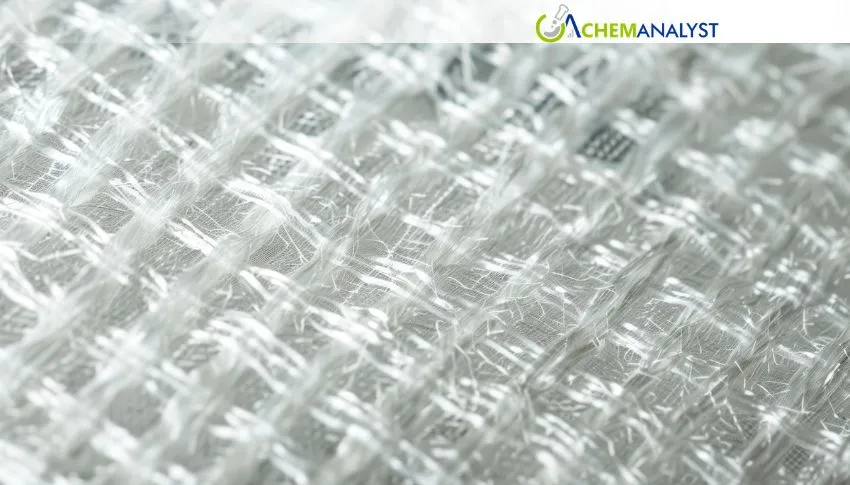
The European glass fiber market staged a strong recovery during June as E-glass fiber CFR Hamburg prices increased 10.19% month-on-month, reversing the weakness observed earlier in the second quarter. The rally was primarily driven by the delayed impact of the European Commission's anti-dumping measures announced on 15 April 2026, which fundamentally changed import economics once newly contracted cargoes began arriving in Europe. While the duties were introduced in mid-April, much of the material delivered during May had already been purchased under earlier commercial agreements. By June, however, replacement cargoes increasingly reflected the higher duty structure, tightening supply and lifting glass fiber prices across the region.
The Commission imposed definitive anti-dumping duties of 11.0% on imports from Egypt, 11.8% on imports from Bahrain, and between 15.3% and 25.4% on imports from Thailand, following an investigation that concluded these products were being sold at unfairly low prices and causing injury to European manufacturers. The affected countries collectively account for approximately 200,000 tonnes of imports, representing nearly 20% of the European Union's annual glass fiber consumption of around one million tonnes. Industry representatives also noted that Egyptian products now face a combined duty burden exceeding 24% after incorporating existing anti-subsidy measures, substantially reducing their pricing advantage in the European market.
Import costs were further supported by logistics. Freight rates on the Shanghai–North Europe corridor remained elevated during June following disruptions in global container availability and continued rerouting around the Red Sea, increasing replacement costs for Asian glass fiber cargoes. Longer transit times and higher insurance costs reduced the competitiveness of imported material, allowing European producers greater pricing power despite steady domestic production.
Demand fundamentals also improved compared with earlier months. The European glass fiber industry continued to benefit from resilient activity in renewable energy projects, where continuous filament glass fiber remains a critical reinforcement material for wind turbine blades. The European Commission has identified glass fiber as a strategic industrial input supporting the energy transition, alongside its extensive use in automotive lightweighting, electrical insulation, electronics, marine structures, and construction composites. These downstream sectors gradually increased procurement during June as buyers sought to secure material before further import-cost escalation.
Looking ahead, July is expected to remain supportive for the glass fiber market. The anti-dumping duties are now fully embedded within new import contracts, meaning lower-priced material from Egypt, Bahrain, and Thailand will become progressively less competitive. European producers are therefore expected to retain improved pricing discipline as import supply tightens further. Although construction demand is likely to remain mixed, continued investment in wind energy, automotive composites, electrical equipment, and advanced manufacturing should sustain healthy demand for glass fiber.







 About ChemAnalyst
Leave a Comment
Comments (0)