Global Glass Fiber Market Size and Growth Forecast
Global Glass Fiber Market is projected to grow from USD 5993 million in 2025 to USD 10450 million by 2036, registering a CAGR of 5.17% during the forecast period. Glass fiber is a highly versatile inorganic non-metallic material manufactured by melting a precise blend of raw materials—predominantly silica sand, limestone, soda ash, and alumina-rich kaolin clay—in a high-temperature furnace. Its fundamental chemistry and manufacturing process closely mirror the production of traditional silicate float glass, but rather than casting or floating the molten matrix into solid flat panes, the process replaces traditional forming with continuous high-velocity extrusion, drawing the melt through microscopic orifices in heated platinum-rhodium alloy bushings to yield extremely fine, flexible filaments. These engineered filaments present immense competitive advantages over traditional structural alternatives such as steel, aluminum, and unreinforced plastics by delivering exceptional tensile strength-to-weight ratios, outstanding thermal resistance with minimal thermal expansion under high heat, and superior electrical insulation. Furthermore, glass fiber provides excellent barrier properties against moisture and severe chemical corrosion, alongside significant processing benefits that allow for seamless integration and wetting into various polymer matrices via high-speed compounding, continuous pultrusion, and injection molding. The escalating demand for these advanced reinforcements is deeply rooted in strong macroeconomic drivers, particularly the rapid industrialization and robust manufacturing expansion across the Asia-Pacific region. This sustained consumption is heavily propelled by sweeping transitions toward sustainable energy infrastructure, which require vast quantities of resilient composites for wind turbine blades, alongside stringent global emission mandates forcing the automotive, aerospace, and commercial transportation sectors to prioritize intensive lightweighting initiatives without compromising structural integrity.
Glass Fiber Applications in Packaging and Construction Industries
The dominant end-use industries for glass fiber are the automotive and construction sectors, where the material is extensively utilized to manufacture lightweight composite vehicle components and high-performance structural insulation owing to its exceptional tensile strength, remarkable thermal resistance, and superior stiffness-to-weight ratio. Demand for this advanced material is heavily propelled by the transportation industry's urgent pursuit of vehicle lightweighting—a technical necessity to enhance fuel efficiency and maximize the operational battery range of electric vehicles—alongside surging consumer and industrial requirements for energy-efficient building materials that minimize heat loss. Furthermore, the material's inherent corrosion resistance and dimensional stability offer distinct technical superiority over traditional metals, while its indispensable role in fabricating durable wind turbine blades aligns seamlessly with broader sustainability mandates and the accelerating transition toward renewable energy infrastructure. Driven by these intersecting requirements for structural reliability and environmental efficiency, the glass fiber industry is positioned for robust expansion, characterized by increasing market penetration across core industrial segments and expanding adoption in emerging applications requiring advanced, high-performance composite solutions.
Global Glass Fiber Market Segmentation by Resin Type and End-Use Application
The global glass fiber market is primarily segmented by glass type into E-glass, ECR-glass, S-glass, AR-glass, and specialty glasses, as well as by end-use industry, which encompasses building and construction, automotive and transportation, wind energy, electrical and electronics, and aerospace. Within this analytical landscape, E-glass utilized in the building and construction sector firmly holds the leading position in the market, a dominance fundamentally attributed to the material's unparalleled cost-effectiveness, excellent electrical insulation properties, robust chemical stability, and widespread industrial adoption for manufacturing corrosion-resistant structural reinforcements and thermal insulation panels. While these traditional infrastructure applications account for the vast majority of the market volume, the wind energy and advanced automotive segments are rapidly emerging as the fastest-growing categories with the highest forward-looking economic potential. This accelerated expansion is intensely driven by surging demand for specific, high-performance applications such as extended wind turbine blades, electric vehicle (EV) battery enclosures, and lightweight chassis components, where the precisely engineered silicate composition of the fibers provides an exceptional tensile strength-to-weight ratio, superior mechanical fatigue resistance, and outstanding thermal dimensional stability, all of which are critical technical prerequisites for optimizing vehicular range, enhancing energy conversion efficiency, and meeting stringent global carbon reduction mandates.
Asia Pacific's Dominant Role in the Global Glass Fiber Market
The Asia-Pacific region currently dominates the global landscape for the glass fiber market, holding the premier position in both manufacturing output and overall geographical consumption. This undisputed territorial leadership is heavily propelled by aggressive, state-backed industrial policies across the continent, including targeted government subsidies for renewable energy infrastructure and robust "Make in India" manufacturing initiatives that heavily incentivize the localized production of advanced materials. Complementing these vital regulatory drivers is a strong regional market sentiment fueled by rapid urbanization, soaring middle-class disposable income, and surging industrialization, which together generate an immense domestic demand for highly durable, lightweight structural materials to support massive infrastructure overhauls. Bolstering this geographic advantage is the region's intense commitment to research and development, characterized by strategic capital investments aimed at optimizing energy-intensive furnace efficiencies and scaling up high-throughput, cost-effective manufacturing technologies. As a direct result of these localized economic and technological drivers, the Asia-Pacific territory is rapidly accelerating the diversification of glass fiber applications, pushing the material far beyond its conventional utility in basic civil construction and propelling its integration into highly advanced, cutting-edge sectors such as next-generation electric vehicle lightweighting and ultra-long offshore wind turbine blade fabrication, thereby cementing the region's fundamental role as the primary engine for the global evolution of this chemical material.
Recent Developments and Strategic Initiatives (2025)
The global glass fiber market continues to demonstrate resilience, characterized by sustained capital expenditure and strategic capacity additions designed to meet growing demand across the construction, renewable energy, and automotive sectors. Reflecting this positive momentum, Owens Corning announced in late 2024 a significant investment to construct a new fiberglass insulation production line at its Kansas City, Kansas, manufacturing facility. Slated to commence operations in 2027, this brownfield expansion will increase the capacity of the company's existing portfolio by producing both light and heavy-density fiberglass products while integrating advanced environmental controls for improved energy efficiency. Concurrently, major manufacturers across the broader market are focusing on process innovation to develop high-modulus and eco-friendly glass fibers that support the lightweighting requirements of electric vehicles and the structural integrity of next-generation wind turbine blades. Through these targeted investments and continuous technological advancements, players in the glass fiber industry are strategically positioning themselves to secure localized supply chains and reliably fulfill the sustained global demand for high-performance composite materials.
Key Players in the Global Glass Fiber Market
Major players in the Global Glass Fiber market are Chongqing Polycomp International Corp. (CPIC), Jushi Co., Ltd., Owens Corning, Taishen Fiber Glass Inc., Others (AGY Holdings, Nippon Sheet Glass Company Limited, etc.)
Years considered for this report:
Historical Period: 2015-2024
Base Year: 2025
Estimated Year: 2026
Forecast Period: 2026-2036
This report will be delivered through an online digital platform with a one-year subscription, along with quarterly updates.
Objective of the Study:
• To assess the demand-supply scenario of the Glass Fiber, covering production, demand, and supply at the global level.
• To analyze and forecast the market size of Glass Fiber
• To classify and forecast the Global Glass Fiber market based on end-use industries and regional distribution.
• To examine competitive developments in the global Glass Fiber market, such as expansions, mergers & acquisitions, and other strategic initiatives.
Research Methodology: How Was the Glass Fiber Market Data Collected?
To extract data for the Global Glass Fiber market, primary research surveys were conducted with Glass Fiber manufacturers, suppliers, distributors, wholesalers, and traders. During the interviews, respondents were also asked about their competitors.Through this approach, ChemAnalyst was able to identify and include manufacturers that could not be captured through secondary research due to its limitations.Moreover, ChemAnalyst analyzed various market segments and projected a positive outlook for the Global Glass Fiber market over the coming years.
ChemAnalyst calculated the global demand for Glass Fiber by analyzing the volume consumed by end-user industries. The forecast was developed based on the growth rates of these end-use industries. These values were obtained from industry experts and company representatives and were externally validated by analyzing the historical sales data of respective manufacturers to determine the overall market size. Additionally, various secondary sources, such as company websites, association reports, and annual reports, were reviewed by ChemAnalyst.
Key Target Audience for This Report
• Glass Fiber manufacturers and other industry stakeholders
• Organizations, forums, and alliances related to Glass Fiber distribution
• Government bodies, including regulatory authorities and policymakers
• Market research organizations and consulting firms
The study provides insights into several critical ques tions relevant to industry stakeholders, including Glass Fiber manufacturers, customers, and policymakers. It also helps identify high-growth segments over the coming years, thereby supporting stakeholders in making informed investment decisions and facilitating strategic expansion.
Report Scope and Market Segmentation Framework
In this report, the Global Glass Fiber market has been segmented into the following categories. In addition, key industry trends have been detailed below:
Attribute
Details
Market size Value in 2025
USD 5993 Million
Market size Value in 2036
USD 10450 Million
Growth Rate
CAGR of 5.17% from 2026 to 2036
Base year
2025
Estimated year
2026
Historical Data
2015 - 2024
Forecast period
2027 - 2036
Quantitative units
Demand in thousand tonnes and CAGR from 2026 to 2036
Report coverage
Industry Market Size, Capacity by Company, Capacity by Location, Operating Efficiency, Production by Company, Demand by Type, Demand by End- Use, Demand by Region, Demand by Sales Channel, Demand-Supply Gap, Company Share, Manufacturing Process.
Segments covered
By End-Use: (Building & Construction, Transportation, Industrial Application, Consumer Goods, Renewable Goods, and Others) By Sales Channel: (Direct Sale and Indirect Sale)
Regional scope
North America, Europe, Asia Pacific, Middle East and Africa, and South America.
Market Data & Insights
Table of Content
1. Industry Market Size
It is an essential metric for market analysis, as it provides insights into the overall size and growth potential of Glass Fiber market in terms of value and volume.
2. Capacity By Company
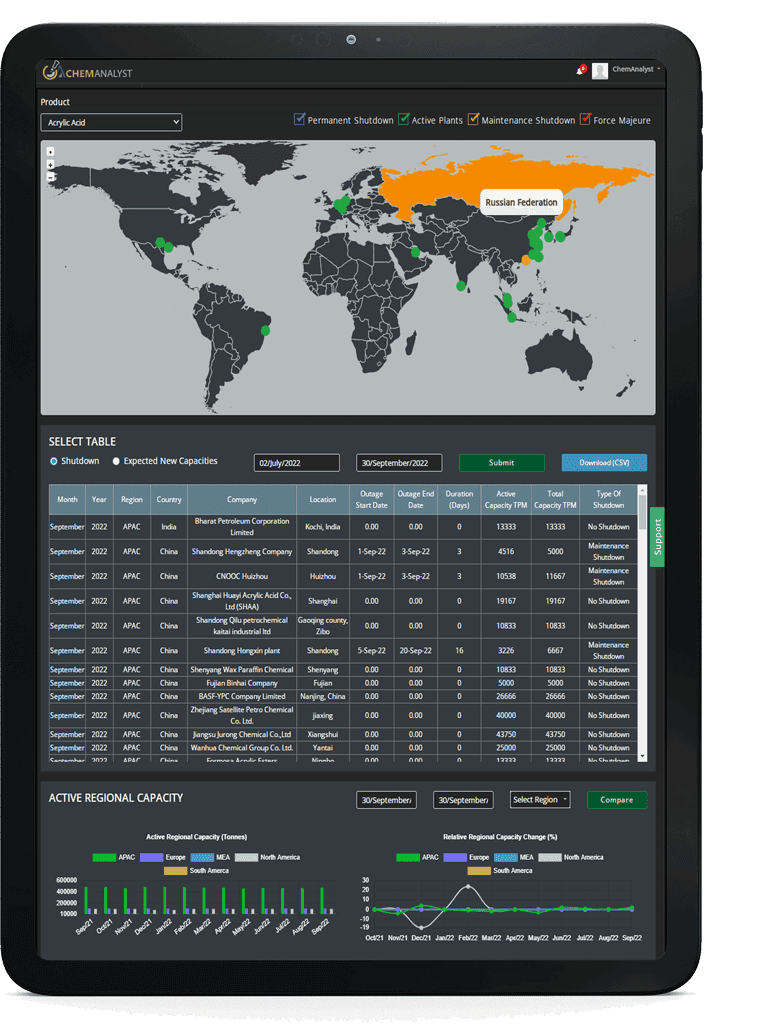
On our online platform, you can stay up to date with essential manufacturers and their current and future operation capacity on a practically real-time basis for Glass Fiber.
3. Capacity By Location
To better understand the regional supply of Glass Fiber by analyzing its manufacturers' location-based capacity.
4. Plant Operating Efficiency
To determine what percentage manufacturers are operating their plants or how much capacity is being currently used.
5. Production By Company [Quarterly Update]
Study the historical annual production of Glass Fiber by the leading players and forecast how it will grow in the coming years.
6. Demand by Type
Learn about the various types of Glass Fiber: Glass Wool, Chopped Strands, Roving, and Yarns, and Others, and their demands. It will allow you to choose which Type to concentrate on when designing your strategy.
7. Demand by End- Use [Quarterly Update]
Discover which end-user industry (Building & Construction, Transportation, Industrial Application, Consumer Goods, Renewable Goods, and Others) are creating a market and the forecast for the growth of the Glass Fiber market.
8. Demand by Region
Analyzing the change in demand of Glass Fiber in different regions, i.e., North America, Europe, Asia Pacific, Middle East and Africa, and South America, that can direct you in mapping the regional demand.
9. Demand by Sales Channel (Direct and Indirect)
Multiple channels are used to sell Glass Fiber. Our sales channel will help in analyzing whether distributors and dealers or direct sales make up most of the industry's sales.
10. Demand-Supply Gap
Determine the supply-demand gap to gain information about the trade surplus or deficiency of Glass Fiber.
11. Company Share
Figure out what proportion of the market share of Glass Fiber is currently held by leading players across the globe.
12. Manufacturing Process
Discover insights into the intricate manufacturing process of Glass Fiber.
I am satisfied with overall performance of ChemAnalyst. Weekly updates before the final report were especially helpful and reassuring. Additional requests on the interim and/or final reports were handled in a swift and professional manner
Mr.Shin Dosho
Member - Board of Directors
Osaka Gas Co. Ltd
Disruption Tracker
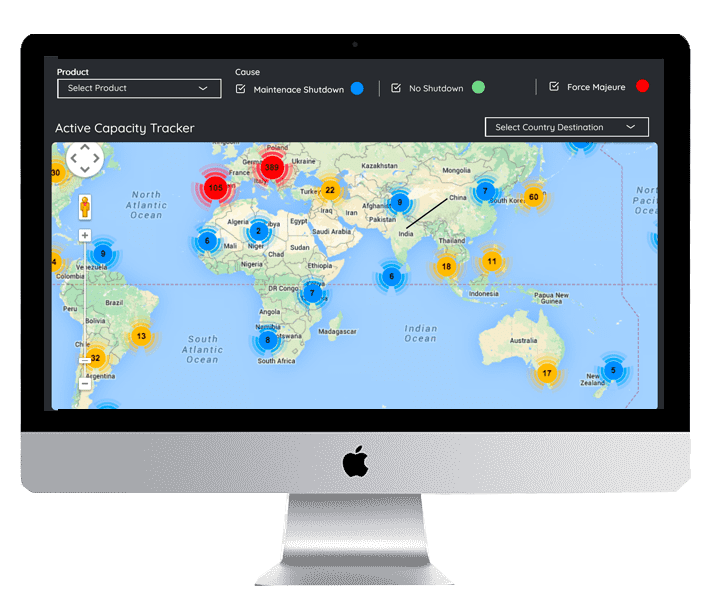
Disruption Tracker reflect the major shutdown on monthly basis which will help you in
tracking the inventory management and smooth functioning of business. Unforeseen shutdowns and disruptions
resulting in a loss of production capacity to impact the bottom line. The capacity tracker provides industries
with a global view of production and consumption capacity loss that reflects the corresponding conversion factors.
It also highlights the immediate impact on supply due to planned and unplanned outages as well as upcoming start-up
of new capacities. Additionally, it emphasizes how each shutdown—whether due to a maintenance turnaround or a case
of force majeure, affects the plant's operating rate for the given duration. Disruption tracker gives a clear insight
into the worldwide outages affecting the commodity of interest. With every shutdown, it also reflects the impact on
supply of the product in the market at a Global level.
The Global Glass Fiber Market was valued at USD 5993 million in 2025 and is projected to reach USD 10450 million by 2036, growing at a CAGR of 5.17% during the forecast period.
The report covers market sizing and forecasting (2015–2036), segmentation, regional analysis, competitive landscape, and recent strategic developments. It also offers solutions including Custom Research for tailored business strategies.
Our Solutions
Custom Research
We at ChemAnalyst provide tailor-made solutions to our clients based on their requirements which help them in building and expanding their business by developing customized strategy such as sales strategy, GTM Strategy, product portfolio and new product development. Our dedicated team helps clients in getting the best solution for their requirements. We at ChemAnalyst look forward to serving our clients for long term association.
Techno Economic Feasibility Report (TEFR)
ChemAnalyst provide TEFR reports which include market sizing, plant cost (ISBL and OSBL units), financial modelling, covering all the major financial calculations and ratios including production cost, IRR, major technology, licensing fee (if required), and others fixed and variable costs. TEFR reports will help the client to build greenfield project as well as brownfield expansion for a specific geography. Our Team of experts have delivered multiple TEFR reports which help clients in moving ahead of their business competition by grabbing the opportunity and expanding their business portfolio.
Price Benchmarking
Pricing benchmark report provides real-time data perpetuating current market scenarios, in a world that is changing at a rapid pace, having real-time prices is an imperative to make impactful insights and thereby informed decisions. The Price Benchmarking report provides pricing data for an individual market, or group of markets, which can be converted into localized insights and comparable listings. Benchmarking Reports help clients to make informed decisions by construing the data on several filters: region, country, category, grade and subsequently increasing their brand presence. Clients majorly require pricing benchmarks when they opt for a competitive pricing strategy.
We use cookies to deliver the best possible experience on our website. To learn more, visit our
Privacy Policy.
By continuing to use this site or by closing this box, you consent to our use of cookies.
More info.