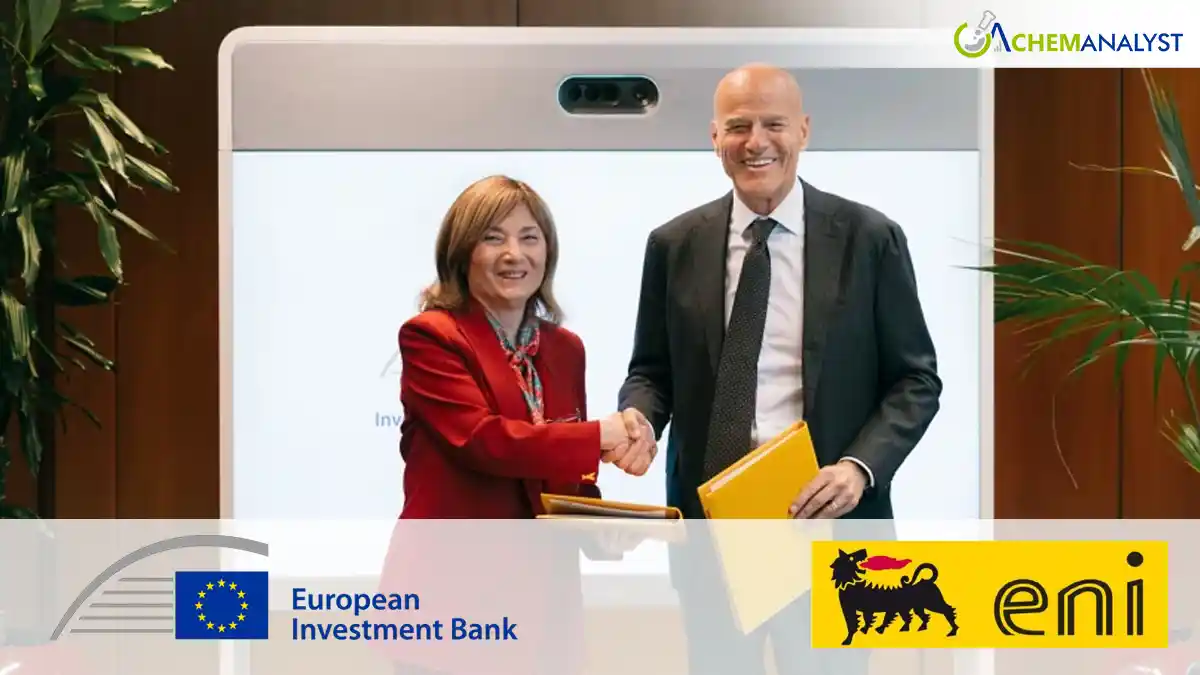
The European Investment Bank and Eni have formalized a major financing agreement worth €500 million to support the transformation of a traditional refinery into a modern biorefinery in Sannazzaro de’ Burgondi, located in Italy’s Pavia province. The 15-year loan agreement was signed by EIB Vice-President Gelsomina Vigliotti and Eni Chief Executive Officer Claudio Descalzi, highlighting a shared commitment to advancing cleaner energy solutions and accelerating Europe’s transition to sustainable fuels.
The project centers on upgrading selected units of the Sannazzaro refinery, particularly the Hydrocracker (HDC2) unit, through the implementation of Ecofining™ technology. In addition, a new pre-treatment facility will be constructed to process waste-based raw materials such as used cooking oil, animal fats, and residues from the agri-food sector. These materials will serve as the primary feedstock for Enilive, Eni’s subsidiary focused on sustainable mobility solutions, enabling the production of hydrotreated vegetable oil (HVO), a renewable and low-emission biofuel.
Using its proprietary Ecofining™ process, Enilive produces HVO from renewable sources in compliance with European sustainability regulations. This fuel can be used in its pure form in compatible engines and is already distributed across more than 1,600 Enilive service stations throughout Europe. Beginning in 2028, the upgraded Sannazzaro facility is expected to manufacture both HVO diesel and sustainable aviation fuel (SAF), with an estimated annual output of approximately 550,000 tonnes.
By leveraging existing infrastructure and utilities at the site, the project will integrate renewable fuel production alongside conventional refining operations. This hybrid approach is designed to lower greenhouse gas emissions in transportation while supporting the decarbonisation of hard-to-abate sectors such as aviation, where SAF currently represents the most viable alternative to fossil fuels. Furthermore, the initiative will diversify fuel supply options, strengthen energy resilience across Italy and the European Union, and contribute to the goals of the REPowerEU strategy by increasing domestic biofuel production capacity.
This agreement builds on a similar €500 million financing deal signed in July 2025 for the conversion of Eni’s Livorno refinery. Together, these projects form part of Enilive’s broader strategy to expand biofuel production capacity to 5 million tonnes annually by 2030, including over 2 million tonnes dedicated to SAF. Currently, Enilive operates biorefineries in Venice and Gela, as well as the St. Bernard Renewables facility in the United States. Additional plants are planned or under construction in Livorno, Malaysia, South Korea, and Priolo in Sicily, the latter in collaboration with Q8.
According to Vigliotti, the financing reflects strong institutional backing for projects that combine environmental sustainability with industrial development, particularly in reducing emissions from aviation. Descalzi emphasized that the agreement demonstrates the strength of Eni’s long-term energy transition strategy, which integrates advanced technologies with scalable industrial operations and a growing customer base. He also noted that biofuels are essential for reducing emissions across multiple transport sectors, including road, maritime, rail, and air travel.
Demand for SAF is projected to increase significantly from 2030 onward, largely driven by regulatory frameworks such as the ReFuelEU Aviation Regulation. This anticipated growth supports the long-term economic and technical viability of the Sannazzaro project. At the same time, HVO biofuels are expected to play a crucial role in delivering immediate emissions reductions across transport systems.
The Sannazzaro conversion aligns with Eni and Enilive’s broader strategy to scale up biofuel production in response to tightening environmental regulations, including targets outlined in the Renewable Energy Directive (RED III). Globally, biofuels accounted for about 4% of transport energy consumption in 2024, but this share is expected to rise to 9% by 2035 and 12% by 2050, according to projections from the International Energy Agency’s Net Zero scenario.







 About ChemAnalyst
Leave a Comment
Comments (0)