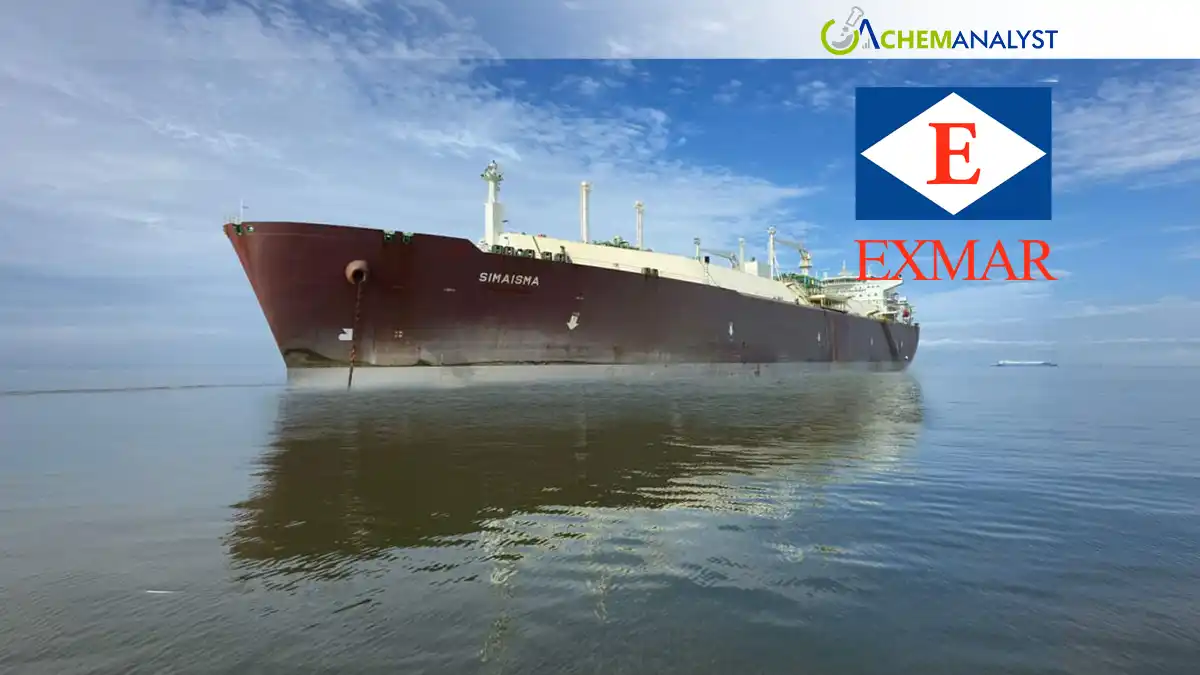
EXMAR has strengthened its commitment to supporting the maritime industry's transition toward cleaner fuels by taking delivery of the 146,000-cubic-meter LNG carrier SIMAISMA. The vessel has been secured under an initial seven-year charter agreement with a leading industry partner and will soon undergo a scheduled dry-docking process. During this period, the ship will be modified to operate as a Floating Transshipment Unit (FTU), specifically designed to serve the growing LNG bunkering market.
Once the conversion is complete, the FTU will act as an offshore LNG storage and transfer facility. Large cargoes of liquefied natural gas delivered by conventional LNG carriers will be transferred to the FTU, where smaller, specialized LNG bunkering vessels can load LNG before supplying it to ships powered by LNG. This logistics model is expected to improve the efficiency of LNG distribution while lowering operational costs associated with marine fuel supply.
The deployment of the FTU reflects EXMAR's strategy to expand infrastructure that supports the increasing adoption of LNG as a marine fuel. By creating an intermediate storage and transfer hub, the company aims to simplify the LNG bunkering process, reduce vessel waiting times, and improve supply chain flexibility for shipping companies seeking cleaner fuel alternatives.
EXMAR Chief Executive Officer Carl-Antoine Saverys emphasized that the project represents another milestone in the company's long-standing involvement in the LNG sector. He stated that EXMAR is pleased to support its customer in accelerating the use of LNG across the shipping industry through an efficient and cost-effective logistics solution. According to Saverys, the FTU concept significantly reduces the complexity and expense of LNG bunkering operations while leveraging EXMAR's nearly five decades of expertise in LNG transportation and infrastructure.
He further noted that the company expects to deploy additional FTUs in the future as demand for LNG-powered vessels continues to grow. Such investments are intended to strengthen LNG bunkering networks and enhance fuel accessibility at major shipping routes and ports.
As global shipping regulations become increasingly focused on lowering greenhouse gas emissions, LNG has emerged as an important transitional fuel due to its lower emissions profile compared with conventional marine fuels. Infrastructure projects such as EXMAR's FTU are expected to play a crucial role in expanding LNG availability, supporting shipowners in meeting environmental regulations, and facilitating the maritime sector's gradual transition toward lower-carbon energy solutions.
Impact on Product
The development is expected to strengthen the LNG bunkering ecosystem by improving fuel availability, reducing transportation and storage costs, and enhancing supply chain efficiency. Greater accessibility to LNG will encourage wider adoption of LNG-powered vessels, supporting demand growth for liquefied natural gas in the marine sector. The FTU model could also stimulate further investments in LNG infrastructure, reinforcing LNG's position as a preferred transitional marine fuel while contributing to lower emissions across global shipping operations.







Leave a Comment
Comments (0)