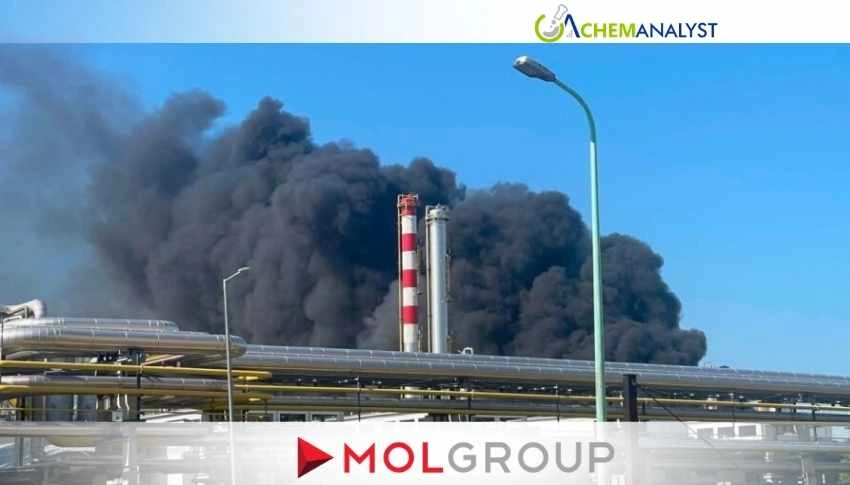
A pipeline explosion occurred at the MOL Group petrochemical facility in Tiszaújváros, Hungary, during the restart of its Olefin 1 unit on May 22, 2026. The incident triggered a major fire that was later brought under control by emergency response teams. The accident resulted in the death of one worker, while several others sustained injuries and were rushed to nearby hospitals for medical treatment. Authorities confirmed that the affected area was immediately secured to allow a detailed investigation into the cause of the explosion.
According to preliminary findings, the blast may have been linked to a malfunction in a compressor system during the process of bringing equipment back online. However, officials stated that the exact cause remains under investigation and has not yet been conclusively identified. Authorities also clarified that there are currently no signs of sabotage, cyberattack, or any form of external interference associated with the accident.
Despite the severity of the incident, operations at other units within the large petrochemical complex continue to function normally. Industry sources indicated that no significant disruption to regional petrochemical supply chains is expected at this stage, as unaffected production units remain operational. Nevertheless, the explosion has intensified concerns regarding operational safety and maintenance procedures at one of Central Europe’s key industrial facilities.
The injured workers were transported to nearby medical centers, where several remain under observation and treatment. Hospital officials reported that the injured individuals are in stable condition, although some suffered serious burns and trauma from the explosion and subsequent fire.
The Olefin 1 unit involved in the accident is a major steam cracker facility with an ethylene production capacity of approximately 370,000 metric tons per year. The wider Tiszaújváros petrochemical complex operates two steam crackers with a combined ethylene production capacity of nearly 660,000 metric tons annually, making it one of the most important petrochemical manufacturing hubs in the region.
Industry analysts noted that while production losses may remain limited in the short term, the incident could lead to tighter safety inspections, operational reviews, and temporary maintenance shutdowns across similar facilities in Europe. The accident also highlights the risks associated with restarting large-scale petrochemical units, where pressure systems and compressors must operate under highly controlled conditions.








 About ChemAnalyst
Leave a Comment
Comments (0)