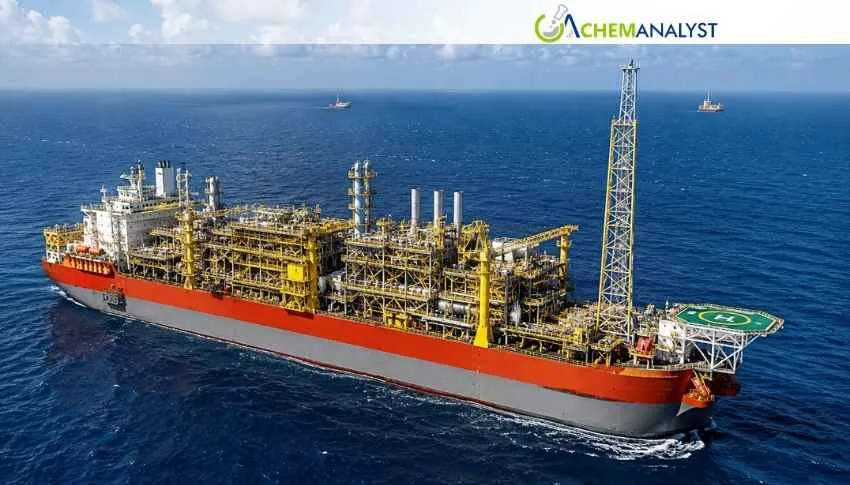
ExxonMobil is advancing plans for a second super-sized Floating Production, Storage, and Offloading (FPSO) vessel dedicated to gas extraction offshore Guyana, signaling a significant shift towards monetizing the country's substantial natural gas reserves. This initiative is part of a broader strategy by ExxonMobil and its partners to develop the prolific Stabroek Block, where numerous oil and gas discoveries have transformed Guyana into a burgeoning energy powerhouse. The focus on gas-driven projects, such as the upcoming Longtail and Haimara developments, aims to bolster Guyana's energy security and drive economic diversification.
The first major gas-driven project, Longtail, is anticipated to be Guyana's eighth development in the Stabroek Block. Its FPSO is designed with a processing capacity of approximately 1.2 billion cubic feet of gas per day and 250,000 barrels of condensate per day. Following this, the ninth phase, known as Haimara, is slated to be the second natural gas-focused development, with production expected to commence in 2031. This project envisions an FPSO capable of producing 1 to 1.5 billion cubic feet of gas per day and 160,000 to 220,000 barrels of condensate per day. These projects underscore a concerted effort to utilize Guyana's gas resources beyond the associated gas from oil production.
The primary driver for these gas developments is Guyana's ambitious Gas-to-Energy project. This initiative aims to transport natural gas from offshore fields via a pipeline to an onshore processing facility and power plant. The goal is to significantly reduce domestic electricity costs by up to 50% and enhance the reliability of the power supply, thereby replacing more polluting heavy fuel oil. This project is a critical pillar for Guyana's economic transformation, moving beyond raw resource extraction to building a more robust industrial base.
Economically, these gas projects are set to have profound impacts. By providing affordable and reliable electricity, they are expected to stimulate economic diversification, foster job creation, and attract further industrial investment across various sectors. Guyana's GDP has already seen unprecedented growth due to its oil discoveries, and the gas developments are expected to further accelerate this trajectory, positioning the country as one of the world's fastest-growing economies.
Geopolitically, Guyana's emergence as a significant energy producer, especially with its expanding gas capabilities, is reshaping global energy dynamics. Its stable governance and scalable resources offer an alternative source of supply amidst instability in traditional energy-producing regions, increasing its strategic importance globally. This rise has also attracted attention from major international players and has seen Guyana forging closer ties with nations like Saudi Arabia and the UAE.
From an industry perspective, the acceleration of these large-scale projects demonstrates ExxonMobil's commitment to the Stabroek Block. Companies like SBM Offshore are playing a crucial role in providing the advanced FPSO technology required for these deepwater developments, highlighting significant advancements in offshore engineering and project execution speed. However, the rapid expansion also brings challenges, including the need for robust environmental impact assessments and ensuring equitable distribution of wealth to avoid the "resource curse."








 About ChemAnalyst
Leave a Comment
Comments (0)