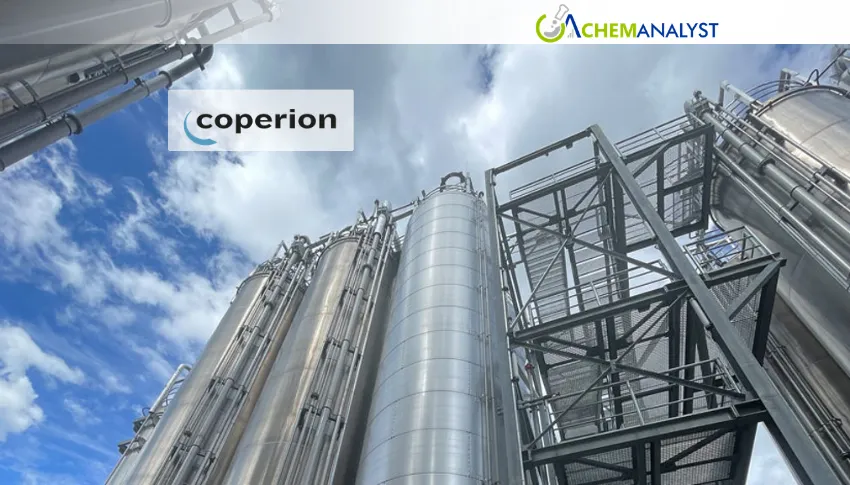
Coperion GmbH, headquartered in Stuttgart, Germany, has achieved a significant milestone in the plastics recycling industry after receiving a Letter of No Objection (LNO) from the U.S. Food and Drug Administration (FDA) for its advanced recycling technology designed for high-density polyethylene (HDPE) and polypropylene (PP). This approval validates that the combination of Coperion’s twin-screw extrusion technology and EcoFresh silo degassing system can effectively produce recycled HDPE (rHDPE) and recycled polypropylene (rPP) suitable for direct food-contact applications.
The FDA’s confirmation represents a major advancement for the circular plastics economy, as it enables recycled materials processed through Coperion’s technology to be used safely in food packaging applications. The company has become the first supplier to offer a complete decontamination solution integrating co-rotating twin-screw extruders with EcoFresh silo degassing technology. This integrated system is capable of handling a broad range of production capacities, from smaller operations to industrial-scale facilities processing up to 6,000 kilograms per hour.
The approval was granted following extensive validation, including challenge testing that demonstrated the system’s ability to remove contaminants from post-consumer HDPE and PP waste streams. The successful evaluation confirmed that the combined technologies achieve the stringent decontamination levels required by the FDA for food-contact materials. As a result, packaging products such as HDPE milk bottles, fruit juice containers, and PP food trays, cups, bowls, and yogurt containers can now be recycled and transformed into new food-grade packaging products.
Producing recycled plastics that meet food safety standards remains one of the most demanding tasks in the recycling sector. Recyclates intended for direct food contact must comply with strict purity and safety regulations, ensuring that any residual contaminants are effectively eliminated. The FDA’s LNO provides recyclers and packaging manufacturers with confidence that materials produced through Coperion’s process satisfy these rigorous requirements.
According to Stefan Lachenmayer, Global Commercial Director Recycling at Coperion, the FDA approval allows recyclers to use rHDPE and rPP produced through the company’s technology in food packaging applications at inclusion rates of up to 100 percent. This capability supports a wide range of packaging uses, including containers designed for products that are frozen, pasteurized, sterilized, or exposed to elevated temperatures. The approval also reinforces the reliability and efficiency of Coperion’s mechanical recycling process in delivering high-quality recycled resins for demanding food-contact applications.
A key factor behind the system’s strong decontamination performance is the synergy between the twin-screw extruder and the EcoFresh degassing unit. During processing, post-consumer plastic waste is fed into the extrusion system through precision gravimetric feeders supplied by Coperion K-Tron. Inside the extruder, the material undergoes melting, intensive mixing, homogenization, and degassing. Leveraging decades of expertise in devolatilization technologies, Coperion has optimized both processing parameters and screw configurations to maximize contaminant removal while maintaining material quality.
Following extrusion, the molten polymer passes through a filtration stage where solid impurities are removed. The purified material is then pelletized before entering the second decontamination stage within the EcoFresh silo degassing unit. This newly standardized technology effectively eliminates low-volatility contaminants, even at relatively short residence times, thereby ensuring compliance with food-contact standards.
To support customers in evaluating the technology, Coperion offers testing services through its Recycling Innovation Center, where recyclers can assess decontamination performance using actual waste streams. In collaboration with the Test Center of Herbold Meckesheim, which specializes in material grinding and washing, the company can replicate the entire recycling workflow—from raw material preparation to final food-grade recyclate production. This comprehensive testing capability allows recyclers to validate process performance before implementing full-scale operations.
By securing FDA recognition for its recycling solution, Coperion has strengthened the prospects for increasing the use of recycled plastics in food packaging while supporting sustainability goals and advancing the transition toward a more circular economy.
Market Impact: The FDA’s Letter of No Objection (LNO) for Coperion’s recycling technology is expected to have a positive long-term impact on the recycled plastics market, particularly for food-grade recycled HDPE (rHDPE) and recycled polypropylene (rPP). The approval increases confidence among recyclers, packaging manufacturers, and brand owners, encouraging greater adoption of mechanically recycled materials in food-contact applications. As demand for sustainable packaging continues to rise, the ability to incorporate up to 100% recycled content in food packaging could significantly expand the market for high-quality recyclates.
From a pricing perspective, the immediate impact on virgin HDPE and PP prices tracked by ChemAnalyst is likely to be limited, as the approval does not directly add substantial polymer production capacity. However, over the medium to long term, increased availability of food-grade rHDPE and rPP could create competitive pressure on virgin resin demand, particularly in the packaging sector. This may moderate price growth for virgin HDPE and PP during periods of balanced supply and demand.
Conversely, prices of food-grade recycled HDPE and recycled PP are expected to remain firm or potentially strengthen due to growing demand from packaging producers seeking regulatory-compliant recycled content. The development also supports circular economy initiatives, which may gradually shift market dynamics toward recycled polymers, reducing dependence on virgin petrochemical feedstocks while enhancing the value of premium recycled plastic grades.







Leave a Comment
Comments (0)