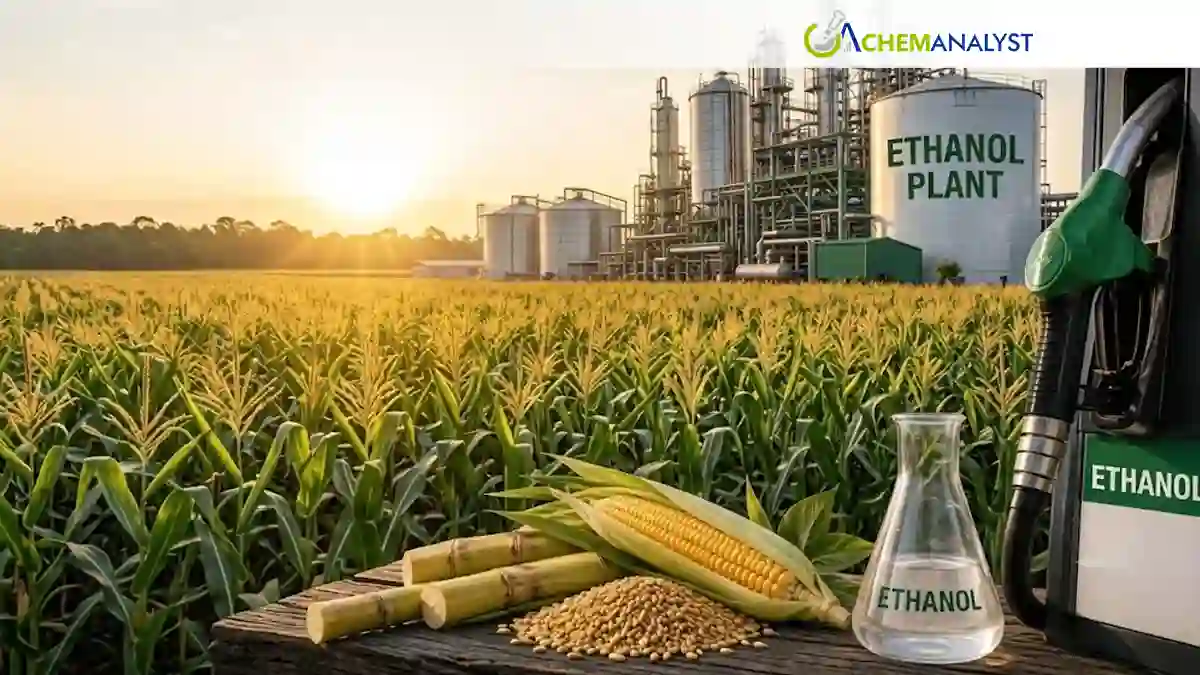
Three major French organizations—VIVESCIA, Roquette, and Siplec E.Leclerc—have entered into a landmark three-year partnership to establish France’s first fully integrated low-carbon ethanol value chain dedicated to road biofuels. The collaboration brings together every stage of the supply chain, from regenerative farming and ethanol production to fuel distribution, with the shared objective of significantly reducing greenhouse gas (GHG) emissions while strengthening France’s domestic biofuel industry.
The partnership combines the expertise of VIVESCIA, one of France’s leading grain cooperative groups, Roquette, a global producer of plant-based ingredients and pharmaceutical excipients, and Siplec E.Leclerc, the energy division of the E.Leclerc retail cooperative. By integrating sustainable agricultural practices with advanced industrial production and an extensive fuel distribution network, the partners aim to create one of the lowest-carbon ethanol supply chains in Europe. Their long-term goal is to achieve GHG emission reductions of up to 100% compared with conventional fossil fuel benchmarks, helping accelerate France’s transition toward cleaner road transportation.
At the agricultural level, VIVESCIA will source wheat through its TRANSITIONS program, launched in 2023 to support farmers in adopting regenerative and low-carbon farming practices. The initiative encourages sustainable cultivation methods over five- to seven-year cycles, promoting improved soil health, enhanced biodiversity, and lower carbon emissions while ensuring farmers receive long-term financial incentives for implementing these practices. Wheat supplied through this program will serve as the feedstock for ethanol production under the partnership.
Roquette will manufacture the ethanol at its production facility in Beinheim, France. The plant already operates using advanced low-carbon technologies, including biomass and geothermal energy, alongside carbon dioxide capture systems that further reduce emissions during production. When combined with sustainably produced wheat from VIVESCIA’s regenerative agriculture program, the resulting ethanol is expected to have one of the smallest carbon footprints currently available in the market. This approach also supports Roquette’s broader decarbonization strategy and aligns with its Science Based Targets initiative (SBTi) climate commitments while meeting increasing customer demand for sustainable fuel solutions.
On the downstream side, Siplec E.Leclerc will distribute the low-carbon ethanol through its nationwide network of 734 service stations. A long-time supporter of ethanol-blended fuels, E.Leclerc has promoted ethanol use in gasoline for over two decades and currently offers E85 Superethanol at more than half of its fuel stations. The ethanol produced under this partnership will be blended into several gasoline grades, including SP95-E5, SP95-E10, and E85, providing motorists with a readily available, lower-carbon alternative without compromising fuel affordability.
The three-year agreement offers long-term stability across the value chain, allowing all participants to make sustained investments in low-carbon production and regenerative agriculture. Over the past two years alone, the TRANSITIONS program has distributed more than €7.2 million to VIVESCIA member farmers, demonstrating the financial benefits of rewarding sustainable agricultural practices. Under the new partnership, support for these farming methods becomes a permanent feature of the ethanol supply chain rather than a temporary initiative.
The complete value chain has also received certification under the 2BSvs sustainability standard, which is officially recognized by the European Commission for biofuel production. This certification ensures that the ethanol meets strict environmental and sustainability requirements throughout every stage of production.
Beyond environmental benefits, the initiative reinforces France’s industrial and energy sovereignty. Domestic ethanol production currently utilizes less than 1% of the country’s agricultural land while supporting nearly 30,000 jobs. In addition to producing renewable fuel, the industry generates valuable co-products for animal feed and reduces dependence on imported energy resources. By strengthening local supply chains and encouraging collaboration between agriculture, industry, and fuel distribution, the partnership aims to establish a resilient, competitive, and sustainable French biofuel ecosystem capable of supporting both climate goals and economic development.
Impact on Product: Ethanol
The partnership between VIVESCIA, Roquette, and Siplec E.Leclerc is expected to strengthen the long-term supply of low-carbon fuel-grade ethanol in France by integrating regenerative wheat farming with low-emission ethanol production and nationwide fuel distribution. Although the agreement is unlikely to create an immediate surge in ethanol output, it will improve supply chain stability and encourage greater production of certified low-carbon ethanol over the next three years. Increased availability of sustainable feedstock and long-term purchase commitments will support investment in production capacity while enhancing the competitiveness of French bioethanol against fossil fuels.
For chemical commodities tracked by ChemAnalyst, this development is expected to exert slightly bearish to stable price pressure on fuel-grade ethanol in the medium to long term, as improved domestic production and supply security reduce dependence on imports and alleviate supply risks. Feedstock demand for sustainably produced wheat may remain firm, but the integrated value chain and efficiency gains are likely to offset cost pressures, keeping ethanol prices relatively stable while supporting broader adoption of renewable fuels.







 About ChemAnalyst
Leave a Comment
Comments (0)