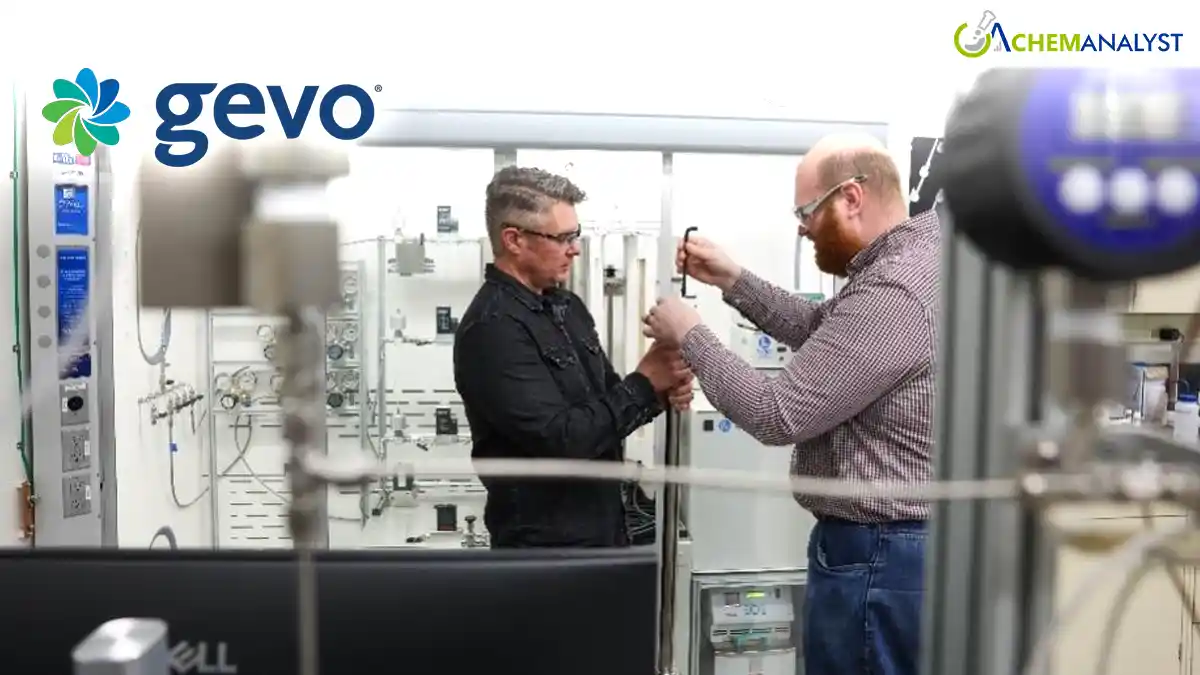
Gevo, a Colorado-based company specializing in advanced biofuels, has entered into an agreement to license two patented catalyst technologies developed by the U.S. Department of Energy’s Oak Ridge National Laboratory (ORNL). These technologies are intended to support the production of sustainable aviation fuel (SAF), a cleaner alternative to conventional jet fuel derived from renewable resources such as plant materials and waste products.
According to Andrew Sutton, a senior scientist in ORNL’s Manufacturing Science Division, this collaboration is designed to accelerate the transition of these catalyst innovations from laboratory-scale experiments to pilot-scale reactor systems. By proving their effectiveness in industrial conditions, the initiative aims to fast-track commercialization within the United States, strengthening domestic aviation fuel production and enhancing the country’s competitiveness in the global energy market.
Sustainable aviation fuel has garnered significant attention from the aviation industry, particularly from the International Air Transport Association, which represents over 80% of global air traffic. Although many airlines have committed to purchasing SAF in large quantities, challenges related to production efficiency and scalability still persist.
To address these challenges, ORNL researchers have developed advanced catalysts capable of converting ethanol into olefins through a single-step process known as ethanol-to-olefins (ETO). Catalysts play a critical role in speeding up chemical reactions and improving overall process efficiency. Olefins produced through this method can then be further processed into SAF, offering a streamlined and cost-effective pathway for fuel production.
Beyond their role in aviation fuel, olefins are also essential components in the manufacturing of various industrial and consumer products, including plastics, solvents, and surfactants. With the global plastics market projected to exceed $1.3 trillion by 2033, the demand for olefins is expected to remain strong, further highlighting the value of this technology.
Ethanol, typically derived from agricultural crops or cellulosic biomass, serves as a key feedstock in SAF production. The conversion of ethanol into olefins simplifies the fuel manufacturing process and reduces associated costs. ORNL’s innovative approach not only improves carbon efficiency but also achieves production costs comparable to or lower than traditional methods.
The collaboration between Gevo and ORNL has been supported through the Department of Energy’s Technology Commercialization Fund. As part of this initiative, a three-year cooperative research and development agreement (CRADA) has been established to advance the technology toward pilot-scale deployment and eventual industrial commercialization. Gevo will contribute its industry expertise and oversee process modeling to ensure successful integration into its pilot reactor systems.
Andrew Ingram, Gevo’s director of process chemistry and catalysis, noted that this project focuses on evaluating a novel catalytic pathway that converts ethanol into valuable fuel intermediates and chemicals such as butadiene. While this effort complements Gevo’s broader portfolio of ethanol conversion technologies, it remains distinct from its existing commercial processes. If proven economically viable, this approach could provide a flexible and cost-effective solution for scaling bio-based fuel production in the United States, while also creating new market opportunities for agricultural producers.
As part of the CRADA, ORNL will produce catalyst pellets and test their performance in advanced reactor systems. Researchers will also develop computational models based on experimental data to predict how the process will perform at industrial scale, thereby reducing risks associated with commercialization.
With global jet fuel demand expected to grow from 106 billion gallons in 2019 to 230 billion gallons by 2050, expanding SAF production is seen as a critical step toward meeting future energy needs while enhancing energy security and reducing environmental impact.







 About ChemAnalyst
Leave a Comment
Comments (0)