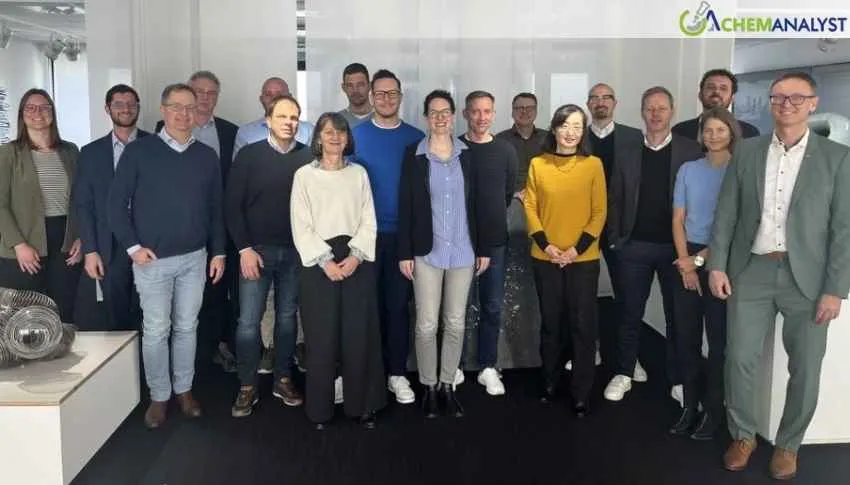
The Global Impact Coalition (GIC), headquartered in Geneva, has published a detailed report focusing on a pilot initiative aimed at improving the recycling of plastics derived from end-of-life vehicles (ELVs). Titled “Closing the Loop on Automotive Plastics: From End-of-Life Vehicles to Circular Material Streams,” the report highlights the outcomes of the Automotive Plastics Circularity Project. This initiative was specifically designed to encourage collaboration among major industry players who typically would not undertake such large-scale experimental efforts independently.
The project brought together eight prominent companies — BASF, Covestro, LG Chem, LyondellBasell, Mitsubishi Chemical Group, SABIC, SUEZ, and Syensqo. These organizations worked collaboratively in a pre-competitive environment to process 100 ELVs through a comprehensive system involving dismantling, shredding, and advanced sorting. As a result, approximately eight metric tonnes of plastic materials were successfully recovered from vehicles of varying ages, brands, and conditions.
The findings from this pilot project confirm that, from a technical standpoint, it is entirely feasible to recover plastic components from end-of-life vehicles and convert them into materials suitable for recycling. Despite this success, the report emphasizes that achieving commercial viability remains a significant hurdle. The key challenge is not rooted in technological limitations but rather in systemic issues such as coordination across stakeholders, economic feasibility, and the absence of a well-structured value chain. Currently, there is a lack of alignment among original equipment manufacturers (OEMs), dismantlers, waste management firms, and chemical producers, making large-scale implementation difficult.
The urgency of addressing this issue is underscored by the scale of waste generated. Each year, over 800,000 tonnes of automotive plastic waste are either incinerated or sent to landfills in Europe alone. While potential solutions are known, the infrastructure and systems required to implement them effectively at scale are still underdeveloped. As noted by GIC CEO Charlie Tan, the challenge has shifted from conceptual ambition to practical execution.
Regulatory developments are further intensifying the need for action. New policies in the European Union mandate that by 2036, new vehicles must incorporate at least 25% recycled plastics, with 20% coming specifically from closed-loop automotive recycling systems. Currently, only about 2.5% of plastics in new vehicles come from such closed-loop processes, highlighting a substantial gap that presents both a challenge and a significant opportunity for innovation and growth.
This issue is not confined to Europe. In China, more than 7.9 million ELVs were processed in 2024, and a national strategy introduced in December 2025 aims to increase the use of recycled materials in automotive manufacturing by 2030. This demonstrates that both the challenge and opportunity for automotive plastics recycling are global in scope.
Looking ahead, the insights from this pilot project will inform the next phase of GIC’s work. The focus will shift toward unlocking the full potential of the ELV recycling value chain by assessing economic feasibility. This includes developing detailed scenario models for specific components and conducting further experiments in areas such as automation, chemical recycling, and designing vehicles with recyclability in mind.







 About ChemAnalyst
Leave a Comment
Comments (0)