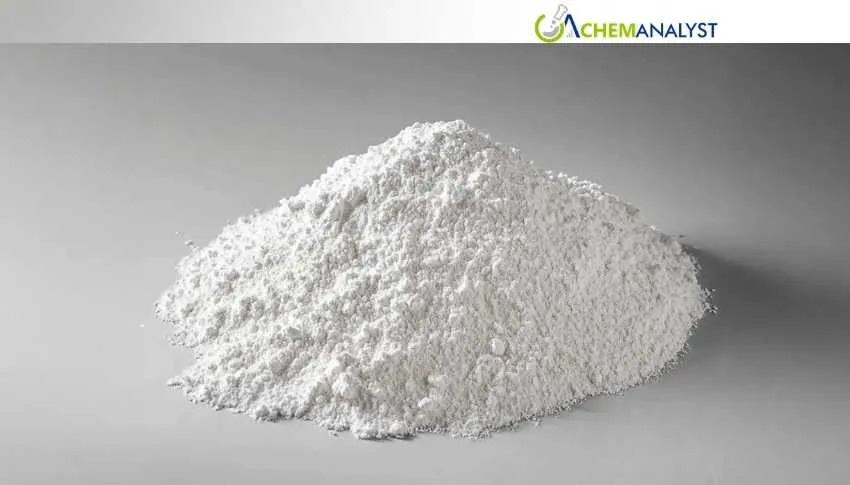
The U.S. Soda Ash market recorded a modest decline in prices in mid-May 2026, reflecting ongoing pressure from global oversupply and weak international demand. While domestic consumption from glass, detergents, and chemical manufacturers remained steady, the broader market environment continued to soften. Overseas producers, facing slow demand in Asia and Europe, increased exports to the United States at discounted rates. This dumping trend kept Soda Ash prices under pressure and limited the ability of U.S. suppliers to maintain margins.
Industry analysts noted that profitability across basic chemicals remains moderate, with oversupply and global demand headwinds shaping the outlook. The situation mirrors challenges seen in other chemical segments, where rising raw material costs and uncertain weather patterns—such as India’s monsoon concerns—are affecting downstream demand. Although these factors do not directly impact U.S. Soda Ash, they contribute to a weaker global consumption environment.
International trade flows also played a role in shaping sentiment. Between January and April 2026, more than 74,000 tons of Soda Ash arrived at the Port of Recife from the United States, China, Spain, and Turkey. This movement highlights the strong global competition U.S. producers face, as well as the interconnected nature of the Soda Ash supply chain. The steady flow of imports into Brazil and other markets shows that global supply remains abundant, reinforcing downward pressure on U.S. prices.
Domestic industrial activity offered mixed signals. USG Corporation’s announcement of a $1.175 billion investment in a new Texas production facility reflects long-term confidence in construction and building materials, sectors that rely on Soda Ash for glass manufacturing. Similarly, Coca-Cola Consolidated’s $35 million expansion of its Indianapolis glass-bottling line suggests stable demand for glass packaging. However, these investments are future-oriented and have not yet translated into immediate demand growth strong enough to lift Soda Ash prices.
Geopolitical tensions added another layer of uncertainty. Shipping disruptions in the Strait of Hormuz increased freight volatility, although the impact on Soda Ash was less severe than on crude oil or sulfur. Higher bunker fuel costs and rerouted vessels contributed to logistical challenges, but these factors were not enough to offset the downward pull of oversupply in the U.S. Soda Ash market.
Overall, the U.S. Soda Ash market in mid-May 2026 remained characterized by modest price declines, steady domestic demand, and strong competitive pressure from global suppliers. Market participants expect these conditions to persist as long as international producers continue redirecting excess volumes toward the United States.
In the coming weeks, as per ChemAnalyst, U.S. Soda Ash prices are expected to remain slightly weak due to persistent oversupply and continued dumping from overseas producers. Domestic demand from glass and detergent manufacturers should stay stable, but not strong enough to absorb excess inventories. Freight volatility linked to Middle East tensions may cause minor fluctuations, yet the overall trend is likely to remain soft. A meaningful recovery in Soda Ash prices will depend on improved global demand, production cuts by major exporters, or tighter trade regulations. Until then, the U.S. market is expected to experience mild downward pressure.








 About ChemAnalyst
Leave a Comment
Comments (0)