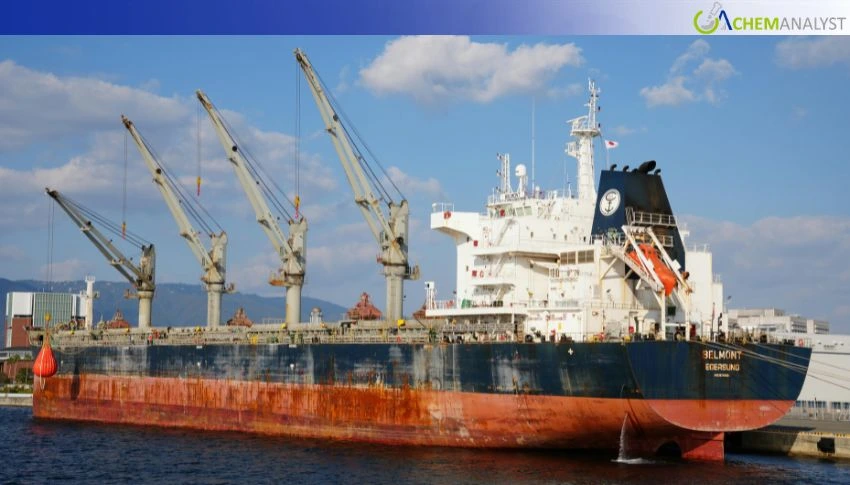
Global maritime trade is rapidly being reshaped as commercial shipping through the Strait of Hormuz has dropped by nearly 90% following the intensifying conflict in the Middle East. The dramatic reduction in vessel movement through one of the world’s most critical energy chokepoints has forced shipping companies and energy traders to redirect cargo routes around the Cape of Good Hope, significantly increasing travel time and transportation costs.
The disruption began after Iran announced the closure of the strait in response to joint military strikes carried out by the United States and Israel. Following the escalation, the UK Maritime Trade Operations raised the security threat level for ships operating in the region to “critical.” As a result, maritime insurers rapidly withdrew war-risk coverage for vessels operating near the corridor, leaving many shipping operators unwilling to risk transiting the area.
Data from maritime intelligence firm Windward showed that only four vessels passed through the strait on March 3, representing a sharp decline of about 90% compared with the previous week’s average. Under normal circumstances, roughly 138 ships pass through the strategic channel each day.
Oil tanker traffic experienced an equally dramatic drop. According to vessel tracking data from MarineTraffic, tanker movements through the strait plunged by approximately 90% compared with activity levels before the recent attacks.
As ships avoided the Persian Gulf route, traffic along the Cape of Good Hope route surged. On March 3 alone, 94 vessels were recorded passing around the southern tip of Africa, about 35% higher than the seven-day average for that route.
Major global shipping companies have already taken precautionary measures. German carrier Hapag-Lloyd confirmed that it has suspended all voyages through the Persian Gulf. The company also noted that its fleet has avoided the Red Sea since late 2023 and will continue doing so due to security risks, including threats from Iranian-aligned Houthi forces in Yemen.
Similarly, French shipping giant CMA CGM instructed vessels currently operating in the Gulf region to seek safe harbor while halting shipments through the Suez Canal until further notice.
Danish shipping leader Maersk also suspended voyages that normally pass through the Bab el-Mandeb Strait. Instead, the company is rerouting cargo from the Middle East and India bound for the Mediterranean and the eastern United States via the Cape of Good Hope.
The Strait of Hormuz is among the most important energy corridors in the world. Positioned at the entrance to the Persian Gulf, the waterway connects the oil-rich Middle East with global markets through the Arabian Sea and the Indian Ocean. Around 20 million barrels of crude oil and refined petroleum products move through the strait each day, accounting for roughly one-third of global seaborne crude trade.
Energy importers across Asia rely heavily on these shipments. According to data from S&P Global, China consumes about 5.3 million barrels of crude oil transported through the route daily, while India imports roughly 2 million barrels. Japan and South Korea each receive around 1.7 million barrels, while other nations collectively account for an additional 4.2 million barrels.
On the export side, Saudi Arabia remains the largest supplier using the corridor, shipping about 5.1 million barrels of crude per day. Iraq follows with approximately 3.3 million barrels, while the United Arab Emirates exports around 2.6 million barrels daily. Iran contributes roughly 1.7 million barrels, and Kuwait sends about 1 million barrels.
Meanwhile, tanker diversions have led to increased activity at Yanbu on Saudi Arabia’s western coast. Oil loadings there surged to approximately 2.44 million barrels per day in early March, significantly above its typical six-month average of 650,000 to 940,000 barrels.
The crisis has also disrupted production across the region. The Iraqi Oil Ministry halted operations at the Rumania complex in Basra due to the inability of tankers to enter the Gulf. Storage tanks have reportedly reached near-maximum capacity, while Basra’s port — normally capable of exporting 3.5 million barrels per day — recorded zero crude shipments earlier this week.
Analysts at JPMorgan warn that prolonged disruptions could force major oil producers in the region to shut down facilities if tanker traffic does not resume within three weeks.
Security risks are also escalating. Iranian forces reportedly launched drone attacks targeting facilities operated by Saudi Aramco in Ras Tanura. Meanwhile, state-owned QatarEnergy temporarily halted production at its massive liquefied natural gas complex in Ras Laffan after drone strikes, further intensifying fears of a severe global energy supply crunch.








 About ChemAnalyst
Leave a Comment
Comments (0)