Honeywell has announced a strategic agreement with Technip Energies to supply advanced, integrated liquefied natural gas (LNG) pretreatment and liquefaction solutions for the planned export terminal of Commonwealth LNG in Cameron Parish, Louisiana. The collaboration is designed to support Commonwealth LNG’s ambition to accelerate project delivery while maintaining high standards of operational efficiency, safety, and reliability. By deploying Honeywell’s modular LNG technology, the project aims to streamline construction activities, reduce on-site complexity, and mitigate execution risks often associated with large-scale energy infrastructure developments.
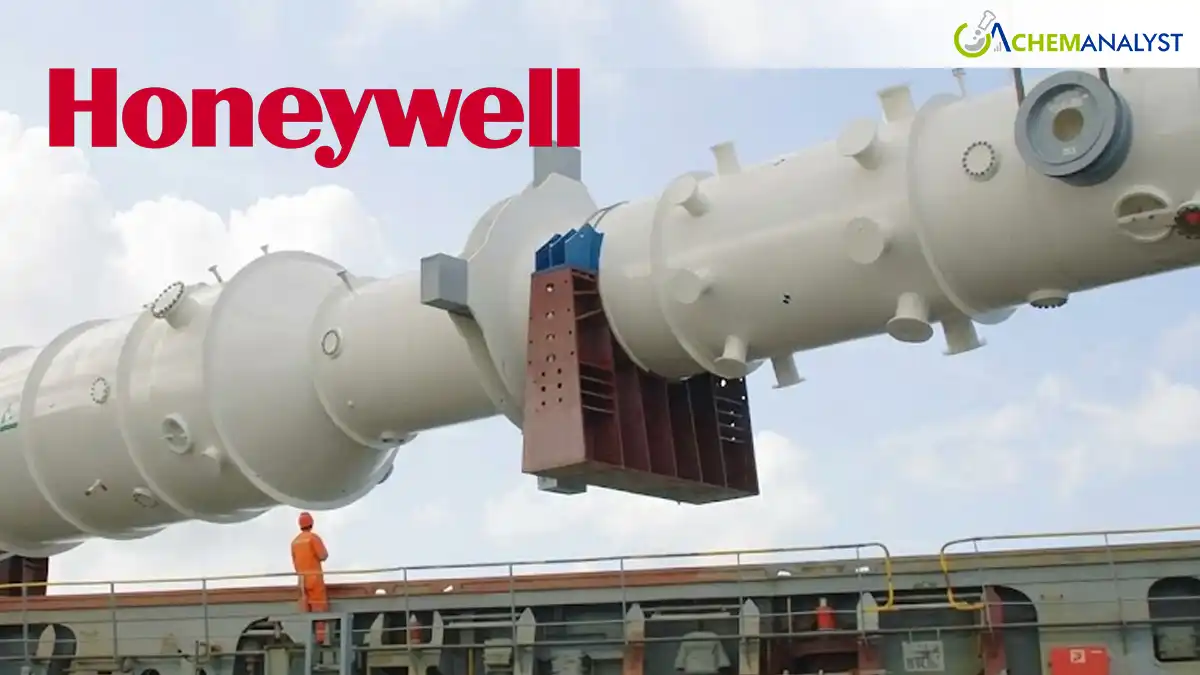
At the core of the project is Honeywell’s single mixed-refrigerant liquefaction process, combined with six modularized coil wound heat exchangers (CWHEs). These CWHEs are engineered to deliver exceptionally high natural gas throughput within a compact footprint, allowing greater processing capacity without significantly increasing space requirements. Their modular configuration enables off-site fabrication and assembly, followed by transportation to the project location for final installation. This approach significantly shortens construction timelines, improves quality control, and reduces exposure to weather-related or labor-related delays.
Once operational, the Commonwealth LNG facility is expected to produce approximately 9.5 million tonnes per annum of LNG, positioning it as a globally competitive export terminal. The use of modular CWHE technology not only enhances production efficiency but also improves operational reliability and safety by minimizing the number of field-installed components. This is particularly important in LNG facilities, where consistent performance and high availability are critical to meeting long-term supply commitments.
In addition to liquefaction, Honeywell will supply its Honeywell UOP SeparSIV pretreatment technology. This solution is designed to remove water, heavy hydrocarbons, and other contaminants from the natural gas feedstock, ensuring that it meets stringent LNG quality specifications before liquefaction. SeparSIV technology is highly adaptable, capable of handling a wide range of feed gas compositions, and is recognized for its economic advantages. Compared with conventional removal processes, it can reduce total lifecycle costs by as much as 50%, delivering both capital and operating cost savings to LNG operators.
According to John Palamara, vice president and general manager of Honeywell’s LNG business, the company’s comprehensive LNG solutions and modular delivery options are designed to help customers shorten construction schedules, achieve faster market entry, and ultimately improve returns on investment. He emphasized that combining Honeywell’s innovative technologies with its extensive industry expertise allows optimization across every phase of the LNG value chain, contributing to the broader objective of strengthening global energy security.
From the developer’s perspective, the agreement represents a major milestone in advancing the Commonwealth LNG platform. Caturus, the parent platform of Commonwealth LNG, views this capital investment as a clear demonstration of its commitment to delivering a world-scale LNG project. David Lawler, Chief Executive Officer of Caturus, noted that progress on technology selection, alongside an advancing financing process, underscores the seriousness of the company’s long-term strategy. He highlighted that the Commonwealth project is central to Caturus’ wellhead-to-water vision, aimed at building a leading independent and fully integrated natural gas company in the United States.
Honeywell’s role in the global LNG industry further reinforces the significance of this collaboration. The company is widely recognized as a leader in LNG process technology and automation, with solutions spanning pretreatment, liquefaction, advanced control systems, and digital software. Honeywell technologies are used to liquefy roughly two-thirds of the world’s LNG, while its pretreatment systems support around 40% of global LNG capacity. By offering modular LNG solutions that can be fabricated off-site and rapidly deployed, Honeywell continues to help project developers reduce risk, compress schedules, and bring new LNG capacity online faster than traditional construction methods allow.







Leave a Comment
Comments (0)