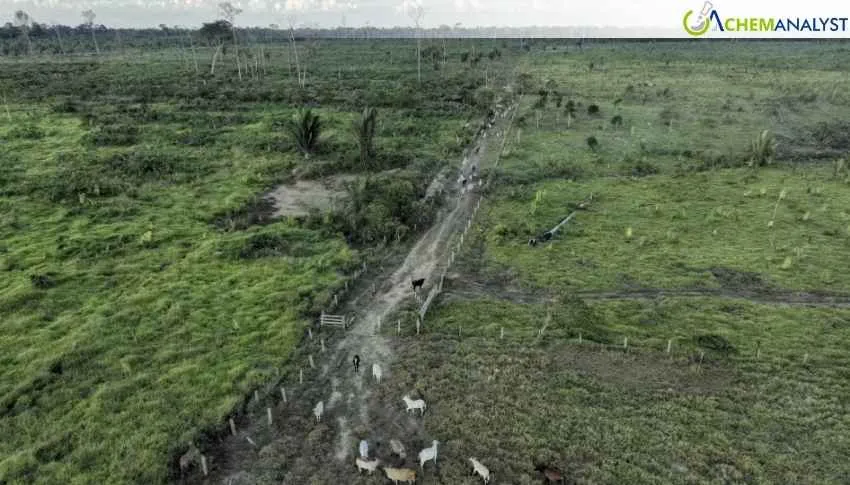
Human Rights Watch (HRW) has urged the European Parliament to reject proposed amendments that threaten to significantly weaken the European Union's Deforestation-Free Products Regulation (EUDR). This landmark legislation, adopted in May 2023 and effective since 2023, mandates that companies importing or exporting specific commodities into the EU ensure their products are not linked to deforestation that occurred after 2020 and were produced in compliance with human rights and local laws. The regulation covers key commodities such as wood, oil palm, soy, coffee, cocoa, rubber, and cattle, as well as derived products like leather.
The EUDR was initially set for company compliance by December 30, 2024, but the European Commission later proposed a delay of 12 months for large companies and 18 months for small and micro-enterprises. However, further amendments proposed on November 7, 2024, by Christine Schneider of the European People's Party, aim to delay the regulation's implementation by two years, exclude traders from its obligations, and introduce a "no risk" category. This "no risk" classification is criticized for potentially creating a loophole that would shield businesses from scrutiny regarding their deforestation records. Additionally, the European Commission has proposed excluding leather from the regulation's scope, which HRW warns would create a significant loophole.
The primary cause for the EUDR's creation was to combat rampant global deforestation, a major driver of climate change, and address human rights abuses often intertwined with agricultural expansion. Industrial agriculture is a leading cause of forest loss, and environmental destruction frequently correlates with rights violations against forest-dependent communities. Global Forest Watch reported that the world lost 4.3 million hectares of tropical primary rainforest in the previous year, an area comparable to Denmark.
The potential consequences of these amendments are severe. HRW argues that such changes would be "terrible news for climate-critical forests" and for the human rights of workers and forest-dependent communities. Weakening the EUDR would undermine its integrity and effectiveness in curbing deforestation and related human rights violations within the supply chains of products sold in Europe. Specifically, excluding traders, including large multinational supermarket chains that control global supply chains, could allow commodities from deforested areas to enter EU markets unchecked.
From an economic and industry-specific perspective, these revisions would penalize companies that have already invested substantial time and resources to prepare for compliance. The exclusion of products like leather sends a "worrying signal" that could undermine one of Europe's most crucial environmental laws. This could lead to increased deforestation risks and create a fragmented regulatory framework, causing legal and market uncertainty for businesses operating in complex global supply chains. Geopolitically, the integrity of the EUDR is seen as vital for the EU's commitment to environmental protection and human rights on a global scale. Indigenous communities and environmental organizations have consistently advocated for the regulation to uphold land rights, recognizing these communities as crucial protectors of the world's forests.







Leave a Comment
Comments (0)