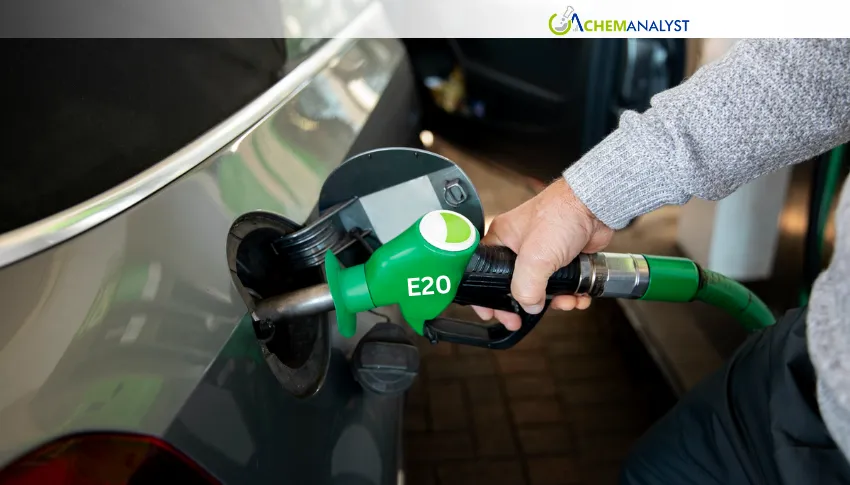
India has aggressively pursued an ethanol blending program, achieving a 20% ethanol blend (E20) in petrol across the country, significantly ahead of its original 2030 target. This initiative, formalized as the Ethanol Blended Petrol (EBP) Programme, aims to reduce the nation's heavy reliance on crude oil imports, enhance energy security, and improve air quality. The government views this as a critical step in India's energy transition, with E20 fuel becoming mandatory from April 1, 2026.
The primary motivation for India's ethanol program is to bolster energy security by reducing dependence on imported crude oil, which accounts for about 85% of its oil needs. This strategy is projected to save billions of dollars in foreign exchange annually and insulate the economy from global oil price volatility. Additionally, the program seeks to reduce greenhouse gas emissions and vehicular pollution, with E20 fuel showing significant reductions in carbon monoxide and hydrocarbon emissions. It also aims to boost the agricultural sector and increase farmers' incomes by creating demand for biofuel crops.
Despite the government's objectives, the rapid rollout of E20 fuel has generated considerable debate and skepticism among vehicle owners. Many motorists report experiencing reduced mileage and potential engine damage, particularly in older vehicles not explicitly designed for higher ethanol blends. Ethanol's lower energy density compared to petrol can lead to a marginal drop in fuel efficiency. Furthermore, ethanol's hygroscopic nature means it absorbs moisture, potentially causing corrosion and affecting rubber, plastic, or metallic components in incompatible fuel systems.
The ethanol program has significantly reshaped India's agricultural landscape. Initially driven by surplus sugarcane, the focus has shifted, with grain-based ethanol (primarily from maize and rice) now accounting for a larger share of production. This change has led to a substantial increase in land dedicated to ethanol feedstocks, rising from 0.7 million hectares in 2020-2021 to 5.7 million hectares in 2024-2025. However, this diversion of food crops for fuel raises concerns about food security, the "food vs. fuel" dilemma, and potential impacts on food prices.
The distillery industry has also seen rapid expansion, with India's ethanol production capacity exceeding domestic demand. This surplus has led to underutilized distillery capacity, prompting the industry to explore export opportunities to neighboring countries like Nepal, Bangladesh, and Indonesia.
The program's geopolitical impact primarily centers on strengthening India's energy independence. Environmentally, while ethanol blending reduces tailpipe emissions, the water-intensive nature of producing feedstocks like sugarcane, rice, and maize poses concerns about water stress and agricultural sustainability. The government maintains that the program is the result of over two decades of policy evolution and institutional reforms, not a rushed decision. It also highlights the availability of flex-fuel vehicles and the option for consumers to purchase 100% petrol, albeit potentially at a higher cost.
Impact of the move: E20 mandate from April 2026 accelerates India's shift away from crude imports, saving forex and cutting emissions, but pressures automakers to ensure vehicle compatibility, pushes farmers toward maize/rice-based ethanol feedstocks, and expands distillery capacity, opening export opportunities to Nepal, Bangladesh, and Indonesia.








 About ChemAnalyst
Leave a Comment
Comments (0)