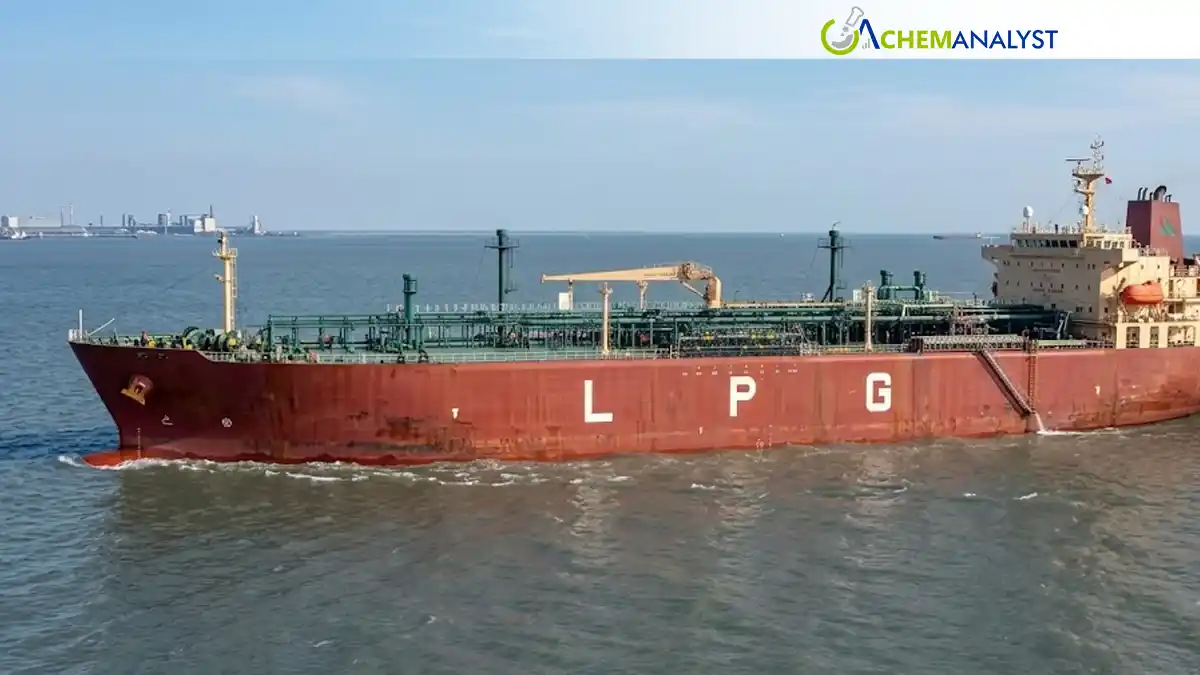
India is preparing to significantly diversify its liquefied petroleum gas (LPG) import portfolio by sourcing up to 25% of its LPG requirements from the United States by 2027. The strategy marks a notable shift in the country's energy procurement approach as it seeks to reduce its heavy reliance on Middle Eastern suppliers while strengthening economic and trade relations with Washington.
According to multiple media reports, state-owned refiners Indian Oil Corporation (IOC), Bharat Petroleum Corporation (BPCL), and Hindustan Petroleum Corporation (HPCL) are expected to issue tenders within the next two months for U.S. LPG cargoes scheduled for delivery in 2027. Representatives from the three companies are also expected to visit the United States in the coming weeks to explore long-term supply agreements with American exporters.
The initiative comes after severe supply disruptions earlier this year, when geopolitical tensions involving Iran and the temporary closure of the Strait of Hormuz affected LPG shipments to India. The disruption resulted in one of the country's most significant LPG shortages in recent years, forcing the government to divert petrochemical feedstocks from industrial consumers to ensure uninterrupted household cooking gas supplies.
India remains one of the world's largest LPG importers, with imported cargoes meeting nearly two-thirds of its domestic demand. Around 90% of these imports currently originate from the Middle East. During 2025, the country imported approximately 21.85 million metric tonnes of LPG, highlighting the concentration of its supply sources and the need for diversification to improve energy security.
The planned increase in U.S. LPG purchases also supports broader India-U.S. trade negotiations. Expanding energy imports from the United States is expected to help narrow India's trade surplus with the U.S., a priority raised during bilateral discussions. Both countries are working toward concluding a trade agreement while targeting bilateral trade worth USD 500 billion by 2030. India has already committed to increasing its purchases of U.S. energy products from USD 10 billion to USD 25 billion over the coming years.
Imports of American LPG have already gained momentum. Shipments exceeded one million tonnes in June for the first time, and market participants expect total imports to surpass the originally contracted volume of 2.2 million tonnes for 2026.
Although supply disruptions reduced India's LPG consumption by around 8% year on year during the first half of 2026 and imports also declined sharply, demand is expected to recover as supply conditions stabilize. Industry estimates indicate LPG consumption could reach nearly 31 million tonnes in 2027, supported by improved import availability and a more diversified sourcing strategy that enhances long-term supply resilience.
Impact on Prices of Chemical Commodities Tracked by ChemAnalyst
The increased procurement of U.S. LPG is expected to improve feedstock availability and reduce supply risks for India's petrochemical sector. Stable LPG supplies will benefit downstream production of propylene, propylene derivatives, and other LPG-based petrochemicals by lowering the likelihood of feedstock shortages during geopolitical disruptions. Consequently, prices of chemical commodities tracked by ChemAnalyst are expected to remain largely stable, with only limited volatility arising from freight costs or global LPG market fluctuations. Improved supply security should also reduce the need to divert petrochemical feedstocks toward domestic fuel requirements, supporting more consistent production and balanced pricing across the petrochemical value chain.






Leave a Comment
Comments (0)