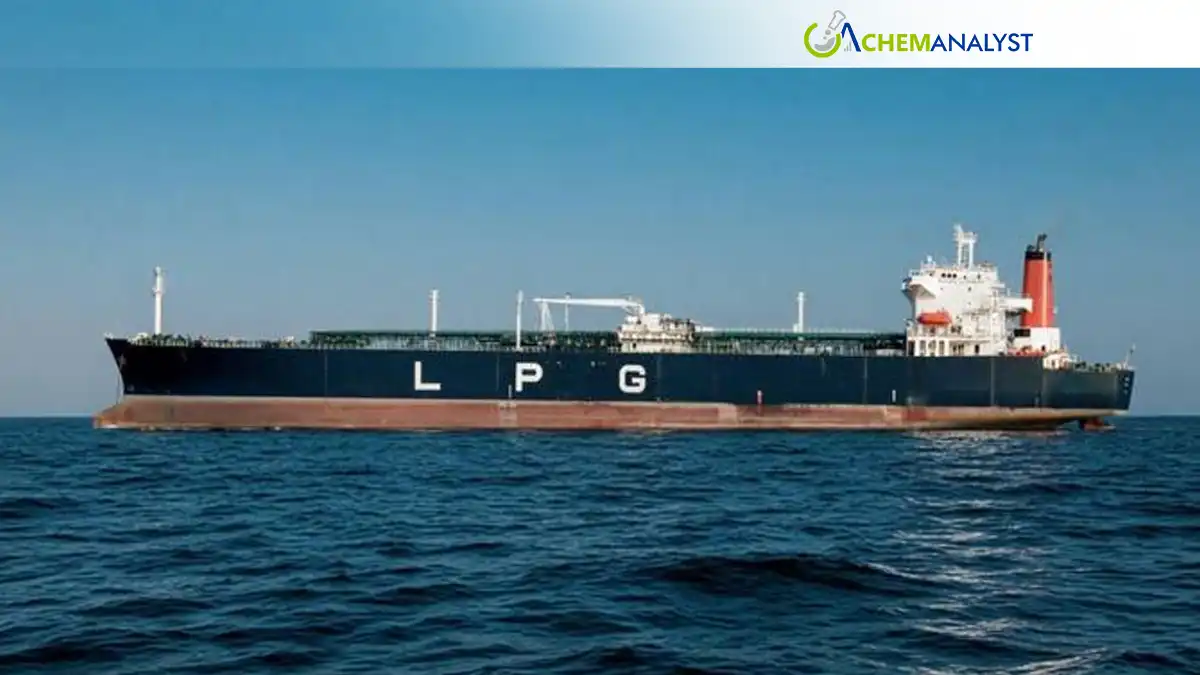
India's liquefied petroleum gas (LPG) imports significantly increased in June, reaching 1.25 million metric tons (MMT). This marks a 16.2% rise compared to May. The overall LPG imports for the first quarter of the fiscal year 2025 (April-June 2024) stood at 3.3 MMT, showing a 10.2% year-on-year growth. This surge highlights India's growing reliance on international markets to meet its energy needs.
The United States (US) emerged as India's leading LPG supplier in June, providing 619,000 metric tons (MT). This volume represents 49.5% of India's total LPG imports for the month. It also marks the highest monthly supply from the US to India since December 2023. Saudi Arabia followed as the second-largest supplier, contributing 249,000 MT, while Qatar supplied 163,000 MT.
Several factors contributed to the heightened demand for imported LPG in India during June. Robust domestic demand for LPG is a primary driver. The Indian government's ongoing Ujjwala scheme plays a crucial role in boosting consumption. This initiative offers free cooking gas connections to eligible households and provides a subsidy of 300 rupees per 14.2 kg cylinder for up to 12 refills annually. With approximately 100 million households benefiting from this scheme, it ensures sustained demand for LPG. Furthermore, the upcoming general elections are influencing the government's focus on energy security and affordability, leading to continued support for such schemes.
Indian refiners scaled back their crude processing runs in May due to lower refining margins. This reduction in refinery activity directly impacted domestic LPG production, which fell by 4.4% from April to 2.38 MMT in May. The decrease in local supply necessitated a greater reliance on imports to bridge the demand-supply gap.
The increased reliance on imports, particularly from the US, has several economic and industry-specific implications. The rising global contract prices for LPG, with propane at $610/MT and butane at $600/MT for July, will affect India's import bill. These price increases could potentially strain the budgets of Indian oil marketing companies (OMCs) and the government, which bears the cost of subsidies. The trend also highlights the vulnerability of India's energy sector to international price fluctuations and supply dynamics.
The US consistently being India's largest LPG supplier reinforces the growing energy trade relationship between the two nations. This partnership is strategically important for India, as it diversifies its energy import sources and enhances its energy security. Relying on a variety of suppliers, rather than concentrating imports from a few regions, helps mitigate geopolitical risks associated with energy supply chains.
Product Impact:
India's LPG demand-supply gap is widening as domestic refinery runs decline, forcing greater import dependence. This strengthens India-US energy trade ties and diversifies supply sources away from traditional Middle Eastern suppliers (Saudi Arabia, Qatar). For OMCs, higher import volumes at rising contract prices will pressure margins and increase subsidy burdens on the government, especially with Ujjwala scheme obligations covering ~100 million households. Continued reliance on imports exposes India to freight, currency, and geopolitical risks, though supplier diversification offers some resilience against regional supply disruptions.
Impact on ChemAnalyst-Tracked Commodity Prices:
Rising global propane ($610/MT) and butane ($600/MT) contract prices for July signal firming LPG price trends, likely pushing Indian import costs higher. This could translate into elevated domestic LPG procurement costs for OMCs, indirectly affecting downstream petrochemical feedstock pricing (propane/butane used in PDH and cracker units). Tighter global LPG availability, driven by strong Indian and Asian demand, may support upward price momentum across the broader LPG-linked chemical value chain, including propylene derivatives, through the near term.







 About ChemAnalyst
Leave a Comment
Comments (0)