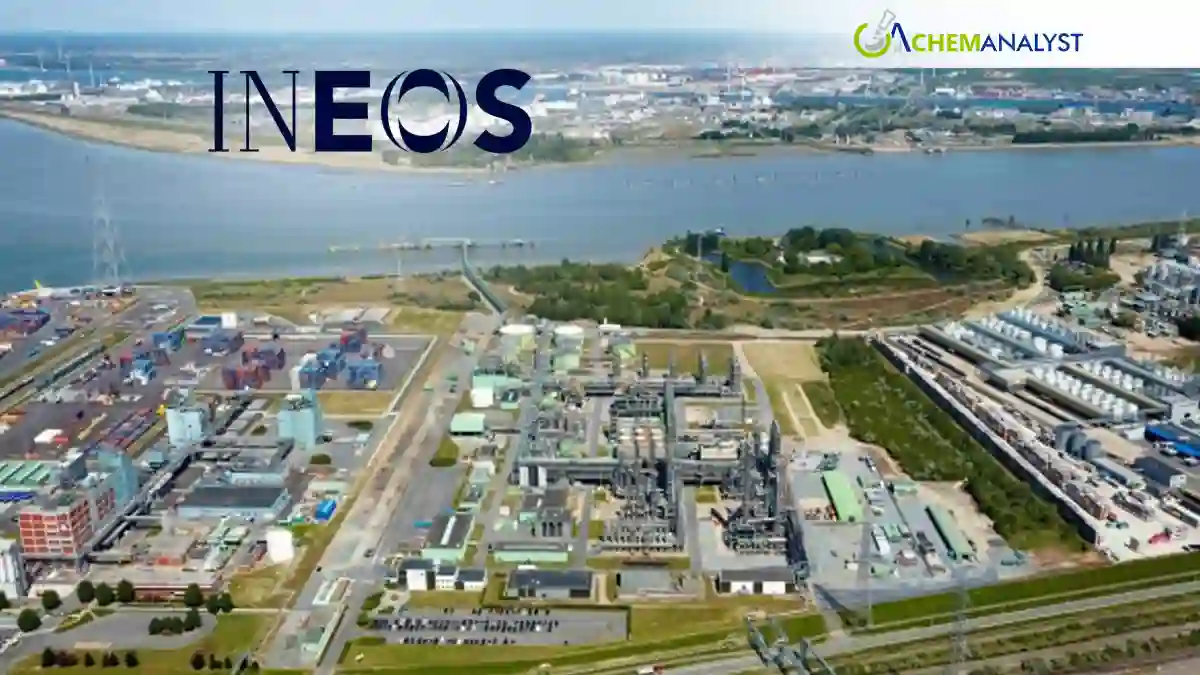
INEOS has announced a further delay to the planned restart of its phenol production facility in Doel, Belgium, citing the continued deterioration of market fundamentals across the European petrochemical industry. The decision reflects the company's assessment that economic conditions remain insufficient to support a commercially viable and sustainable resumption of operations at the site.
Previously, INEOS had indicated that production at the Doel facility could potentially recommence by late 2027, offering hope for the plant's return following an extended period of inactivity. However, after reviewing current market dynamics and future demand projections, the company has concluded that the necessary improvements in the business environment have not yet emerged. As a result, plans for restarting the plant have been deferred until market conditions show meaningful and sustained recovery.
A major factor influencing the decision is the prolonged weakness in the European automotive sector, which serves as one of the most significant end-use markets for phenol and its derivative products. Phenol and acetone are essential raw materials used in the manufacture of engineering plastics, resins, coatings, and automotive components. The European automotive industry has experienced mounting competitive pressure from increasing imports of lower-cost vehicles manufactured in China. This trend has adversely affected production levels among European automakers, leading to reduced demand for various petrochemical feedstocks, including phenol and acetone.
In addition to sluggish demand, European chemical producers continue to face substantial cost disadvantages compared with global competitors. Elevated energy prices remain a significant burden for manufacturers operating in Europe, particularly for energy-intensive industries such as petrochemicals. Furthermore, carbon-related regulatory costs and taxation have added another layer of financial pressure. Many producers outside Europe operate under less stringent regulatory frameworks and lower energy cost structures, allowing them to compete more aggressively in global markets.
These combined challenges have created a difficult operating landscape for petrochemical companies throughout the region. Market oversupply, uncertain economic growth, and subdued industrial activity have further weakened profitability, making it increasingly difficult to justify investments in restarting idled production assets.
Given these circumstances, INEOS has confirmed that its phenol production facility in Gladbeck, Germany, will continue operating beyond 2027 and will remain the company's primary production hub for serving regional demand. Maintaining output at Gladbeck provides operational stability while allowing the company to defer the financial risks associated with restarting the Doel plant under unfavorable market conditions.
INEOS explained that the timing of this announcement was necessary because preparations for a plant restart would need to commence immediately if production were to resume in the near future. By communicating the decision now, the company aims to provide clarity to employees, customers, and other stakeholders regarding its operational plans.
Despite postponing production activities, INEOS emphasized that the Doel site remains strategically important. The Antwerp-based facility will continue to support customers through logistics and distribution services, ensuring uninterrupted supply chain operations within the region. The company also reaffirmed its commitment to preserving the site's long-term viability.
To maintain flexibility for future opportunities, INEOS is continuing to invest in the upkeep and preservation of the Doel facility. Necessary maintenance programs and infrastructure investments are being carried out to ensure the plant remains in a condition that would allow operations to restart when market fundamentals improve sufficiently. According to the company, all available options remain under consideration, and the facility will be maintained until economic conditions justify a sustainable and competitive return to production.
The postponement underscores the broader challenges facing Europe's petrochemical industry, where weakening demand, rising costs, and intense international competition continue to reshape production strategies and investment decisions across the sector.
Market Impact: The postponement of the Doel phenol plant restart is expected to have a supportive impact on the European phenol and acetone markets. By keeping a significant production asset offline for a longer period, INEOS effectively limits the addition of new supply to a market that is already struggling with weak demand and excess capacity concerns. While current consumption from the automotive and construction sectors remains subdued, the delayed restart reduces the risk of further oversupply and helps balance regional inventories.
For downstream products, manufacturers dependent on phenol and acetone feedstocks, including producers of bisphenol-A (BPA), phenolic resins, polycarbonate resins, and solvents, may continue to rely on existing supply sources such as INEOS' Gladbeck facility and imports. Supply availability is not expected to tighten dramatically in the near term, but the absence of additional volumes from Doel could provide some support to margins across the value chain.
From a ChemAnalyst pricing perspective, the news is likely to be mildly bullish for Phenol and Acetone prices in Europe, particularly if demand stabilizes or improves over the coming quarters. Downstream commodities such as Bisphenol-A (BPA), Polycarbonate (PC), and Phenolic Resins could also experience modest upward pricing pressure due to constrained feedstock availability. However, weak industrial demand, high inventories, and ongoing economic uncertainty across Europe are expected to limit any sharp price increases. Overall, the development supports price stability to slightly firmer market conditions rather than triggering a significant bullish trend.







Leave a Comment
Comments (0)