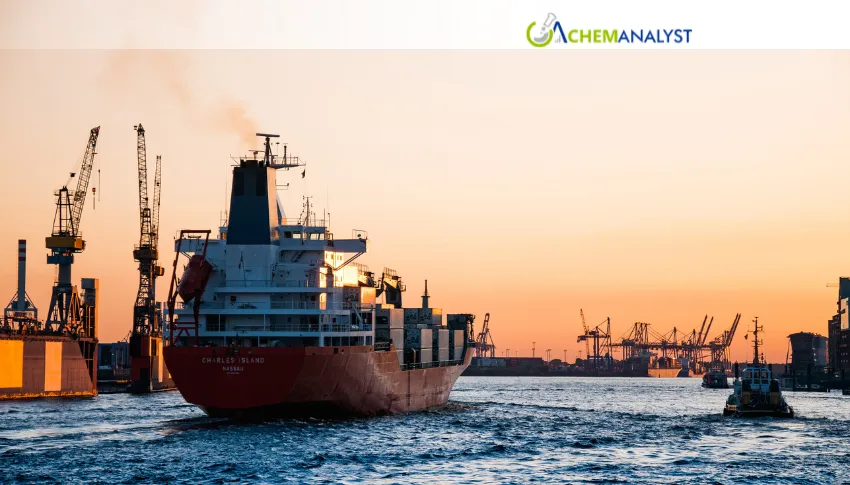
Intra- Asia container freight rates continued to ease during the third week of July 2026 as softer cargo demand outweighed localized equipment tightness and weather- related disruptions. However, the peak typhoon season continued to pose operational risks across East Asia, additional vessel deployment and cautious shipping activity kept downward pressure on freight rates.
The Drewry Intra- Asia Container Index (IACI) declined for the third consecutive week, dropping to USD 960 per FEU as of 23rd July 2026, reflecting continued weakness in regional freight charges. This softening in rates remains sustained despite the constant pressure across the region. Equipment shortages remain a bottleneck across China and Southeast Asia, while FEU containers remain in demand with a tight supply, a dynamic that would usually support rates rather than weigh on them, underscoring that the current dip is being driven more by demand softness than by an easing in capacity constraints.
With the Typhoon Bavi having left with aftereffects, ocean freight’s main concern remains to be the operational backlog rather than the storm’s approach. Lane-specific rates reflect the same pattern Shanghai to Jakarta eased 4% to $1,475 per FEU, Shanghai to Kaohsiung dropped 4% to $1,433, and Shanghai to Jawaharlal Nehru Port slid 4% to $1,667, a uniform decline over all the region's major routes reinforces the broader index reading
Recent market developments indicate that carriers have scheduled approximately 46 blank sailings across the major East- West trade lanes between 13 July and 16 August, representing a cancellation rate of around 6%, as shipping lines continue adjusting capacity to moderate freight demand. Within Asia, port congestion remains uneven, with Qingdao and Manilla reporting longer vessel waiting times, while most other major regional ports continue to operate with relatively limited delays. Meanwhile, the ongoing typhoon season continues to pose operational risks, with adverse capability of causing localized port congestion, schedule adjustments and temporary vessel delays across East Asia.
Short- Term Outlook
Rates are likely to remain under mild downward pressure through early August as demand softens, though equipment tightness could limit the expenditure of the decline. Operational risk remains, with peak typhoon season running through September, further disruptions to terminal gates, loading windows, and vessel schedules are likely, and blank sailings could tighten capacity. Shippers and exporters should build in schedule buffers over the next four to six weeks rather than assume current rate softening will eventually mean a smoother, faster transit.






Leave a Comment
Comments (0)