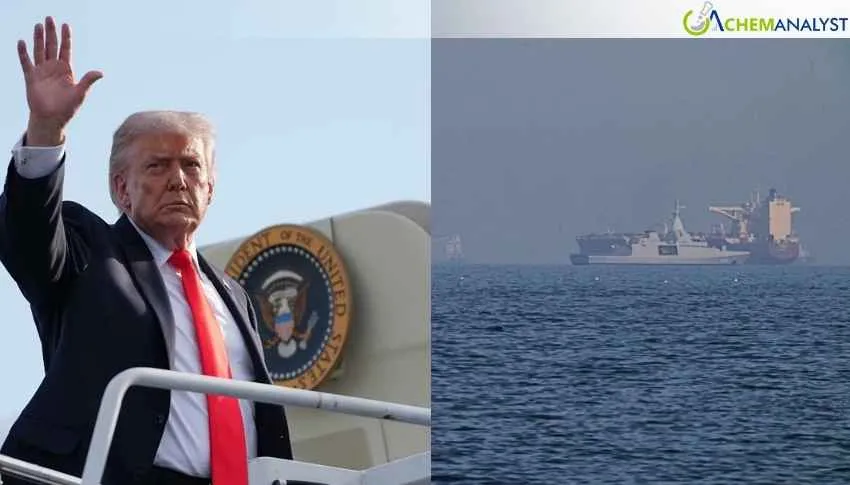
The ongoing tensions between Iran, the United States, and Israel continue to destabilize the Persian Gulf region, with particular focus on the Strait of Hormuz and Iran's nuclear ambitions. Despite claims of "very good talks" by US President Donald Trump and a US-backed plan to end the conflict being reviewed by Tehran, military actions and diplomatic friction persist.
A central point of contention is the Strait of Hormuz, a critical global shipping lane. Iran has denied involvement in a ship bombing in the strait, accusing the US of undermining diplomacy. Conversely, the US Central Command reported that an American Navy aircraft disabled an Iranian-flagged oil tanker attempting to breach a US blockade in the waterway. Iran has also asserted that a South Korean cargo ship was fired upon by its forces, a claim South Korea is currently investigating. In response to heightened tensions, Iran has declared the Strait of Hormuz a key component of its "defensive geography" and has implemented new procedures requiring vessels to coordinate with the Islamic Revolutionary Guard Corps (IRGC) Navy for transit, potentially involving fees. Iran's military has explicitly warned that any US forces attempting to enter the strait would be targeted.
To counter threats to commercial shipping, the US launched "Project Freedom," an initiative aimed at securing transit through the Strait of Hormuz with continuous monitoring and protection from American naval, air, and land forces. US officials claim Iran has launched cruise missiles, drones, and fast boat attacks against shipping routes and US positions. Diplomatic efforts have been fraught with difficulty; Iran views past negotiations as instances of being "stabbed from behind," citing concurrent military actions. President Trump reportedly halted a naval escort operation in the Strait of Hormuz after Saudi Arabia denied airspace to US aircraft involved in the mission.
Regarding its nuclear program, Iran maintains a firm stance in negotiations, insisting that uranium enrichment is non-negotiable and opposing any removal of its enriched uranium stockpile from the country. President Trump has intensified his rhetoric, suggesting a potential need to restart military operations if Iran refuses to surrender its enriched uranium.
Regionally, attacks have also been reported. While Iran denies any attacks on the UAE, earlier reports indicated missile and drone strikes on the UAE since a ceasefire, with US forces reportedly intercepting one such attack on the Fujairah oil terminal. Separately, an explosive-laden Hezbollah drone strike in southern Lebanon injured an Israeli soldier and three others.
The geopolitical instability has had notable economic impacts. Global oil prices have fallen, with Brent crude dropping approximately 8% to around $101 per barrel after a volatile week, while stock markets have risen on hopes of easing tensions. However, the situation continues to pose significant risks to regional stability, international shipping, and the global oil supply chain, highlighting the complex and volatile nature of relations in the Middle East.







Leave a Comment
Comments (0)