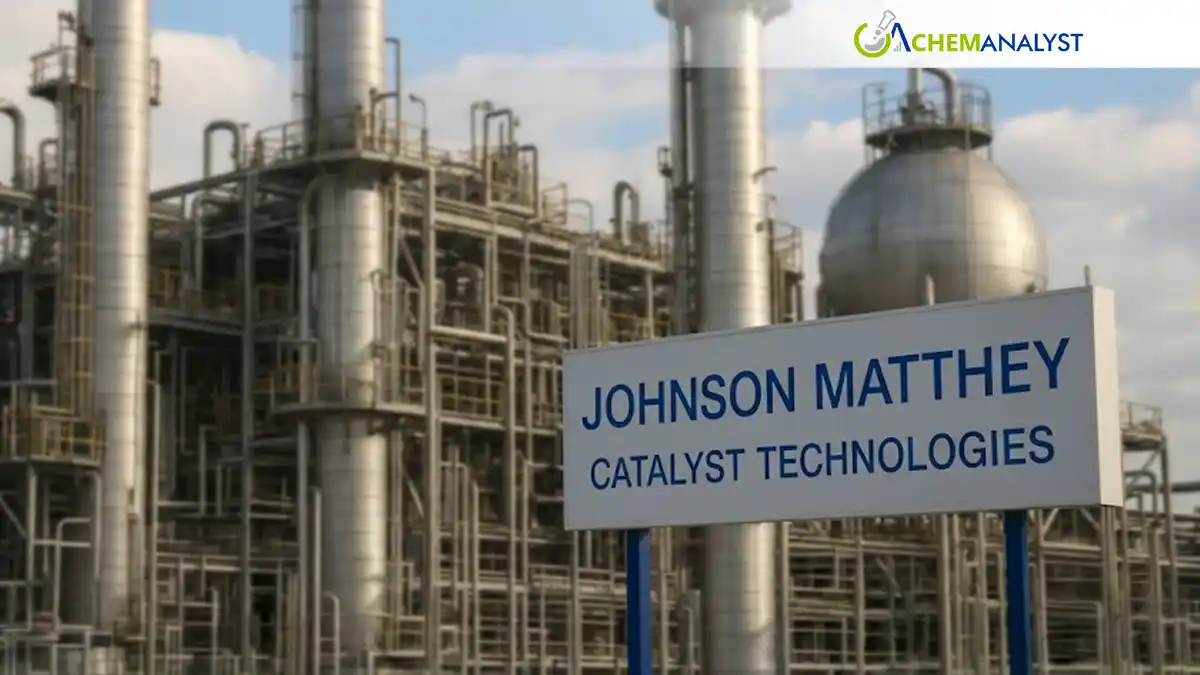
Phelan Green Hydrogen has selected Johnson Matthey Catalyst Technologies (JM CT) as a key technology partner for its ambitious electro-sustainable aviation fuel (eSAF) project in South Africa’s Western Cape region. Through this collaboration, Phelan Green has secured licences for Johnson Matthey’s advanced technologies, which will play a vital role in enabling the production of sustainable aviation fuel using renewable energy, captured carbon dioxide, and green hydrogen.
The proposed eSAF facility, located in Saldanha Bay, represents a significant milestone for both the South African renewable energy sector and the global aviation industry’s transition towards lower-carbon fuels. Construction of the first phase of the project is expected to commence by the end of 2026. The development forms part of the broader Phelan Green Hydrogen Project, which is anticipated to attract approximately R47 billion in investment, equivalent to more than £2 billion. This large-scale investment highlights the growing confidence in South Africa’s potential to become a major hub for green hydrogen and sustainable fuel production.
The initial phase of the project is expected to establish one of the world’s earliest commercial-scale eSAF manufacturing facilities. Upon completion of this phase, the plant is projected to produce around 35,000 tonnes of electro-sustainable aviation fuel annually. The fuel will primarily target European Union and United Kingdom markets, helping meet their increasing demand for sustainable aviation fuels under future regulatory mandates. The projected output from the first phase could account for up to 6% of the eSAF volumes required by the EU and UK under their 2030 sustainability targets.
The project has a much broader long-term vision, with multiple expansion phases planned. Once fully developed, the Saldanha Bay facility is expected to reach an annual production capacity of approximately 140,000 tonnes of eSAF. This scale of production will position the project among the leading sustainable aviation fuel initiatives globally and demonstrate the commercial viability of producing synthetic fuels from renewable resources.
Johnson Matthey’s contribution to the project includes its proprietary HyCOgen™ technology, a process designed to convert captured carbon dioxide and electrolytic green hydrogen into carbon monoxide using advanced catalytic reactions. The resulting carbon monoxide is then combined with additional hydrogen to create synthesis gas, commonly known as syngas, which serves as a crucial building block in the production of synthetic fuels.
The HyCOgen™ process works seamlessly with FT CANS™ technology, a Fischer-Tropsch process jointly developed and co-owned by Johnson Matthey and bp. This integrated technology converts syngas into synthetic crude oil with enhanced efficiency. The synthetic crude is subsequently upgraded into synthetic paraffinic kerosene, a high-quality aviation fuel that can help reduce dependence on conventional fossil-based jet fuels.
Alberto Giovanzana, Chief Executive Officer of Johnson Matthey Catalyst Technologies, described the Phelan Green eSAF development as a landmark project that demonstrates how sustainable aviation fuel technologies are moving from concept to large-scale implementation. He highlighted that the project would be among the first commercial-scale eSAF facilities worldwide and also marks Johnson Matthey’s first deployment of its HyCOgen™ and FT CANS™ technologies on the African continent.
Blair Phelan, Managing Director of Phelan Green Group, stated that finalising the technology licensing and engineering agreements with Johnson Matthey establishes the technological foundation necessary to advance the project into its next development stage. He acknowledged Johnson Matthey’s technical support in reaching this milestone and emphasized the company’s readiness to convert renewable electricity, carbon dioxide, and water into commercially viable sustainable aviation fuel in South Africa.
The partnership between Phelan Green and Johnson Matthey highlights the increasing global momentum behind eSAF as the aviation industry seeks scalable solutions to reduce carbon emissions. The successful implementation of this project could establish South Africa as a strategic supplier of renewable aviation fuels for international markets while accelerating the worldwide shift toward sustainable air transport.






Leave a Comment
Comments (0)