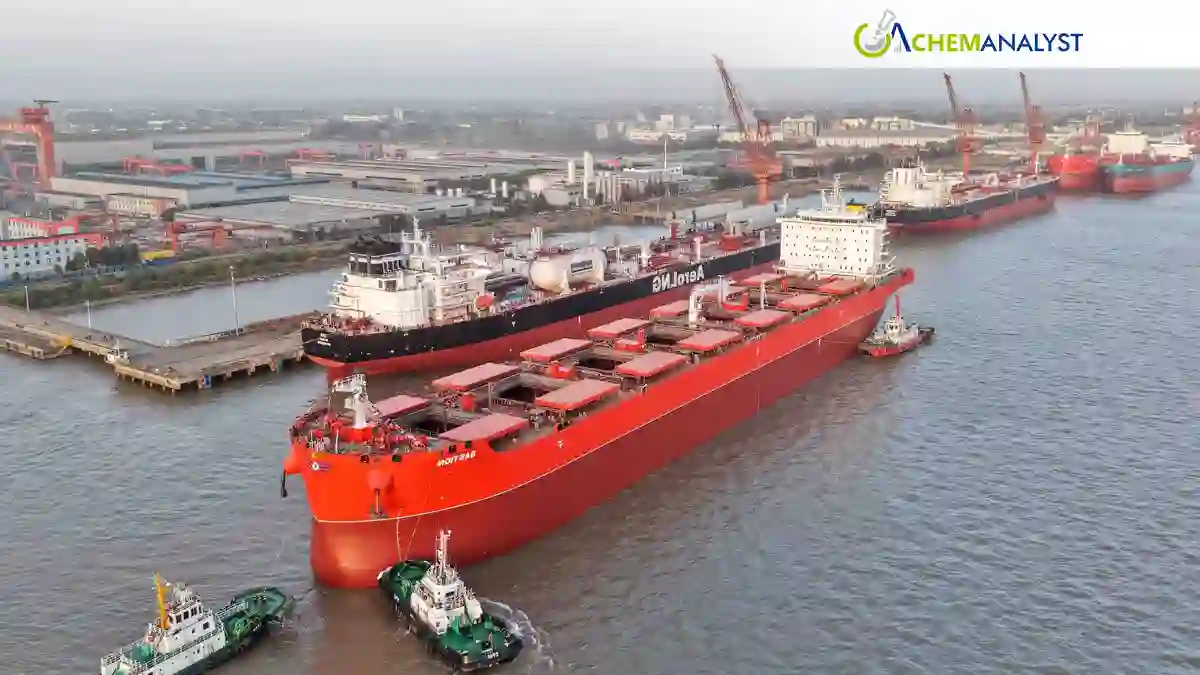
Klaveness Combination Carriers (KCC) has revised down its overall earnings guidance for the second quarter of 2026, signaling a retreat in tanker rates across the market. Despite this adjustment, the company still anticipates "historically strong" financial results for the period. The updated time-charter equivalent (TCE) expectations for KCC's fleet are now projected to be between 36,500 and 38,400 per day, a decrease from the earlier range of 39,900 to 43,200.
The primary drivers behind this guidance cut are a softer product tanker market, particularly following disruptions related to the Middle East conflict, and a notable decline in Atlantic tanker rates. Geopolitical tensions continue to introduce significant volatility, with incidents like a KCC vessel being trapped in the Strait of Hormuz highlighting the operational risks, although this particular disruption was partly mitigated by war risk loss of hire insurance.
Looking at the broader industry, the tanker market has been characterized by a mix of strong underlying demand drivers and increasing uncertainty. While geopolitical events such as the Red Sea crisis and diversions via the Cape of Good Hope have paradoxically boosted tonne-mile demand by lengthening voyages, leading to elevated freight rates in some segments, the spot market has shown signs of drifting lower in Q2 2024 after reaching high points around May. Analysts point to seasonal weakness, with Asian refineries undertaking maintenance, as a contributing factor to softening crude tanker rates. Furthermore, the product trade has been notably weak, with growth in 2025 expected to lag significantly behind crude.
Economically, the recovery of the Chinese economy remains unstable, casting a shadow over demand, while elevated interest rates in Western economies pose a risk of a severe downturn. For KCC specifically, while CLEANBU rate expectations were reduced for Q2 2026, guidance for its CABU fleet was slightly nudged upwards, despite fewer on-hire days. The company's Q2 2024 actual results showcased robust performance, with CABU TCE earnings reaching a record 37,656 per day and CLEANBU TCE earnings at 39,093 per day, contributing to record half-yearly financial results and a declared dividend of $0.30 per share. However, Q3 2024 TCE guidance suggests a further reduction from the strong Q2 performance.
Industry-specific impacts include a historically low newbuilding orderbook, which has provided supply-side support to the market. However, increased tanker ordering in recent years is expected to lead to higher deliveries in 2025 and 2026, potentially dampening market conditions. Investor sentiment in tanker equities is also showing caution, with some analysts drawing parallels to the "buy the rumor, sell the news" phenomenon seen during the COVID-era floating storage boom, as share prices have stalled despite strong earnings, leading to downgrades for some major tanker companies. KCC has also strategically postponed energy efficiency retrofit projects for two vessels from the second half of 2024 to 2025, possibly in response to market conditions or fleet utilization priorities. The increasing costs associated with operating older, less eco-friendly vessels due to tightening CO2 emission regulations like the EU ETS also represent a growing challenge for the industry.








 About ChemAnalyst
Leave a Comment
Comments (0)