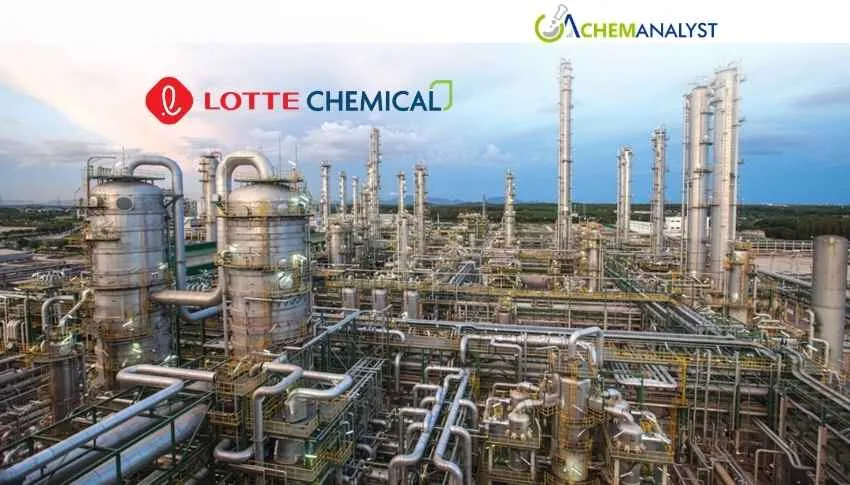
South Korea's Lotte Chemical has resumed operations at its Yeosu cracker, a crucial petrochemical facility, following a two-month maintenance shutdown that was initiated earlier than originally scheduled. The restart, which occurred on Wednesday (May 28, 2026), comes ahead of its initial early June target.
The decision to take the cracker offline in late March, instead of April, was primarily driven by significant difficulties in securing feedstock, particularly naphtha. This shortage was a direct consequence of the ongoing Middle East crisis, which led to disruptions in maritime transportation and a blockade of the Strait of Hormuz, severely impacting supply chains. In response to the escalating crisis, the South Korean government implemented a five-month ban on naphtha exports to prioritize domestic supply for its vital petrochemical industry. The maintenance period, initially planned, was brought forward to manage risks associated with the feedstock scarcity.
Lotte Chemical's Yeosu cracker is a substantial facility, capable of producing 1.2 million metric tons of ethylene and between 620,000 and 665,000 metric tons of propylene annually. Despite the restart, operating rates for June and July are projected to remain below pre-war levels, with propane cracking volumes expected to be under 50,000 metric tons per month (down from an average of 70,000 mt/month) and butane cracking volumes below 30,000 metric tons per month (down from 35,000 mt/month).
The broader petrochemical market remains cautious, with participants adopting a "wait-and-see" approach due to continued geopolitical uncertainty, including military actions between the U.S. and Iran. This sentiment has resulted in quiet LPG and naphtha markets and limited buying demand, despite recent price declines that might otherwise suggest easing supply tightness.
The shutdown of Lotte Chemical's Yeosu plant was part of a wider trend in South Korea, where other major petrochemical companies, such as LG Chem and Yeochun NCC, also faced successive shutdowns or reduced operating rates due to feedstock challenges. These disruptions raised concerns about potential shortages of essential everyday products like plastics and vinyl. To mitigate these impacts, Lotte Chemical's Daesan plant increased its operating rates to 83% to help stabilize domestic supply, particularly for critical products like medical IV fluid bags and concrete admixtures.
On a larger scale, the South Korean government is actively pushing for a comprehensive restructuring of its petrochemical sector, aiming to cut ethylene capacity by up to 25% and encourage a pivot towards high-value-added products. This initiative is a response to persistent oversupply, particularly from China, and declining margins. Mergers and integrations, such as the one involving Lotte Chemical and Hyundai Chemical at the Daesan complex, and a planned integration in Yeosu involving Yeochun NCC, DL Chemical, and Hanwha Solutions, are key components of this government-backed overhaul. The government is also providing support through financing, tax incentives, and R&D assistance to facilitate this transition. While the restart of Lotte Chemical's Yeosu cracker offers some relief, the industry continues to navigate a complex landscape of geopolitical instability and structural transformation.








 About ChemAnalyst
Leave a Comment
Comments (0)