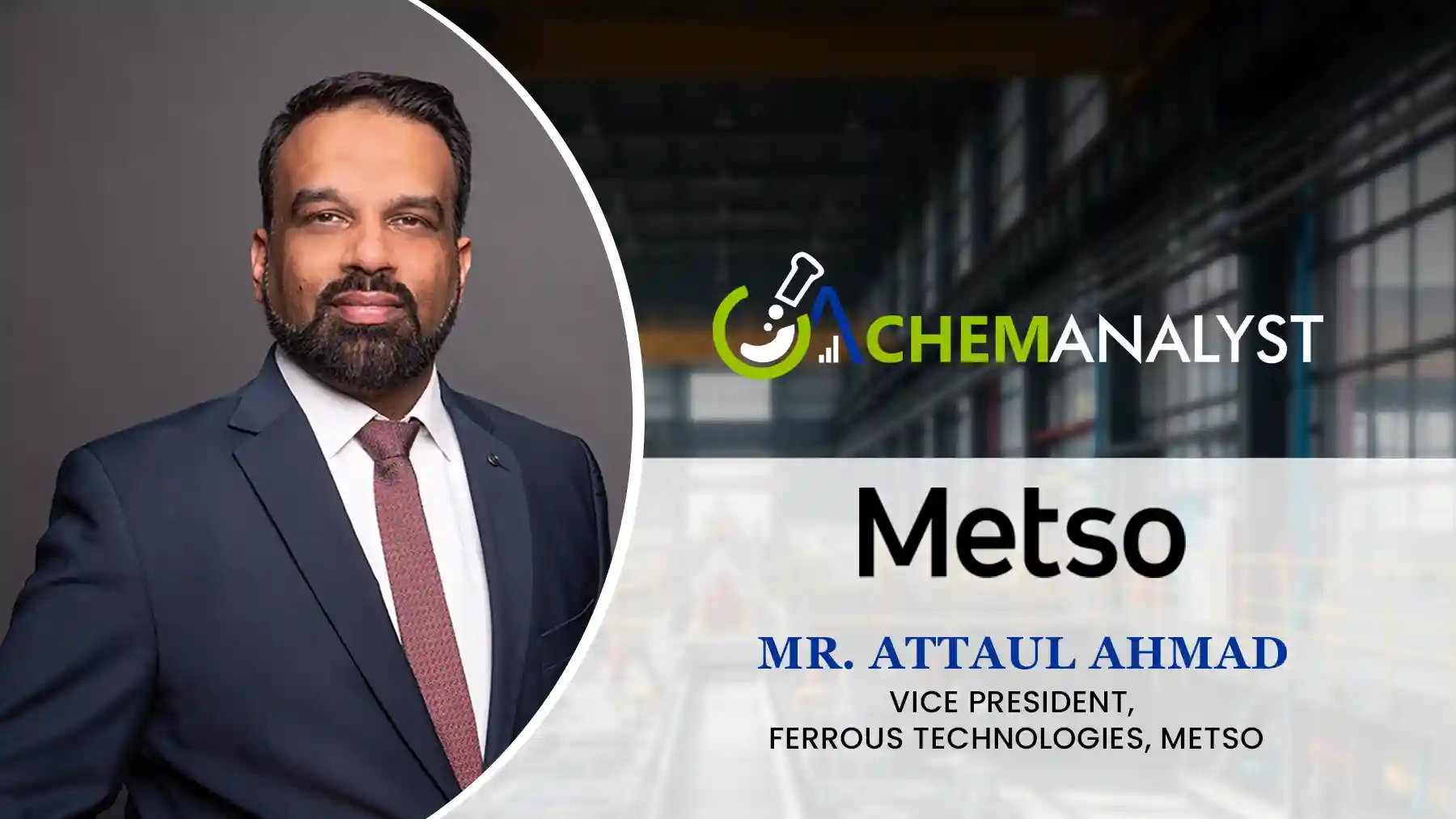
Metso, a global frontrunner in sustainable technologies, provides end-to-end solutions and services for the aggregates, minerals processing, and metals refining industries. Headquartered in Espoo, Finland, the company focuses on improving customers’ energy and water efficiency, enhancing productivity, and minimizing environmental impact through its deep technological expertise. With a century-long legacy in sintering innovation, Metso continues to lead the transition toward low-carbon and energy-efficient steelmaking solutions. ChemAnalyst spoke with Mr. Attaul Ahmad, Vice President, Ferrous Technologies at Metso, about the company’s pioneering role in advancing next-generation sintering and ironmaking technologies. Mr. Ahmad highlighted Metso’s commitment to supporting India’s ambitious steel capacity expansion with sustainable, high-performance solutions such as the EOS (Emission Optimized Sintering) technology, which enables significant CO2 reduction, operational savings, and process optimization. He further discussed how Metso’s continuous innovation, digitalization, and collaboration with industry leaders are reshaping the competitiveness and sustainability of the global steel sector. Metso has signed an agreement to sell its Ferrous business to SMS group. The closing of the transaction, which is subject to regulatory approvals, is expected to take place in the first quarter of 2026.
Complete Interview with Mr. Attaul Ahmad
Q: Please provide an overview of your professional journey and leadership experience in the steel, ferrous technology, and sustainability sectors. How have these experiences shaped your strategic vision at Metso, particularly in advancing low-carbon and energy-efficient steelmaking solutions?
Mr. Attaul Ahmad: I’ve spent over two decades working across different sectors with a strong focus on innovation. My leadership roles have consistently centered around driving strategic partnerships, fostering innovation ecosystems, and aligning technological development with global sustainability goals. Much of my work with Metso has involved advancing energy-efficient steelmaking and hydrogen-based processes. These experiences have shaped my strategic outlook—emphasizing scalable technologies, cross-sector collaboration, and a commitment to building a more sustainable future.
Q: With India aiming to reach 300 MTPA of crude steel by 2030, how do you view the current growth trajectory, and what implications does it have for demand in sintering and ironmaking technologies?
Mr. Attaul Ahmad: India is undoubtedly one of the most important growth markets for steel technology providers today. The country’s ambitious target to reach 300 million tonnes per annum (MTPA) of crude steel capacity by 2030 is driving a wave of investments and expansion projects across the sector. A significant portion of this growth will be realized through the commissioning of new blast furnaces. In fact, approximately two-thirds of the additional steel capacity planned by 2030 will be based on the Blast Furnace–Basic Oxygen Furnace (BF-BOF) route. This is reflected in the numerous greenfield integrated steel plants currently under development across India, with major players such as SAIL, JSW, Tata Steel, and ArcelorMittal Nippon Steel all announcing large-scale projects that include new blast furnaces. This surge in blast furnace projects will drive also a demand for new sinter plants, which are essential for supplying the blast furnaces and recycling iron-bearing residues from steel production. As a result, we see significant opportunities in India and are committed to supporting this growth with advanced sintering and ironmaking solutions.
Q: What are the major factors shaping the supply and demand balance for iron ore and sinter feed in India as well as across the globe, and how do you help steelmakers maintain consistent quality and availability amidst fluctuating ore grades and policy shifts?
Mr. Attaul Ahmad: The supply and demand for iron ore and sinter feed in India and globally are influenced by steel production growth, ore grade variability, export policies, and environmental regulations. In India, rapid capacity expansion and fluctuating domestic ore quality add complexity. We support steelmakers by providing advanced sintering technologies and process automation, which help maintain consistent sinter quality and optimize raw material usage, even as ore grades deteriorate and policies shift. This ensures reliable supply and operational efficiency for customers in a dynamic market.
Q: The EOS (Emission Optimized Sinter) technology claims to cut over 54,000 tonnes of CO2 annually. How do you measure and validate such environmental benefits, and what do these reductions mean for the future of low-carbon steelmaking in India?
Mr. Attaul Ahmad: The effective reduction of CO2 is directly correlated to the reduction of solid fuel (or other carbon carrier) in the sintering process and depend very much on the size of the plant: the bigger the plant the higher the savings! By minimizing the coke consumption, the CO2 footprint of the sinter process, as one of the largest CO2 emitters in a steelwork, is significantly lowered. We have continuously developed and improved the sintering technology over the last decades and came up with several state-of-the-art products: physically and digitally. The validated and proven reductions of CO2 do not only demonstrate real environmental progress but also position Indian steelmakers to meet stricter sustainability targets and enhance their competitiveness in the emerging low-carbon steel market.
Q: The EOS-equipped plants are described as a “decisive step towards low-carbon steelmaking.” How do these technologies and sustainability measures help Indian steelmakers reduce emissions, energy consumption, and operational costs?
Mr. Attaul Ahmad: These benefits are closely interlinked: by recirculating the off-gas from the sintering process, the latent heat and the carbon monoxide (CO) content in the off-gas is utilized as fuel saver. By this additional heat recovery the total energy efficiency of the sintering process is further increased. As a side-effect of this gas recirculation system, the total off-gas volume is drastically reduced, the solid fuel (coke) consumption is minimized profoundly and finally the operational costs are substantially reduced. As a result, Indian steelmakers can achieve lower emissions, improve energy use and significantly optimize operational savings — all while supporting the transition to low-carbon steelmaking — and we haven´t even touched the additional savings through the digital sinter plant optimizer (Optimus Sinter).
Q: Travelling grate sintering is a proven technology, yet you emphasize efficiency and lower emissions. What specific innovations give you an edge over competitors, and how do you ensure this technology remains future-ready?
Mr. Attaul Ahmad: Metso has been one of the inventors of sinter technology for over 100 years and has maintained its position as a market and technology leader through continuous research at its own R&D center. This leadership is sustained by ongoing improvements to core equipment, the development of new digital tools for process optimization, and the valuable feedback gained from the operation of our extensive installed base of plants. These efforts ensure our technology remains highly efficient, sustainable, and ready for future industry needs.
Q: This is the third sintering plant for SAIL ISP. From a business standpoint, how does this order strengthen Metso’s your long-term position in sintering technology in India and globally, and what lessons have you applied from past projects?
Mr. Attaul Ahmad: This SAIL project is the first major sinter plant project in India in a decade, demonstrating the client’s strong trust in our technology and expertise. Each project provides an opportunity to introduce, test, and prove the latest technological developments, while also implementing lessons learned in process innovation, engineering, and project management. By continuously improving through feedback and experience, we further enhance our global reputation as a reliable partner for advanced sintering solutions.
Q: Looking at the Indian crude steel market, what pricing trends do you foresee? Specifically, do you anticipate that steel produced using low-carbon technologies like EOS could command a premium as ‘green steel’ in domestic or global markets?
Mr. Attaul Ahmad: India’s steel demand is projected to grow strongly, but domestic prices face pressure from global overcapacity and rising imports. However, there is a clear trend toward increased demand for green steel, driven by decarbonization goals, policy support, and export requirements. Currently, green steel commands a notable premium—up to $210 per ton for hydrogen-based production—but this is expected to decrease as technology matures and carbon pricing rises. As a result, steel produced with low-carbon technologies like EOS is likely to attract a premium, especially in export markets and sectors prioritizing sustainability.
Q: From a cost-curve perspective, how does improving sinter-plant efficiency through the EOS technology impact crude steel cost per ton, particularly in energy and raw-material terms? Could this enhance India’s competitiveness versus China or ASEAN producers in exports?
Mr. Attaul Ahmad: Improving sinter-plant efficiency with EOS technology directly reduces coke consumption, lowering raw material costs per ton of steel. Additionally, by recirculating the off-gas, the total off-gas volume is reduced by up to 50%. This allows for a significant reduction in the size—and thus the capital expenditure—of any secondary off-gas treatment equipment in new (greenfield) projects. These savings also translate into lower operating costs for gas cleaning, helping the cost competitiveness of Indian steel versus China or ASEAN producers.
Q: This plant is a long-term project expected to be operational in 2029. How do you manage price forecasting, procurement risk, and supply chain flexibility for critical components and raw materials over such an extended timeline in a volatile global metals market?
Mr. Attaul Ahmad: We address these challenges through a combination of robust risk management and flexible procurement strategies. We use advanced market analysis and long-term supplier partnerships to forecast prices and secure critical components at competitive rates. Diversifying our supplier base and maintaining strategic inventories help mitigate supply chain disruptions. Additionally, we continuously monitor global market trends and adjust procurement plans as needed, ensuring both cost control and reliable delivery of materials throughout the project’s lifecycle.
Q: How does the travelling grate sinter technology improve sinter quality and consistency, and what economic or operational benefits can steelmakers expect?
Mr. Attaul Ahmad: Our extensive process know-how, the high quality of its process-relevant equipment, and advanced digital tools for process control and optimization all contribute to producing sinter with optimized quality and homogeneity. This consistency is crucial for stable and efficient blast furnace operation, which is a key factor for achieving high raw iron quality. As a result, steelmakers benefit from improved furnace performance, reduced energy consumption, and lower operational costs, supporting a more reliable and cost-effective supply chain for finished products.
Q: India’s steel sector is undergoing a shift toward sustainability. How do you see low-carbon and energy-efficient steelmaking reshaping competitiveness, and what role will your technology play in driving this transformation?
Mr. Attaul Ahmad: India is committed to improving the sustainability of its steel industry, but this must be balanced with ambitious growth targets and significant cost pressures. Therefore, technologies that combine cost competitiveness with reduced CO2 footprints are especially important. The EOS technology is a prime example, as it not only lowers both capital and operating expenditure but also delivers substantial sustainability benefits. By enabling steelmakers to achieve both economic and environmental goals, we are positioned as a key partner in India’s sustainable steel transformation.
Q: Looking beyond this project, what are your plans for next-generation sintering technologies that could further reduce energy consumption, emissions, and raw material usage in steel production?
Mr. Attaul Ahmad: The sinter process is already highly energy efficient, maximizing the use of fuel energy, as shown by the low temperature of the off-gas process. However, there is still potential for further improvement, especially through digitalization, which can optimize process performance even more. Additionally, we are working on substituting fossil fuels and enabling the use of lower-quality raw materials without compromising product quality or energy efficiency.
Q: Large-scale projects often face delays, cost pressures, and technical risks. What are the critical challenges you anticipate for this project, and how is the company prepared to mitigate them?
Mr. Attaul Ahmad: Our scope in this project includes the engineering of the plant, the supply of process-relevant core equipment, and support for installation and commissioning. With these key elements under our direct control, most schedule-related risks can be effectively managed through efficient project management and control. This is further supported by the proven technical competence and the long experience of our local and global team, ensuring that challenges such as delays, cost pressures, and technical risks are proactively addressed and mitigated throughout the project.
ChemAnalyst Insights on Stainless Steel (Flat)
In China, the Stainless Steel (Flat) Price Index increased by 1.25% quarter-over-quarter, driven by destocking and feedstock pressures. Spot prices showed intermittent strength as mills reduced discounts, helping improve cash market balances. The market is expected to experience short-term volatility due to inventory cycles and export protection measures. Production costs remained elevated because of firm ferrochrome and NPI, which has put pressure on mill margins. Demand outlook is mixed, with support coming from the NEV and machinery sectors, while construction demand remains weak. Price trends were influenced by inventory levels, aggressive export shipments, and protectionist measures that limited domestic absorption. Despite operating at a loss, mills continued shipping, with targeted production cuts aimed at reducing inventories and restoring market balance.







Leave a Comment
Comments (0)