Far East Asia-Europe Ocean Freight News
What Happened?
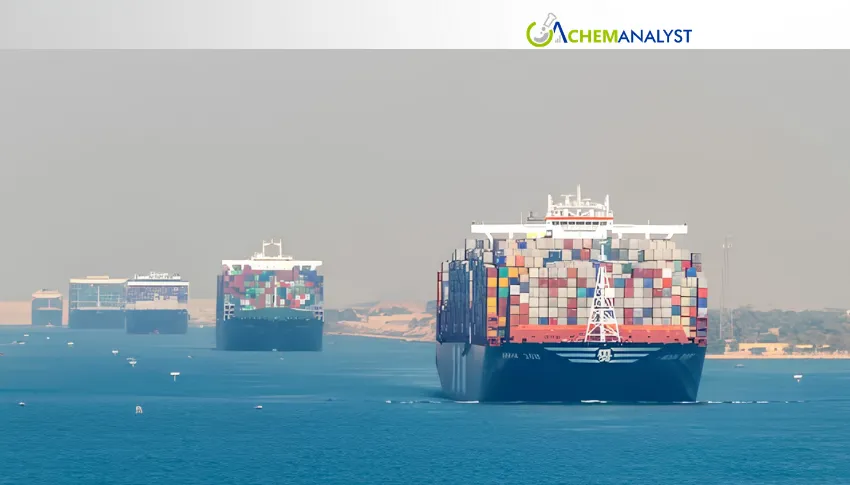
World’s largest container shipping line Mediterranean Shipping Company (MSC) on 24 august announced its partial restoring of the Suez Canal transits on a limited number of East-West services, following what was described as “a comprehensive review of the largest security an operational condition” in the Red Sea region. The initial phase covers five sailings across four services: The Jad and Tiger services linking Asia and Mediterranean, the Albatross service between Asia and North Europe, and the Himalaya service connecting India and the Mediterranean. The first vessels involved the MSC Michel Cappellini, MSC Josefina, MSC Anna, MSC Tina and MSC Beryl which began departing from Abu Kir, Jeddah, Singapore, Mersin and Vizina between August 20 and 31.
MSC becomes the fourth major carrier to resume Red Sea routing, following CMA CGM, Maersk and Hapag-Lloyd, and its move is being described as completing the return of all three major container alliances to the Suez corridor after nearly two years of diversions around the Cape of Good Hope. CMA CGM has been the most consistent operator through the crisis, with 199 of its ships transiting since the start of 2026 carrying 5.2 million tons of cargo, aided by European naval escort under Operation Aspides.
Why It Happened
Carriers have been cautiously testing the waters for weeks as it was reported that MSC quietly sent seven ships eastward through Suez and the Bab el Mandeb Strait over the prior two weeks, without formal announcement, before this week's official confirmation. This shift reflects a broader industry judgment that security risk in the Red Sea has become manageable enough to resume normal routing, following the earlier US-brokered steps toward de-escalation in the region. MSC stated that it would continue monitoring developments with relevant authorities and security partners, and that the transition would proceed service-by-service with contingency plans allowing individual voyages to be adjusted if conditions change a caution rooted in history, since both Houthi and Iranian forces have previously singled out MSC vessels over perceived Israel ties.
What It Means
The return unwinds one of the most consequential capacity distortions in recent shipping history. Routing around Africa via the Cape added up to $1 million in extra fuel cost per voyage, stretched transit times by 10 to 14 days, and absorbed an estimated 5 to 7 percent of global container capacity into longer voyages pulling roughly 1.3 to 1.8 million TEUs out of the active market and pushing Asia-Europe freight premiums 25 to 40 percent above pre-crisis levels. With MSC's return completing the major-carrier cascade back to Suez, shippers now have credible grounds to push back against Red Sea diversion surcharges still being applied on affected lanes. It also directly explains part of the Asia-Europe rate softening seen this week Mediterranean and North Europe prices have already started easing as capacity that was tied up on longer African routings becomes available again.
Short-Term Outlook
A broader normalization could be visible by the end of 2026, though some services may continue routing around Africa in the interim simply to absorb the excess capacity being released back into the network. Watch for how quickly diversion surcharges get withdrawn as more capacity returns to Suez, and whether the Premier Alliance the one major grouping yet to fully commit its own services back to the route follows the others, beyond the slots it already holds on MSC's Tiger service.








 About ChemAnalyst
Leave a Comment
Comments (0)