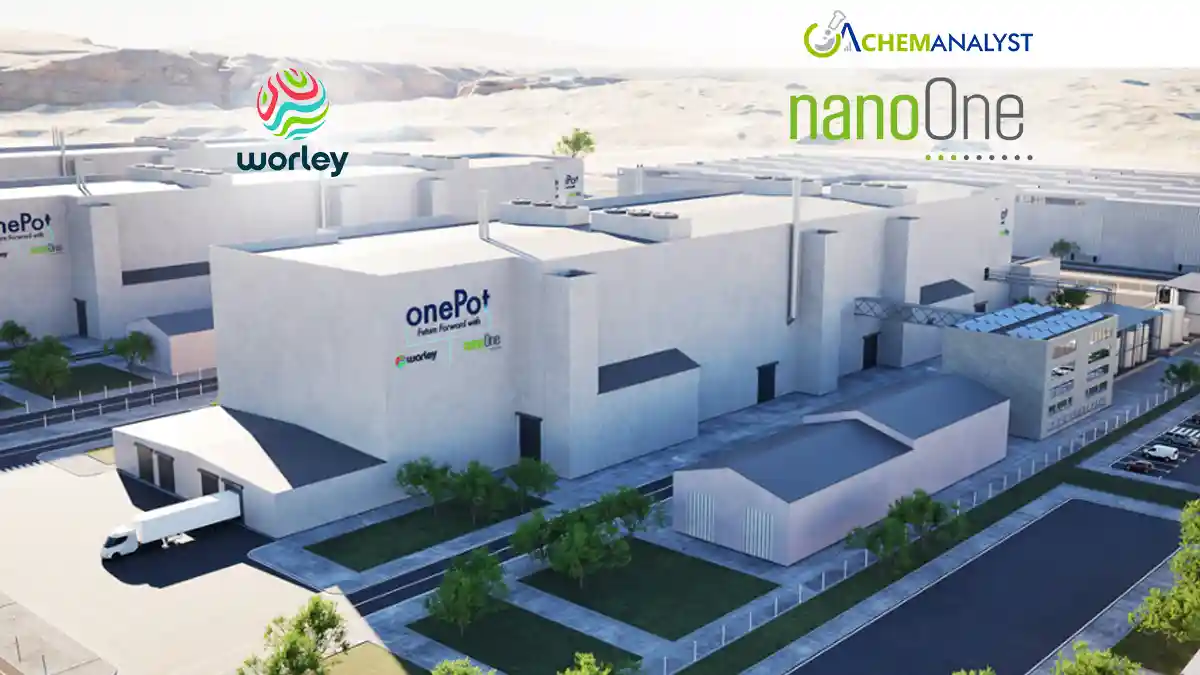
Nano One Materials Corp., a company focused on developing advanced process technologies for lithium-ion battery cathode materials, has announced a significant milestone alongside its strategic partner, Worley Chemetics. The two companies have successfully completed a commercial-ready One-Pot™ Lithium Iron Phosphate (LFP) Cathode Active Material (CAM) Package, engineered to a Class 3 cost estimate standard. The package utilizes qualified equipment suppliers from North America, Europe, and South Africa, fulfilling Nano One’s objective of completing and launching a market-ready solution during the first half of 2026.
The newly completed CAM Package encompasses the complete inside-battery-limits (ISBL) scope required for an LFP cathode production line. This includes the core processing equipment responsible for converting raw feedstock materials into finished LFP cathode active material used in lithium-ion batteries. The package incorporates detailed process engineering, facility layout designs, equipment specifications, vendor quotations, and both capital expenditure and operating cost estimates. By providing a comprehensive and validated framework, Nano One and Worley aim to simplify project development and enable customers to accelerate deployment with reduced technical and financial risks.
The equipment suppliers selected for the package were chosen based on their proven technical expertise and extensive experience working alongside Nano One’s development teams. The project builds upon earlier comparative studies conducted by Nano One and Worley, which indicated that the One-Pot process can significantly improve manufacturing economics compared to conventional production methods. According to those assessments, the technology has the potential to reduce total capital investment by at least 30%, lower operating expenses by up to 30%, and decrease energy consumption by as much as 80% while maintaining equivalent production outcomes.
Nano One Chief Executive Officer Alex Holmes highlighted that the completion of the CAM Package represents a major strategic achievement for the company. He emphasized that continuous innovation remains central to Nano One’s business model and noted that future versions of the package will incorporate additional efficiency improvements developed in collaboration with customers and industry partners. These enhancements are expected to further strengthen the economic advantages of the One-Pot process.
Andrew Barr, President of Technology Solutions at Worley, stated that the combination of Nano One’s proprietary One-Pot technology and Worley Chemetics’ decades of experience in technology commercialization creates a robust and low-risk solution for customers. Worley brings more than sixty years of expertise in designing, fabricating, and delivering chemical processing technologies across global markets, helping bridge the gap between engineering design and commercial-scale production.
To broaden customer flexibility, Nano One and Worley are also developing a second version of the CAM Package featuring a hybrid sourcing model. This configuration will allow the inclusion of Chinese-manufactured equipment in regions where such sourcing aligns with local regulations, incentive programs, or procurement strategies. At the same time, critical intellectual-property-sensitive equipment, including proprietary One-Pot reactors, will continue to be produced by Worley Chemetics and trusted technical partners in North America, Europe, and South Africa. This hybrid package is being developed in response to customer feedback and is expected to be completed during the second half of 2026.
The initiative comes at a time when demand for localized LFP cathode production is growing rapidly. LFP batteries now account for nearly half of the global electric vehicle market, a dramatic increase from less than 10% in 2020. The chemistry is also becoming increasingly important for large-scale energy storage applications. However, more than 98% of global LFP cathode production remains concentrated in China, creating concerns about supply chain resilience and geopolitical dependence.
Recent export controls introduced by China on battery materials and production technologies, combined with international efforts to strengthen critical mineral supply chains, have accelerated interest in regional manufacturing capabilities. The CAM Package is specifically designed to support these localization efforts by providing a scalable, commercially viable pathway for cathode production outside China.
As part of its broader commercialization strategy, Nano One plans to license the One-Pot technology and CAM Package jointly with Worley Chemetics. This approach aligns with the company’s “Design-One-Build-Many” strategy, which seeks to enable widespread adoption of its manufacturing platform by cathode producers and related industries worldwide. Development of the CAM Package has also benefited from C$2.8 million in non-dilutive funding from Next Generation Manufacturing Canada, supporting proprietary equipment development and commercialization activities. Oversight of the partnership is managed through a joint steering committee that regularly coordinates strategic priorities and project execution.
Impact of Nano One's One-Pot™ LFP CAM Package on Product and ChemAnalyst-Tracked Chemical Commodities
This development signals a structural shift in LFP cathode supply chains. By enabling localized, cost-efficient production outside China, Nano One's technology could gradually reduce China's near-total grip on global LFP supply. For ChemAnalyst-tracked commodities, the ripple effects are notable. Lithium Carbonate prices, already edging down as LFP battery producers ran at reduced rates amid oversupply, could face further downward pressure as wider non-Chinese LFP production reduces dependence on Chinese supply chains. Iron Phosphate, a key precursor, may see firming prices in North America and Europe as new regional plants adopt the One-Pot™ process. Lithium Hexafluorophosphate, already under downward pressure due to global oversupply and weak battery material restocking, could see gradual demand stabilization as broader LFP adoption grows through new non-Chinese capacity. Overall, near-term prices across these commodities remain subdued, but this technology lays the groundwork for regional demand growth that could meaningfully tighten supply-demand balances by 2027–2028, particularly for phosphate and lithium-based chemicals in Western markets.







Leave a Comment
Comments (0)