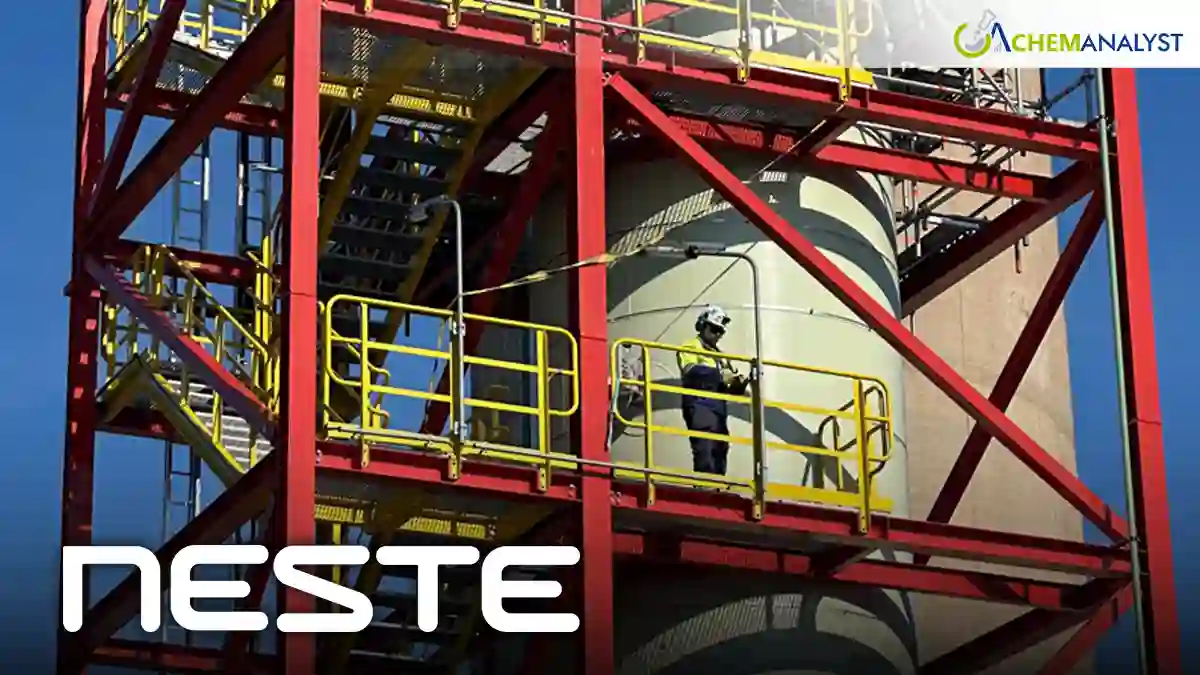
Neste has officially brought online a state-of-the-art upgrading facility for liquefied waste plastic (LWP) at its Porvoo refinery in Finland, marking a significant advancement in the global expansion of chemical recycling technologies. Backed by an investment of EUR 111 million, the facility is designed to convert difficult plastic waste streams into high-quality raw materials suitable for the plastics and chemicals industries. With an annual processing capacity of up to 150,000 tons, it is currently recognized as the largest facility of its kind worldwide. Production at the site has already begun and will be gradually scaled up in line with market demand and evolving regulatory frameworks.
The successful commissioning of the plant demonstrates Neste’s ability to process liquefied waste plastics on an industrial scale, a major technological and operational milestone. According to Jori Sahlsten, Executive Vice President of Oil Products at Neste, the achievement underscores the company’s strength in developing advanced technologies, establishing stringent safety standards, and building entirely new supply chains for unconventional and complex raw materials. He credited the accomplishment to the strong collaboration and dedication of the company’s workforce and partners.
Neste has been working with liquefied plastic waste, including pyrolysis oil, since 2020. Construction of the new upgrading facility began in 2023 and was completed by the end of 2025, followed by the start of production ramp-up in 2026. The facility is seamlessly integrated into the existing refinery infrastructure, allowing efficient processing and scalability.
One of the key advantages of this new plant is its ability to bridge the quality gap between crude liquefied plastic waste and the high-grade feedstock required by petrochemical manufacturers. While mechanical recycling continues to play an essential role in waste management, it often struggles with low-quality or contaminated plastic streams. Neste’s upgrading technology is specifically tailored to handle complex waste types such as multi-layer packaging, mixed plastics, and contaminated materials—streams that would otherwise be incinerated or sent to landfills.
Maiju Helin, Director of Polymers and Chemicals at Neste, highlighted that the facility enables the scaling of chemical recycling by transforming low-quality plastic waste into valuable resources. However, she also raised concerns about current European regulatory frameworks, particularly the European Commission’s rules under the Single-Use Plastics Directive. These rules, she noted, may limit the contribution of refinery-based processes toward recycled content targets. She emphasized the need to revise these regulations within the context of the EU Packaging and Packaging Waste Regulation to support Europe’s competitiveness and sustainability goals.
The facility operates by co-processing liquefied plastic waste with crude oil, using a mass balance approach to allocate recycled content to Neste RE™ products. This approach ensures traceability and certification of recycled materials. By utilizing recycled Neste RE, manufacturers can achieve significant environmental benefits, including over 70% reduction in virgin fossil resource use and more than 35% reduction in greenhouse gas emissions compared to conventional methods where plastic waste is incinerated.
In addition to operating the new facility, Neste is actively promoting the broader adoption of chemical recycling technologies. In collaboration with partners such as Alterra and Technip Energies, the company is licensing liquefaction technology designed to process hard-to-recycle plastics. This initiative aims to accelerate the development of a circular plastics economy by enabling more industries to adopt advanced recycling solutions.






Leave a Comment
Comments (0)