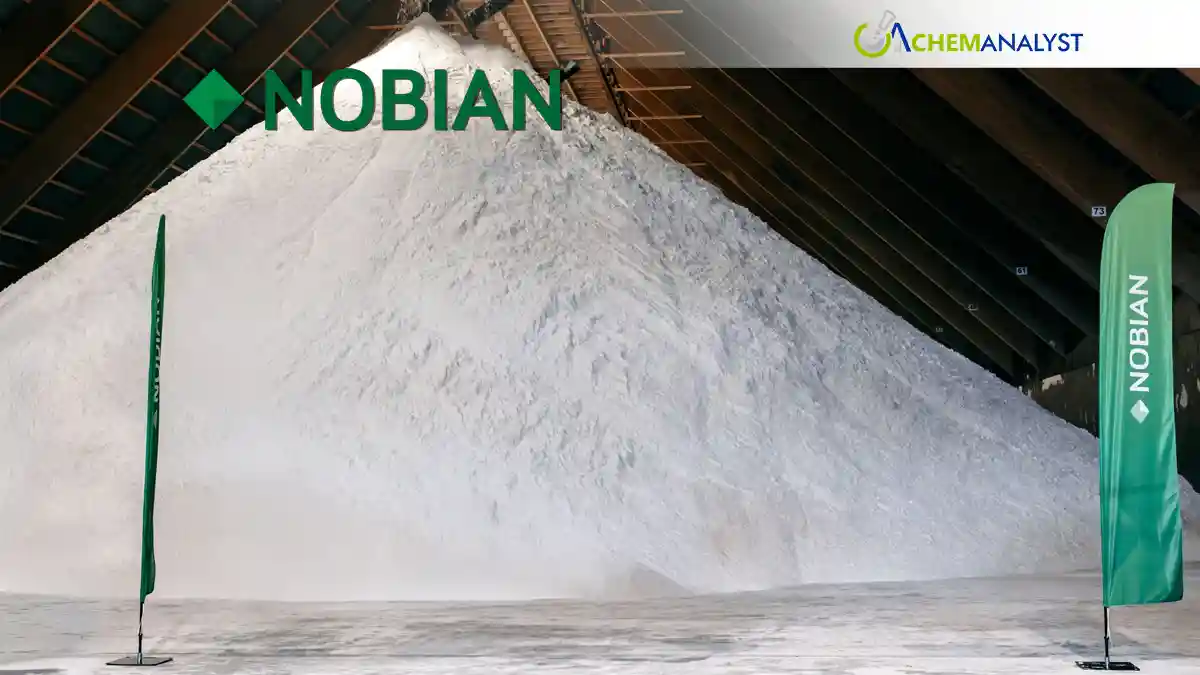
Nobian has marked a significant advancement in sustainable industrial manufacturing with the official opening of its new fully electrified salt production facility in Mariager, Denmark. The new installation utilizes advanced Mechanical Vapor Recompression (MVR) technology, enabling the company to produce high-purity vacuum salt with greater energy efficiency while substantially expanding the site’s overall production capabilities. The project represents an important step in Nobian’s broader strategy to reduce carbon emissions, increase operational flexibility, and support Europe’s growing demand for responsibly produced essential raw materials.
The MVR-based production system has been operational since January 2026 and replaces traditional gas-powered steam generation with an electricity-driven process. The technology functions in a manner similar to a heat pump, where process steam is compressed and recycled within the system instead of being released and replaced with newly generated steam. By continuously recovering and reusing thermal energy, the installation significantly lowers the amount of energy required for salt production, leading to reduced CO2 emissions and a more sustainable manufacturing process.
The new electrified facility also delivers a considerable increase in production capacity, with the Mariager site now capable of increasing its output by around 60%. Following the latest expansion, the facility has the potential to achieve an annual production capacity of up to one million tons of salt. This expansion further strengthens Nobian Dansk Salt’s position as a leading European supplier of high-quality vacuum salt used across multiple industries.
The opening of the new facility is particularly symbolic, as it coincides with the 60th anniversary of the first brine delivery from the Hvornum salt dome to the Mariager production site. Over six decades, salt production has played a crucial role in the local economy and industrial landscape. The latest investment demonstrates Nobian’s long-term confidence in the future of the Mariager site, ensuring continued industrial activity, employment opportunities, and the strengthening of important regional value chains.
Michael Koenig, CEO of Nobian, highlighted the strategic importance of the investment, emphasizing that the electrified production expansion represents a major milestone in creating a more sustainable salt manufacturing process. According to him, the project not only reduces energy consumption and lowers greenhouse gas emissions but also helps customers meet their own decarbonization objectives. Additionally, the investment enhances local economic development, supports strategic industries, and contributes to Europe’s ability to maintain secure supplies of critical raw materials, including salt. The development also supports future underground energy storage solutions, particularly through the use of salt caverns.
The MVR installation is part of a wider electrification journey at the Mariager facility. It complements previous upgrades, including the commissioning of a 37 MW electric boiler in 2022. Together, these technologies provide greater operational flexibility, allowing the site to adjust its electricity demand according to the availability of renewable energy sources such as wind and solar power. This improved energy flexibility enables the facility to contribute to electricity grid balancing and supports the development of a more resilient and adaptable renewable energy system.
Beyond improving efficiency and increasing production volumes, the new facility reflects Nobian’s long-term commitment to advancing low-carbon salt production. Salt remains an essential material for numerous sectors, including food processing, water purification, construction, automotive manufacturing, and emerging battery supply chains. By investing in electrified technologies and cleaner production methods, Nobian is positioning itself at the forefront of sustainable industrial transformation while helping Europe strengthen its domestic supply of critical raw materials.
Market Impact: Nobian’s fully electrified salt production facility in Denmark is expected to have the greatest impact on the chlor-alkali industry, particularly the production of chlorine, caustic soda, and associated hydrogen, as high-purity vacuum salt is a key feedstock for electrolysis. The plant’s increased capacity of up to one million tons annually and lower-carbon production process will support chemical manufacturers in reducing their supply chain emissions while ensuring a more reliable European salt supply. The food processing industry will also benefit significantly through improved access to sustainable food-grade salt used in preservation and packaged foods, while water treatment applications will gain from increased availability of high-quality salt for purification and softening processes. Emerging battery supply chains and energy storage solutions, including hydrogen storage in salt caverns, are expected to see medium-to-high long-term benefits. Overall, the strongest commercial impact will be on chlorine and caustic soda production, as these products rely directly on large volumes of high-purity salt, making Nobian’s low-carbon, expanded salt production a strategic advantage for Europe’s chemical and clean energy transition.






Leave a Comment
Comments (0)