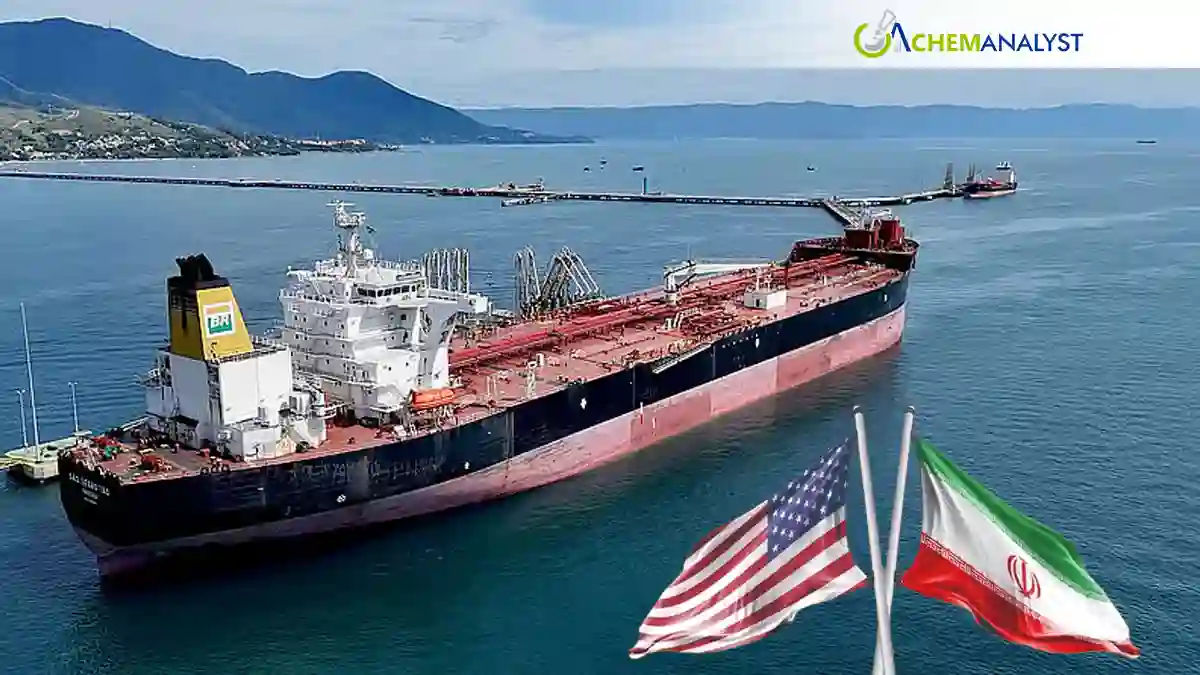
Global oil prices witnessed a significant decline on Monday, dropping to their lowest levels since March, after the United States and Iran announced progress toward a peace agreement aimed at ending months of conflict and restoring normal maritime traffic through the strategically vital Strait of Hormuz. The development eased concerns over prolonged disruptions to global energy supplies and triggered a sharp sell-off in crude markets.
Brent crude futures fell by $4.08 per barrel, representing a decline of approximately 4.7%, bringing prices down to $83.25 per barrel by 0415 GMT. Meanwhile, US West Texas Intermediate (WTI) crude dropped $4.35, or nearly 5.1%, to $80.53 per barrel. The decline extended losses from the previous trading session, when both benchmarks had already fallen by more than 3%. The latest price movement pushed crude oil benchmarks to their weakest levels since early March, reflecting renewed confidence among traders that supply risks in the Middle East may gradually ease.
The improvement in market sentiment follows announcements by US President Donald Trump and Iranian officials regarding an initial agreement to end the conflict. According to Pakistan’s Prime Minister, whose country played an important mediating role in the negotiations, the United States and Iran are expected to sign a memorandum of understanding in Switzerland on Friday. The agreement is expected to establish a framework for restoring diplomatic engagement, improving regional security, and allowing energy trade routes to operate normally.
President Trump stated that the Strait of Hormuz would reopen without any transit charges and confirmed that the United States would remove its naval blockade of Iranian ports. Iran’s semi-official Mehr News Agency reported that the proposed agreement includes plans to resume shipping activities through the Strait within 30 days under arrangements coordinated by Tehran.
The closure of the Strait of Hormuz for more than three months had severely affected global oil and natural gas markets. The waterway is one of the world’s most critical energy corridors, handling nearly 20% of global oil shipments and substantial volumes of liquefied natural gas (LNG) trade. The disruption had removed millions of barrels of oil and gas supply from international markets, increasing fears of shortages and contributing to higher energy prices.
Despite the positive developments, market participants remain cautious regarding the speed at which oil-producing countries in the Middle East can restore damaged infrastructure, resume production, and return export volumes to pre-conflict levels. The willingness of shipping companies to send more vessels through the region will also be an important factor in determining how quickly global energy trade normalizes.
Iran’s Deputy Foreign Minister Kazem Gharibabadi indicated that a broader and more comprehensive agreement would be discussed during a proposed 60-day ceasefire period. In addition, the E4 nations—comprising the United Kingdom, France, Germany, and Italy—announced their readiness to consider lifting sanctions on Iran if Tehran takes meaningful steps to address international concerns regarding its nuclear programme.
The prospect of reduced geopolitical tensions, the reopening of a major global energy route, and the potential return of Iranian exports have collectively placed downward pressure on oil prices. However, the long-term stability of the market will depend on the successful implementation of the agreement, continued diplomatic cooperation, and the restoration of confidence among global energy traders and shipping companies.
Market Impact
The agreement is expected to create a bearish outlook for crude oil markets in the near term as fears of supply shortages diminish. The reopening of the Strait of Hormuz could restore the flow of millions of barrels of oil and LNG, increasing global energy availability and reducing risk premiums previously added to crude prices. Lower oil prices may benefit major oil-importing nations by reducing inflationary pressure and improving energy affordability. However, oil-exporting countries and upstream producers may face lower revenue realization due to declining benchmark prices. Energy, shipping, petrochemical, aviation, and manufacturing sectors are likely to experience improved cost conditions as fuel and feedstock prices stabilize.






Leave a Comment
Comments (0)