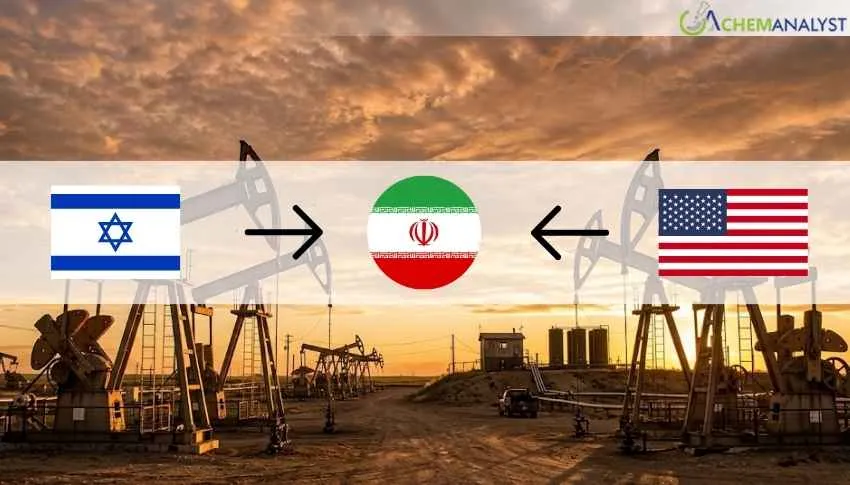
Global oil prices have surged beyond $100 per barrel as tensions escalate following the ongoing military conflict involving the United States and Israel against Iran. The sharp increase reflects growing concerns about disruptions to global energy supplies, particularly from the Middle East, which remains one of the world’s most crucial oil-producing regions.
The international benchmark, Brent Crude, jumped more than 20 percent on Sunday and briefly crossed $114 per barrel before easing slightly. By around 02:30 GMT on Monday, prices were hovering close to $107.50 per barrel. This marks the first time oil prices have surpassed the $100 level since the energy markets were shaken by the Russian invasion of Ukraine in 2022.
Despite the sudden spike in oil prices, Donald Trump attempted to play down the economic concerns. Writing on his social media platform Truth Social, the US president argued that a temporary increase in energy costs was a small sacrifice compared with the long-term benefits of global security. Trump suggested that oil prices would fall rapidly once what he described as the Iranian nuclear threat had been eliminated.
The US government also sought to reassure consumers about rising fuel costs. Chris Wright said during an appearance on the television program Face the Nation that any rise in gasoline prices for consumers would likely be temporary and should stabilize once market conditions improve.
Oil markets have been volatile since February 28, when the United States and Israel launched coordinated strikes against Iran. Since that time, crude prices have surged by roughly 50 percent. In retaliation, Iran has effectively halted shipping operations through the strategically vital Strait of Hormuz, a narrow maritime corridor responsible for transporting nearly one-fifth of the world’s oil supply. Any disruption in this route has immediate consequences for global energy markets.
The situation has also affected other major producers in the region. Countries including Iraq, United Arab Emirates, and Kuwait—all key members of the Organization of the Petroleum Exporting Countries—have reduced their output as shipments remain stuck due to the blockage of maritime routes. Meanwhile, attacks on oil infrastructure across the Gulf have intensified fears about broader supply disruptions. Iran has been accused of being behind several attacks targeting energy facilities in countries such as Qatar, Saudi Arabia, and Kuwait.
Over the weekend, Israel escalated the situation by carrying out air strikes on Iran’s oil infrastructure for the first time since the conflict began. According to Iranian state media, the attacks damaged four oil storage sites along with an oil transfer center located in Tehran and the nearby Alborz Province.
Iran’s powerful military organization, the Islamic Revolutionary Guard Corps, responded with strong warnings. The group threatened to target energy facilities throughout the region if hostilities continue, claiming that oil prices could surge to as much as $200 per barrel if the United States and Israel persist with the conflict.
Financial markets across Asia reacted negatively to the developments. Japan’s Nikkei 225 fell by more than 7 percent during early trading, while South Korea’s KOSPI dropped over 8 percent. In Hong Kong, the Hang Seng Index declined by nearly 3 percent. US stock futures traded outside regular market hours also showed notable declines as investors reacted to the uncertainty created by rising energy prices.
Although officials within the Trump administration believe the conflict could end within weeks, economists warn that prolonged instability could have serious consequences for the global economy. The International Monetary Fund estimates that every sustained 10 percent increase in oil prices leads to a 0.4 percent rise in inflation and reduces global economic growth by about 0.15 percent.
Market analysts caution that if oil prices remain elevated for several weeks, the global economy could face significant challenges. Energy leaders in the Gulf region have also warned that producers may soon declare force majeure and halt production entirely if the conflict continues to escalate.








 About ChemAnalyst
Leave a Comment
Comments (0)