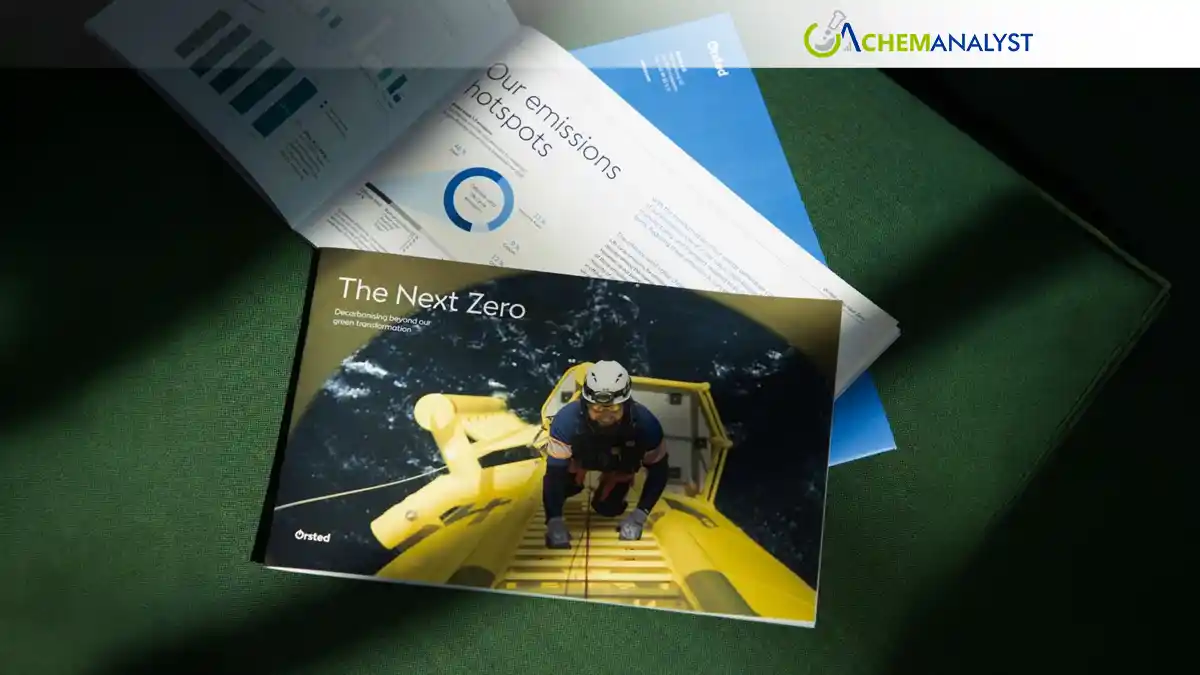
Ørsted has unveiled a new phase in its sustainability journey, setting an ambitious target to achieve net-zero greenhouse gas emissions across its entire value chain by 2040. Having successfully transformed itself into one of the world’s leading renewable energy companies and achieved its science-based climate goals by the end of 2025, the company is now turning its attention to emissions generated beyond its direct operations. This initiative focuses on reducing the carbon footprint associated with the design, construction, manufacturing, transportation, and operation of offshore wind farms.
The company’s latest strategy, outlined in a newly released report titled The Next Zero, was launched during London Climate Action Week. The report details how Ørsted plans to address the remaining emissions embedded throughout its value chain, particularly those associated with raw materials, industrial manufacturing processes, logistics, and supply chain activities. By targeting these areas, Ørsted aims to tackle some of the most difficult-to-abate emissions linked to renewable energy infrastructure.
According to Patrick Harnett, Ørsted’s Chief Construction Officer, reaching net-zero emissions across the full value chain will require a combination of industrial electrification, engineering innovation, advanced design strategies, and extensive collaboration with suppliers and industry partners. He emphasized that electrification represents one of the most immediate and impactful opportunities to reduce emissions, but broader transformation throughout the supply chain will also be essential.
Ørsted’s new commitment builds upon significant progress already achieved over the past two decades. Renewable energy now accounts for approximately 99% of the company’s energy production portfolio, while emissions from its own operations have fallen by more than 98% compared with 2006 levels. These achievements have positioned the company as a global leader in renewable energy and climate action.
Despite these successes, Ørsted recognizes that a substantial share of emissions associated with offshore wind farms occurs before the assets begin generating electricity. Around 75% of the total life-cycle emissions from a typical offshore wind project are generated during the development and construction stages. These emissions are primarily concentrated in a limited number of materials and activities, including steel production, copper manufacturing, shipping, and offshore logistics.
To address these challenges, Ørsted has engaged with more than 50 strategic suppliers since 2020. The company has prioritized collaborations aimed at reducing emissions from steel production, maritime fuel consumption, and cable manufacturing. One notable initiative involves the Hornsea offshore wind cluster, where Ørsted has contracted service operation vessels capable of operating on dual-fuel methanol systems. This approach is expected to significantly reduce emissions associated with marine transportation and offshore maintenance activities.
The company is also working closely with cable manufacturer NKT to lower the carbon footprint of export cables used in the Hornsea 3 offshore wind project. Through this partnership, emissions associated with cable production are expected to be reduced by approximately 50%, demonstrating how supplier collaboration can deliver measurable environmental benefits.
Steel remains the single largest contributor to life-cycle emissions within offshore wind developments. To address this issue, Ørsted has partnered with Dillinger to support the development and commercialization of lower-emission steel products for monopile foundations. The initiative aims to accelerate investment in cleaner steel production technologies and create pathways toward large-scale adoption of low-carbon steel across the renewable energy sector.
In addition to material innovations, Ørsted is redesigning infrastructure to reduce embedded emissions from the outset. Working alongside researchers at the University of Oxford, the company has developed optimized monopile foundation designs that require less material while maintaining structural performance. These leaner designs help lower embodied carbon emissions per foundation and improve resource efficiency.
Operational improvements are also contributing to the company’s decarbonization efforts. Ørsted is increasingly utilizing heavy-lift cargo drones for offshore logistics, reducing dependence on conventional support vessels and lowering fuel consumption. Such innovations demonstrate how technological advancements can contribute to emissions reductions throughout the lifecycle of offshore wind projects.
Through its “Next Zero” strategy, Ørsted aims to demonstrate that the renewable energy industry can move beyond operational decarbonization and address emissions throughout the entire value chain. By combining supplier engagement, cleaner materials, innovative engineering, and operational efficiency, the company seeks to establish a model for achieving deep decarbonization across large-scale renewable energy infrastructure.
Impact of Ørsted's 'Next Zero' Move on Products & ChemAnalyst-Tracked Chemical Commodities
Ørsted's shift toward full value-chain decarbonisation will drive significant structural changes across industrial supply chains. Since approximately 75% of lifecycle emissions from a typical offshore wind project occur during development and construction — linked to steel, maritime transportation, and cable manufacturing — Ørsted's push will intensify demand for low-carbon variants of these materials.
For ChemAnalyst-tracked commodities, the near-term price impact is limited, but medium-to-long-term pressures are building. Industrial chemicals, specialty gases like oxygen, nitrogen, and argon, lubricants, coatings, and refractory materials may witness stronger consumption trends, with prices experiencing mild upward pressure due to increased industrial demand from green infrastructure buildout. Collaboration with suppliers like NKT on cables and Dillinger on low-emission steel signals rising procurement of green-grade materials, which could attract price premiums over conventional alternatives. Overall, the move is bullish for green steel, specialty chemicals, and hydrogen-related commodities over the long term.







Leave a Comment
Comments (0)