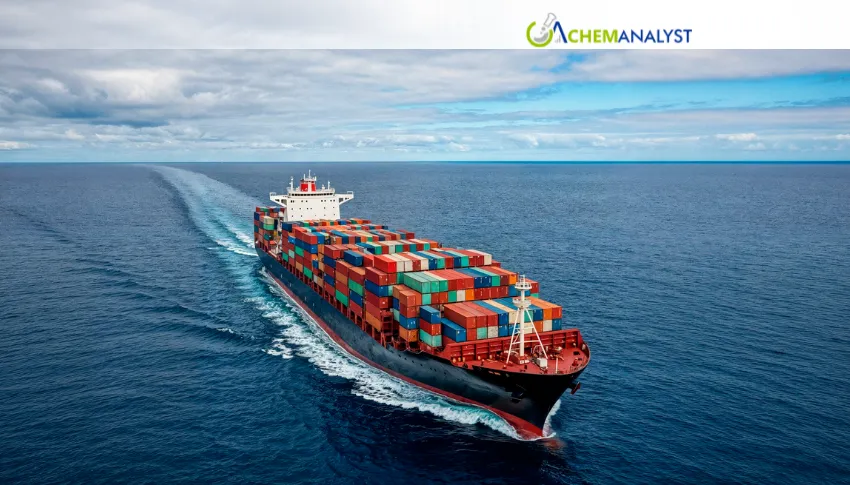
The Transpacific Ocean freight market entered a period of moderation during mid-July following an exceptionally strong early peak season driven by front- loading of imports ahead of potential U.S trade policy changes. Spot freight rates from Asia to North America have begun to stabilize as booking activity slows and many importers delay new shipments while awaiting greater clarity on evolving tariff and trade policies.
Spot Rates Soften as Import Demand Pauses
In light of the sharp increases seen during late spring and early summer, there is now a short-term correction taking place in transpacific spot prices. In the week beginning July 18, the rates from China to USWC began to fall, such that some bookings on the spot market were down to as low as $4,680-$5,400 per FEU. This stabilization is primarily due to policy-related reasons. Importers have been putting off clearing their goods for customs, as well as their shipping process, as they wait to get confirmation about the July 24 tariff deadlines and results of forced labour tariff public hearings. Due to these concerns, there has been no rush of new bookings despite the lower spot rates.
Capacity Dynamics: West Coast Eases, East Coast Tightens
While space availability is improving on USWC routes, the U.S. East Coast (USEC) remains heavily constrained.
• US West Coast: Shippers are finding increased space availability and improved negotiation leverage for USWC-bound cargo. Several carriers have deployed extra-loader vessels into Los Angeles and Long Beach to efficiently absorb the remaining peak season demand.
• US East Coast & Gulf: Rates from China to the USEC remain elevated near the $6,700 to $7,900 range. Capacity on these routes is significantly tighter, exacerbated by inland destination equipment shortages and persistent weight restrictions on specific Gulf Coast loops.
Network Adjustments and Port Congestion
Major operators continue to refine their network strategy due to the volatility of demand. For example, Ocean Network Express (ONE) has officially terminated its slot agreement on some major Transpacific routes (CP1, CP2, CP3, and CP4) after its last ships departed in July. Customers using this Far East to USWC network should check their further route alternatives.
At the origin point, port congestion in Asia keeps posing threats to the schedule reliability of shipping. Although ports like Busan and Singapore remain fluid and have less than a day wait times, other Asian gateways like Shanghai and Ningbo have one- to three-day delays. There are still serious congestion issues at Qingdao where ships have to wait for more than three days for an available berth.
Outlook
Looking ahead, freight charges are anticipated to remain relatively stable over the coming weeks unless significant changes in US trade policy or demand patterns trigger another surge in bookings. Continued carrier capacity management, evolving port conditions, and geopolitical developments will remain the primary factors influencing Transpacific shipping costs.








 About ChemAnalyst
Leave a Comment
Comments (0)