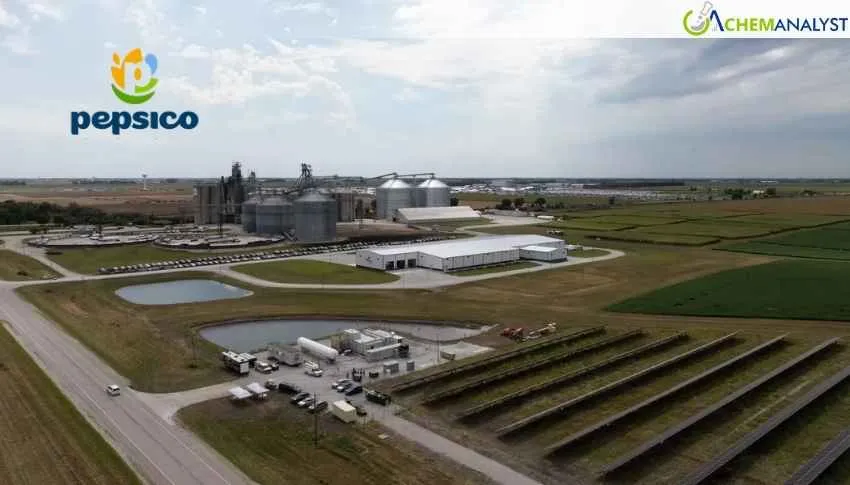
PepsiCo has announced a significant collaboration with agricultural technology company TalusAg, aimed at accelerating the decarbonization of fertilizer across global agricultural supply chains. This partnership marks PepsiCo's initial ventures into securing low-carbon ammonia environmental attributes.
The core of this initiative involves PepsiCo's commitment to acquire environmental attributes representing approximately 30,000 metric tons of low-carbon ammonia, with an option to increase this by an additional 41,000 metric tons. These agreements are set to impact PepsiCo's operations across multiple regions, including Europe, Sub-Saharan Africa, Asia Pacific, and its global teams, with further expansion planned for the U.S., notably through a proposed project in Blue Earth, Minnesota.
The collaboration addresses a critical challenge within the global food system: the highly emissions-intensive nature of fertilizer production, much of which occurs upstream of direct supplier relationships. By focusing on low-carbon ammonia, PepsiCo is extending its broader value-chain decarbonization efforts into a hard-to-abate area.
A key aspect of this partnership is the utilization of a "book-and-claim" model for environmental attribute certificates (EACs). These certificates, issued and managed by S3 Markets from TalusAg's Boone, Iowa project, effectively separate the environmental benefits of low-emission fertilizer from its physical distribution. This innovative approach allows companies to support cleaner production without disrupting existing supply chains, while digital certificates ensure transparency and scalability in tracking verified emissions reductions.
The initiative is poised to deliver several significant impacts. Environmentally, it will contribute to a substantial reduction in agricultural emissions. Economically, the localized production model championed by TalusAg is expected to lower transportation emissions and costs, fostering more stable input economics for growers and encouraging investment in low-emission technologies. This model is designed to maintain cost stability for farmers, thereby creating crucial demand signals for cleaner fertilizer production. From an industry-specific standpoint, the distributed production of ammonia will enhance the resilience of fertilizer supply chains by enabling local, on-site generation, reducing reliance on global logistics, and ultimately strengthening long-term food system resilience. This strategic move by PepsiCo and TalusAg represents a significant step towards a more sustainable and resilient agricultural future.







Leave a Comment
Comments (0)