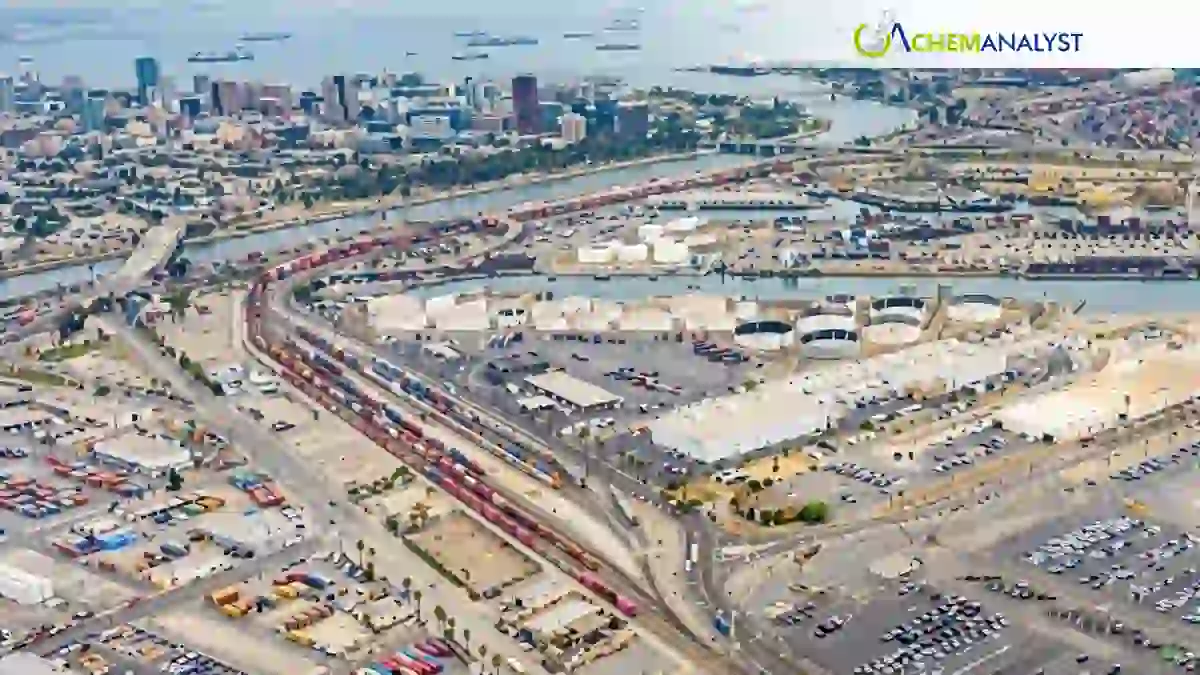
The Port of Long Beach has launched an ambitious "Clean Fuel Bunkering Challenge," offering a $1 million prize to the first ocean-going vessel that successfully completes a commercial-scale methanol bunkering operation at its facilities. This significant incentive, recently approved by the Long Beach Harbor Commission, is designed to aggressively accelerate the maritime industry's transition towards lower-carbon fuels and jumpstart a robust North American market for methanol as a marine fuel.
The primary driver behind this challenge is the urgent need to decarbonize the shipping sector and improve air quality in port communities. Methanol has emerged as a promising alternative to conventional bunker fuels, capable of substantially reducing sulfur oxide emissions by up to 95%, particulate matter by 90%, and nitrogen oxides by up to 50%. This initiative aligns with the Port's broader commitment to clean shipping, which includes ongoing updates to its Green Ship Incentive Program. The challenge also responds to the growing trend among major container carriers to invest in dual-fuel methanol vessels, even as the U.S. currently lags behind major Asian and European ports in bunkering infrastructure for this cleaner fuel. Furthermore, rising fuel costs are strengthening the case for energy diversification and greater energy independence within the shipping industry.
Economically, the 1 million prize aims to offset the higher operational costs associated with methanol bunkering, which the Port estimates to be around 1.5 million per call, compared to approximately $1 million for traditional marine fuel. This financial support is intended to cover expenses related to operational planning, permitting, fuel supply coordination, and safety procedures for pioneering the first commercial-scale operation in San Pedro Bay. Beyond direct cost mitigation, the Port anticipates that the challenge will attract further investment in cleaner energy solutions and bolster its infrastructure, positioning it at the forefront of the global shift towards alternative fuels.
Geopolitically and industry-specific, this move by the Port of Long Beach marks a critical step for the U.S. in fostering green shipping practices. While ports like Shanghai and Singapore have already established commercial methanol bunkering capabilities, this incentive helps the Port of Long Beach to catch up and play a more prominent role in international green shipping corridors, such as those it has established with Los Angeles, Shanghai, and Singapore. The initiative also supports California's wider climate and clean energy objectives. However, the widespread adoption of methanol still faces hurdles, including ensuring consistent fuel availability and addressing ongoing discussions about lifecycle emissions, which vary depending on how the methanol is produced (e.g., green vs. gray methanol). This challenge is crucial for demonstrating the operational feasibility of methanol bunkering and strengthening clearer regulatory pathways, providing a replicable model for other U.S. ports.








 About ChemAnalyst
Leave a Comment
Comments (0)