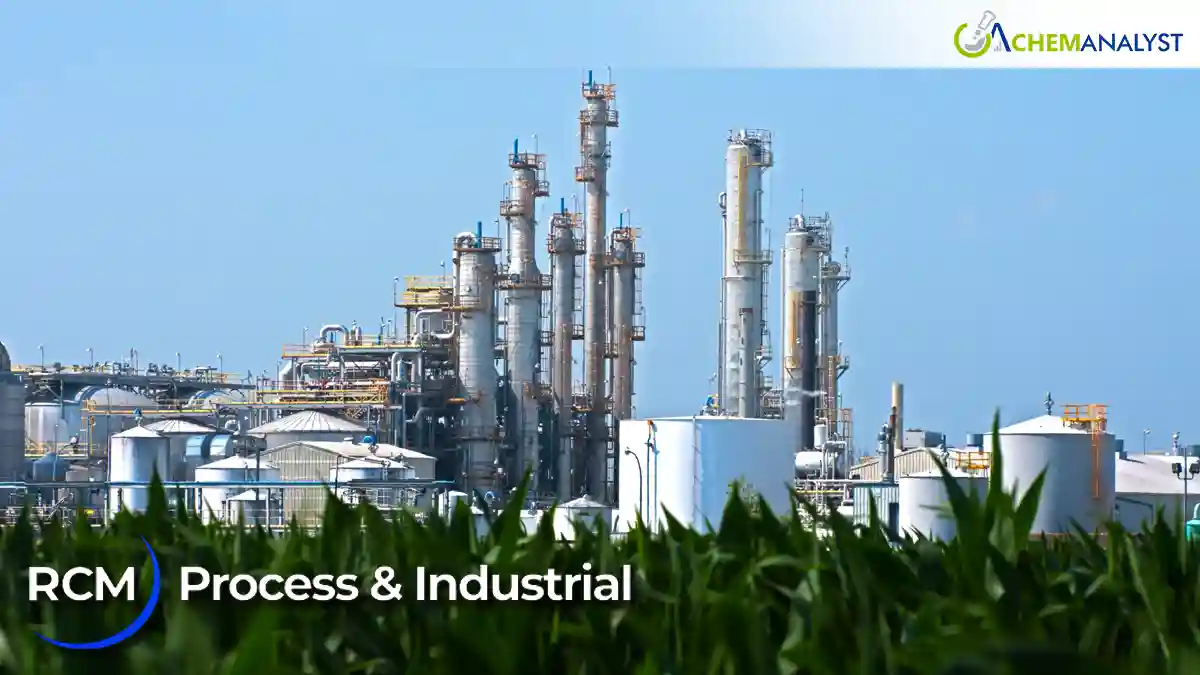
RCM Technologies has announced a major milestone through its division RCM Thermal Kinetics, confirming the successful completion of the first engineering project under its NEXT (New Ethanol eXpansion Technology) program. The initiative, launched in early 2025, is designed to help ethanol producers unlock additional production capacity from existing infrastructure without the need for costly equipment replacement.
The inaugural project involved a Midwestern ethanol plant that was originally engineered to produce 40 million gallons per year (MMGY). Through the implementation of the NEXT program’s advanced engineering techniques, the facility has now been expanded to achieve a production capacity of 105 MMGY. This achievement represents a historic moment for the ethanol sector, as it marks the first time a standard 40-MMGY facility has surpassed the 100-million-gallon production level while continuing to operate with its original distillation columns and without installing parallel columns.
Prior to this development, the plant had already undergone several capacity upgrades in collaboration with Thermal Kinetics. The facility’s output had first been increased to 65 MMGY and later to 86 MMGY. For decades, that level had been widely regarded as the practical upper limit for more than a hundred ethanol plants constructed with the same design framework across North America. By deploying the NEXT program’s process optimization approach, Thermal Kinetics has effectively redefined that limit, demonstrating how modern engineering strategies can extend the productivity of existing facilities.
According to Christopher J. Brown, the breakthrough was made possible through the specialized expertise of senior engineer Roy Viteri. Drawing on extensive experience in petroleum-industry engineering, Viteri applied precision optimization techniques rather than relying on large-scale equipment replacement. These targeted improvements involved carefully designed modifications and advanced system design strategies that unlocked previously untapped capacity within the plant’s existing footprint.
The successful expansion to 105 MMGY sets a new benchmark for ethanol production facilities built under the traditional 40-MMGY design model. The project illustrates how innovative engineering and operational optimization can significantly enhance performance while avoiding the heavy capital investment typically associated with major infrastructure upgrades.
Viteri noted that the project highlights what can be achieved when advanced process engineering is applied to real-world operational constraints. The approach provides a pathway for existing ethanol plants to substantially increase output while also lowering production costs per gallon. As a result, producers can improve efficiency and strengthen their competitiveness in the growing renewable fuels sector.
Scott Yenzer, who recently assumed the role of General Manager for Industrial Markets, stated that the project represents the first completed installation under the NEXT program and serves as proof of the technology’s potential. He added that several additional NEXT projects are currently underway, reflecting strong industry interest and reinforcing Thermal Kinetics’ position as a leader in innovation within the ethanol plant engineering space.








 About ChemAnalyst
Leave a Comment
Comments (0)