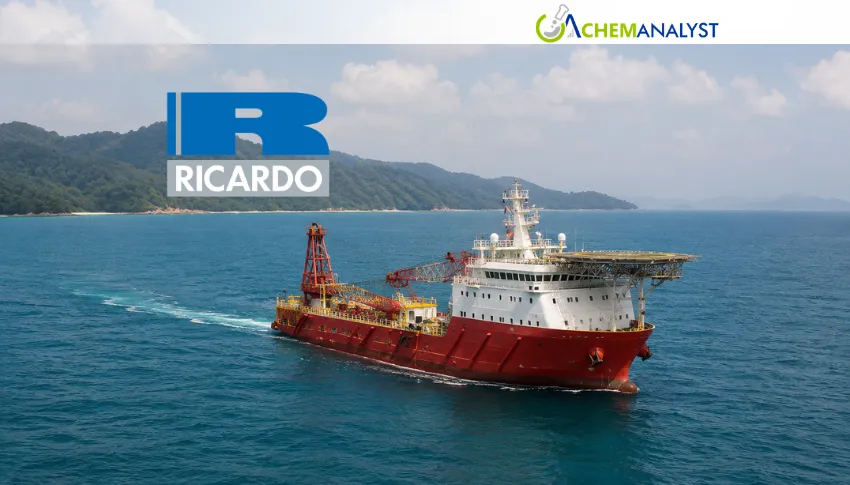
Ricardo recently completed a feasibility study on using ammonia as a future marine fuel, as part of the FASTMOVE project. This initiative aims to support the decarbonization of the maritime sector and inform the design of next-generation ammonia combustion engines. The project also seeks to position the UK at the forefront of low-emission marine propulsion technology.
The FASTMOVE project, a collaboration between Ricardo, Brunel University of London, and the Port of Cromarty Firth, focused on four-stroke ammonia-fueled marine engines for offshore support vessels. Researchers developed initial combustion concepts, including capturing high-pressure ammonia injection data at 200 bar. They also created and validated ammonia spray modeling using computational fluid dynamics (CFD) simulations. The study produced high-pressure dual-fuel (HPDF) combustion models and a concept engine combustion system design.
Safety considerations were a critical aspect of the study. The team assessed in-port and on-board ammonia storage for offshore support vessels, along with bunkering operations. They mapped these safety aspects against current regulatory and environmental risk frameworks. Three HPDF combustion system concepts were developed, with the most viable one undergoing further analysis to optimize injection and combustion conditions and refine emissions predictions. Previous research by Ricardo, Environmental Defense Fund, and Lloyd's Register highlighted that ammonia spills could harm marine ecosystems, particularly estuaries, mangroves, and wetlands, with fish being most sensitive. However, ammonia spills generally show smaller dispersion distances and lower persistence than heavy fuel oil (HFO) and marine gas oil (MGO).
The study's outcomes will help determine if ammonia offers a more sustainable solution for the maritime sector. Richard Osborne, Ricardo's Global Technical Expert in Sustainable Engines, stated that the results would inform the development of a single-cylinder engine (SCE) to verify combustion processes further. The project also considers the potential commercialization of this technology.
The FASTMOVE project is part of UK SHORE, a Department for Transport program dedicated to transitioning the UK to a cleaner maritime sector. Since 2022, UK SHORE has allocated over £230 million to more than 247 projects, leveraging over £107 million in private investment. This significant investment supports numerous organizations across the UK, driving economic growth alongside environmental goals. The successful development of ammonia-fueled engines could help steer UK shipping away from fossil fuels, despite the challenges of safely handling ammonia.
The findings from this feasibility study will act as a case study to assess ammonia's viability as a sustainable marine fuel. Further studies are necessary to evaluate the full ecological and health implications, including potential nitrogen deposition from chronic ammonia leakage and combustion by-products. A robust regulatory framework and strong management practices are essential for ammonia to become a safe and viable low-carbon alternative for shipping.
Impact on Chemical Commodity Prices ChemAnalyst
The immediate impact on chemical commodity prices tracked by ChemAnalyst is expected to be limited, as the FASTMOVE project remains at the feasibility and technology validation stage. However, the study reinforces long-term demand prospects for low-carbon ammonia, particularly green ammonia, as a marine fuel. Continued investment in ammonia-powered shipping could gradually increase demand for ammonia production, renewable hydrogen, and nitrogen feedstocks over the coming years. This may provide medium- to long-term price support for ammonia, especially in regions investing in green fuel infrastructure. Rising interest in ammonia bunkering could also stimulate demand for storage tanks, specialty steel, industrial coatings, valves, and engineering chemicals used in marine fuel handling systems. Conventional marine fuels are unlikely to experience any immediate pricing pressure, but successful commercialization of ammonia engines could gradually shift demand away from fossil-based bunker fuels, influencing future energy and chemical market dynamics as global shipping advances toward net-zero emissions.







 About ChemAnalyst
Leave a Comment
Comments (0)