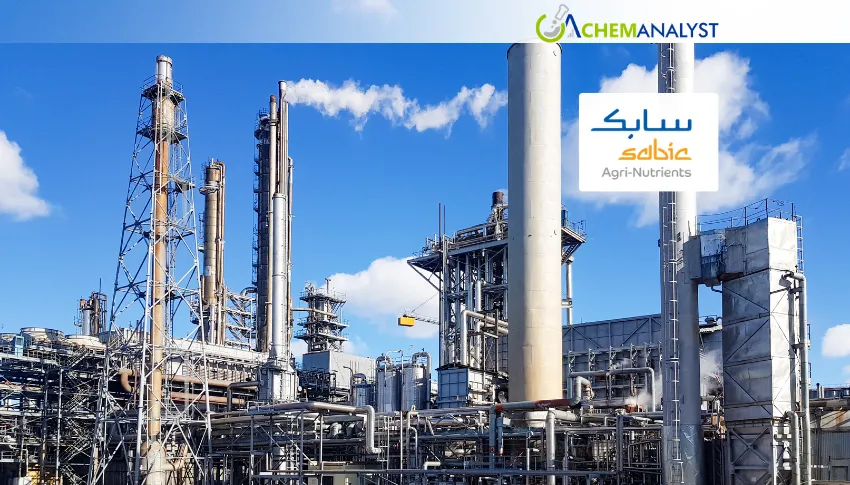
SABIC Agri-Nutrients Company (SABIC AN), a leading fertilizer producer in Saudi Arabia and majority-owned by SABIC with a 50.1 percent stake, is preparing to take the Final Investment Decision (FID) on its planned seventh ammonia and urea production facility in the near future. The development marks another significant step in the company’s long-term strategy to expand its production capabilities and strengthen its position in the global fertilizer and ammonia market.
According to reports, the upcoming seventh plant is expected to substantially boost SABIC AN’s overall production and sales capacity. The company’s Chief Executive Officer, Fahad Albattar, stated in an interview with Arabic financial platform Argaam that the new project is projected to increase SABIC AN’s sales volumes by approximately 54 percent. The significant increase reflects the company’s confidence in future demand for ammonia and urea, which remain essential products for agricultural fertilizers and various industrial applications worldwide.
The proposed seventh facility will have the capacity to manufacture 1.2 million metric tonnes per annum (mtpa) of conventional ammonia and approximately 2.6 million mtpa of urea. The addition of this large-scale production capacity is expected to strengthen Saudi Arabia’s position as one of the major global suppliers of nitrogen-based fertilizers. By expanding its manufacturing footprint, SABIC AN aims to meet growing international demand while enhancing operational efficiency and creating new opportunities for export growth.
A major milestone for the seventh project was achieved in March when Saudi Arabia’s Ministry of Energy approved the allocation of the required feedstock for the facility. Feedstock allocation is a critical step in the development of petrochemical and fertilizer projects, as it ensures the availability of the essential raw materials required for long-term plant operations. With this approval secured, SABIC AN is now moving closer to finalizing its investment decision and initiating the next stages of project development.
Alongside its plans for the seventh plant, SABIC AN is also progressing with its sixth production facility located in Jubail Industrial City. Unlike the seventh plant, which will focus on conventional ammonia and urea production, the sixth facility is designed to produce 1.2 million mtpa of low-carbon blue ammonia. The project represents SABIC AN’s commitment to supporting the energy transition by investing in cleaner ammonia production technologies that reduce carbon emissions compared with traditional manufacturing methods.
However, the advancement of the sixth blue ammonia project remains dependent on securing a long-term offtake agreement. CEO Fahad Albattar noted that the company is fully prepared to proceed with construction and development once a suitable long-term buyer agreement is finalized. If the required offtake agreement is signed during the current year or the following year, the project will move forward accordingly.
Similar to the seventh project, the sixth ammonia plant also received feedstock allocation approval from the Ministry of Energy in March, providing a strong foundation for future implementation. The facility in Jubail Industrial City is expected to play an important role in Saudi Arabia’s ambitions to become a leading global producer and exporter of low-carbon hydrogen derivatives, including blue ammonia.
Although SABIC AN has revealed important technical details and production capacities for both its sixth and seventh plants, the company has not yet disclosed the total investment value of either project. Further information regarding project costs, construction schedules, and commissioning timelines is expected to be announced after key commercial decisions and agreements are finalized.
With these two major projects in its development pipeline, SABIC AN is positioning itself for significant growth in both conventional fertilizer products and low-carbon ammonia solutions. The planned expansion reflects the company’s broader strategy of increasing production capacity, meeting global market demand, and contributing to Saudi Arabia’s industrial and energy diversification goals.








 About ChemAnalyst
Leave a Comment
Comments (0)